How to Improve the MINIQ BG6300 Milling Table's Precision
TL;DR
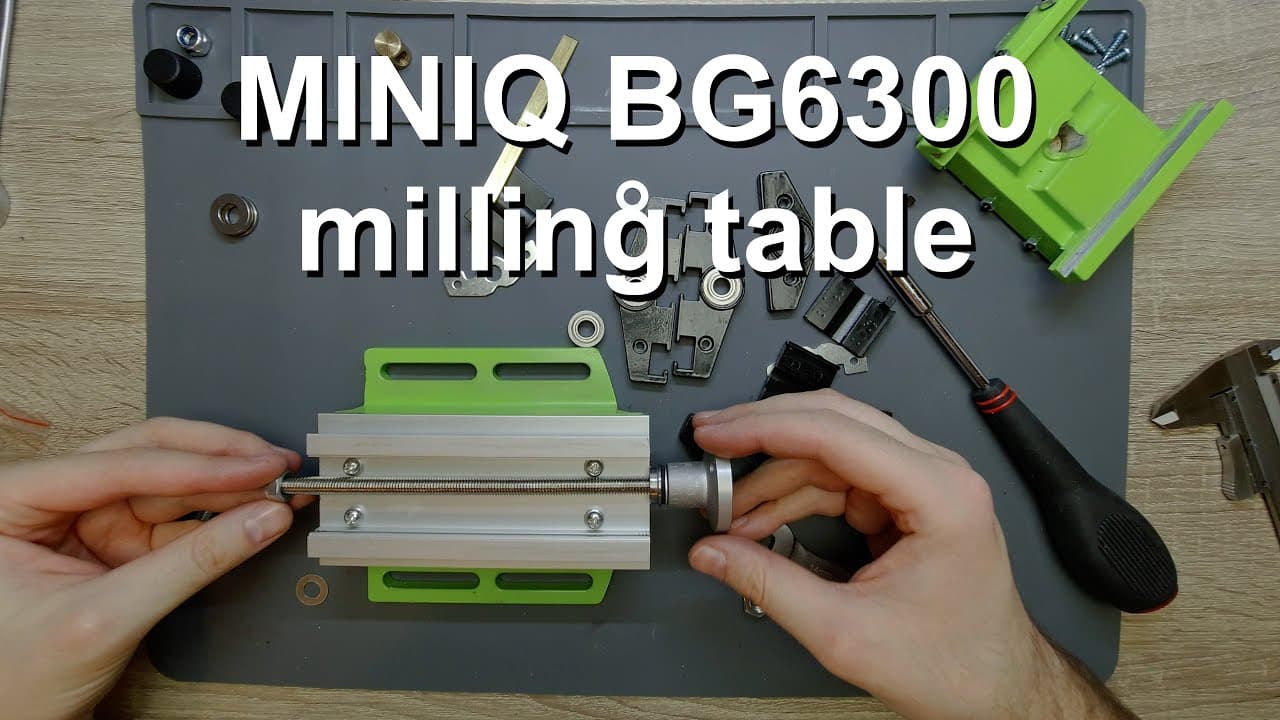
To enhance the performance of the MINIQ BG6300 milling table, add bearings to eliminate slack and improve stability. The table offers smooth operation, making it suitable for hobby projects, but lacks precision due to its original design. Future plans include converting it to a stepper motor-controlled device for more accurate operation.
Transcript
welcome everyone in this video i'm going to dissect this milling table it's a relatively decent and reasonable milling table it has quite smooth movement but it's not the most precise thing on the earth but we can improve this device a little bit and in this video i'm going to show you what is this exactly and how we can improve it and what we can ... Read More
Key Insights
- 📽️ The milling table is ideal for hobby projects, providing ample movement capabilities while maintaining smooth operation.
- 🤩 Understanding the component layout allows users to easily disassemble and maintain the milling table, a key aspect for DIY enthusiasts.
- 🎁 The absence of bearings in the original design presents an opportunity for enhancement, presenting options for modification to improve performance.
- 📽️ The projected upgrade to include stepper motors indicates a trend towards automation in DIY milling projects, showcasing advancements in home machining technologies.
- 🤗 Exploring each axis's functionality reveals the milling table's basic mechanical principles, opening up educational opportunities in machine design.
- 🦻 The presenter stresses the value of video tutorials for potential buyers, illustrating the benefits of visual aids in understanding product disassembly and functionality.
- 😓 The construction materials mentioned, such as cast aluminum and plastic, highlight the trade-off between weight and durability in DIY tool design.
Install to Summarize YouTube Videos and Get Transcripts
Explore YouTube Video Summarizer or Get YouTube Transcript Extractor
Questions & Answers
Q: What are the key components of the milling table discussed in the video?
The milling table consists of various components, including x and y-axis threaded rods, nuts, bolts, and a metal plate for clamping items. The x-axis allows a 20 cm linear movement while the working area spans 30 cm. The simple construction, including the lack of sophisticated bearings, makes it accessible for hobbyists.
Q: Why is the milling table considered not very precise?
The milling table uses basic threaded rods instead of lead screws, which result in greater play and less rigidity. While it functions smoothly for various tasks, the components' simplicity means that extreme precision is compromised. Thus, modifying parts like adding bearings could enhance its overall precision.
Q: What improvements does the presenter suggest for enhancing functionality?
The video suggests adding bearings to compensate for slack in the system, which would improve movement and precision. Additionally, replacing and modifying certain screws can lead to smoother operation. This includes using flat or thrust bearings to handle axial forces when the milling table is under load.
Q: What will be covered in the next video regarding this milling table?
The next video will focus on converting the milling table into a stepper motor-controlled device, allowing for enhanced control of movement. The presenter plans to incorporate Arduino for precise control, demonstrating how this can transform the manual operation into a numerically controlled process.
Summary & Key Takeaways
-
The video dissects a milling table, demonstrating its components and movement. Although it offers smooth operation, it's not the most precise tool available.
-
The presenter outlines how to improve the milling table's performance by adding bearings to eliminate slack and enhance stability, particularly for hobbyist applications.
-
Future plans include transforming the milling table into a stepper motor-controlled device, allowing for accurate numerical control using Arduino programming.
Read in Other Languages (beta)
Share This Summary 📚
Summarize YouTube Videos and Get Video Transcripts with 1-Click
Try YouTube Summary with ChatGPT & Claude or YouTube Transcript Generator
Explore More Summaries from Curious Scientist 📚



![Building a coil winder [Part 6] - A few improvements thumbnail](/_next/image?url=https%3A%2F%2Fi.ytimg.com%2Fvi%2F3eyxG_g2iUA%2Fhqdefault.jpg&w=750&q=75)
Summarize YouTube Videos and Get Video Transcripts with 1-Click
Try YouTube Summary with ChatGPT & Claude or YouTube Transcript Generator