What is branding beyond logos and product claims?
TL;DR
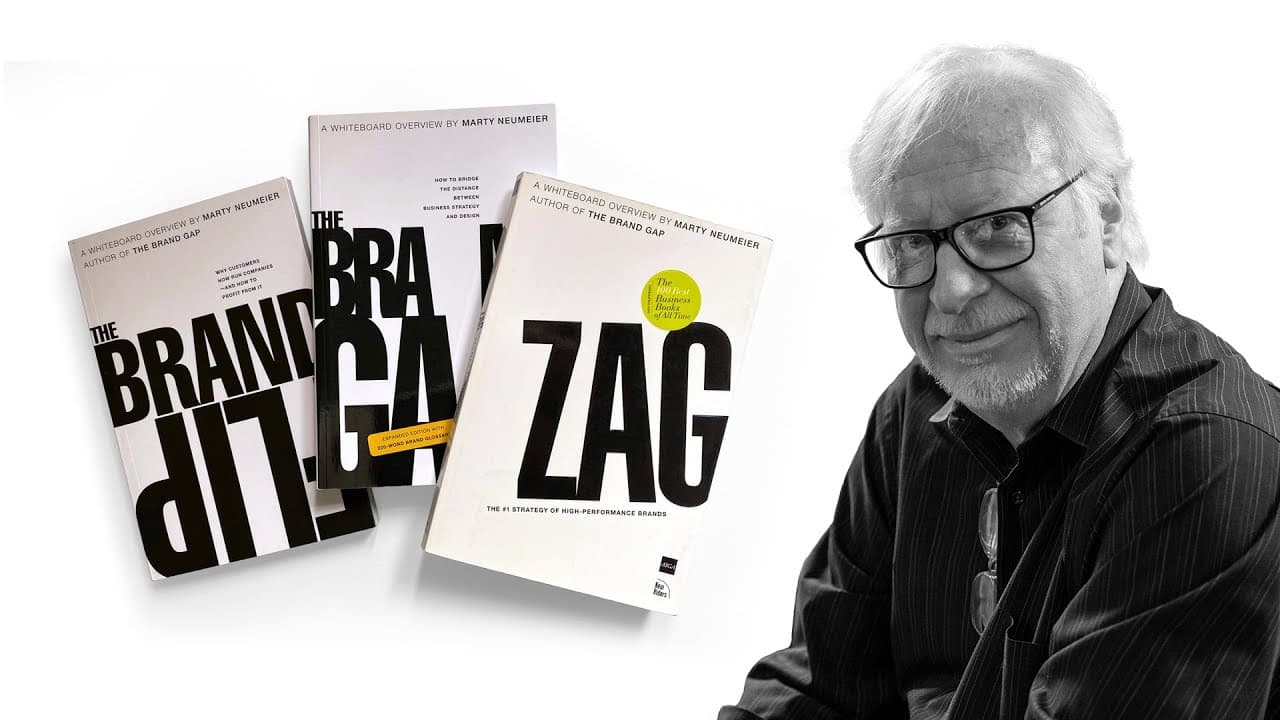
Branding is the gut feeling a customer has about a company, not merely a logo or a product. It resides in the minds and hearts of people who experience the brand and is shaped by how a business communicates and performs. The talk frames branding as a bridge between design and business, turning words and visuals into reputation.
Transcript
flip of scramble the brand dictionary a total of eight books I believe eight books he literally wrote the book on branding he's here you guys want to stick around for this episode we're gonna get into a lot of things how he got started what he's up to today and why are we even having this conversation so let's get right into Marty Neumeier welcome ... Read More
Key Insights
- Branding is a result, not a logo, product, promise, or impressions.
- A brand exists as a gut feeling in customers’ minds and hearts.
- Branding turns many individual customer perceptions into a coherent overall reputation.
- Design and writing must work together because words and pictures reinforce each other.
- Branding serves as a bridge between design work and business outcomes.
- Understanding branding elevates a designer’s value by speaking to business goals.
- Branding is a means to align the company’s actions with customer expectations.
- Effective branding requires clear communication of how the business delivers value to customers.
- More videos from this channel:
- More from this channel: The Futur
Install to Summarize YouTube Videos and Get Transcripts
Explore YouTube Video Summarizer or Get YouTube Transcript Extractor
Questions & Answers
Q: What is branding not, according to the expert?
Branding is not a logo, not a product, not a promise, and not merely the sum of all impressions on an audience. It is a result, a gut feeling in the minds and hearts of customers about a product, service, or company. This reframes branding as a perception-driven outcome rather than a single symbol or message.
Q: Where does branding live, and why is that important?
Branding lives in customers heads and hearts as their authentic perception of a company. This is important because it means branding is created by experiences, interactions, and communications that people actually feel and remember, not just what a company says about itself. This shifts responsibility to delivering value people can sense.
Q: How does branding relate to design and business?
Branding is the connection point where design and business meet. It makes design skills more valuable by giving them a clear business purpose and direction. When branding aligns with business goals, design decisions contribute to tangible outcomes like stronger reputation, consistency, and customer trust.
Q: Why should a designer care about writing in branding?
Writing matters because language shapes perception and clarifies meaning. The speaker notes that great design paired with strong words elevates the work, whereas weak writing can drag down even good visuals. Learning to write well helps designers articulate the business value and contribute more effectively to brand conversations.
Q: What role does branding play in customer perception?
Branding acts as a lens through which customers interpret a company. Their gut feeling about the brand is formed by how the company performs, communicates, and delivers on its promises. This perception drives choices, loyalty, and advocacy, shaping the brand’s overall value in the market.
Q: How can young professionals start building a brand understanding?
Young professionals should learn to articulate how their design work connects to business outcomes and customer value. They should study how messages and visuals work together to shape perception, seek opportunities to explain the business impact of their work, and practice communicating clearly about branding beyond visuals alone.
Q: What is the central misconception about branding in business discussions?
The central misconception is treating branding as a logo or as an advertising metric. Branding is actually the customer’s gut feeling about a company, formed from their overall experience and interactions. Recognizing branding as a holistic outcome helps teams align all efforts toward a consistent reputation.
Q: What is the practical outcome of mastering branding skills for a designer?
Mastering branding helps a designer participate in strategic conversations that influence business direction. It enables them to justify design decisions with business value, collaborate more deeply across departments, and contribute to creating a coherent, trusted reputation. This broader impact can lead to more opportunities and higher value projects.
Summary & Key Takeaways
-
Branding is defined as a result, not a logo or promise, and it lives in customers’ heads and hearts. The speaker emphasizes that branding emerges from how a company is perceived, not what it claims to be. This shifts the focus from visuals to experience and impact.
-
Branding connects design with business outcomes, making design skills more valuable when aligned with a company’s reputation and customer perception. It highlights that words and pictures must work together to influence the brand’s perception.
-
Branding acts as a framework for understanding how customers judge a company, product, or service. It underlines the strategic role of branding in creating consistent experiences and steering business conversations toward shared value and trust.
Read in Other Languages (beta)
Share This Summary 📚
Summarize YouTube Videos and Get Video Transcripts with 1-Click
Try YouTube Summary with ChatGPT & Claude or YouTube Transcript Generator
Explore More Summaries from The Futur 📚




Summarize YouTube Videos and Get Video Transcripts with 1-Click
Try YouTube Summary with ChatGPT & Claude or YouTube Transcript Generator