What Should a Cloud Computing Syllabus Cover?
TL;DR
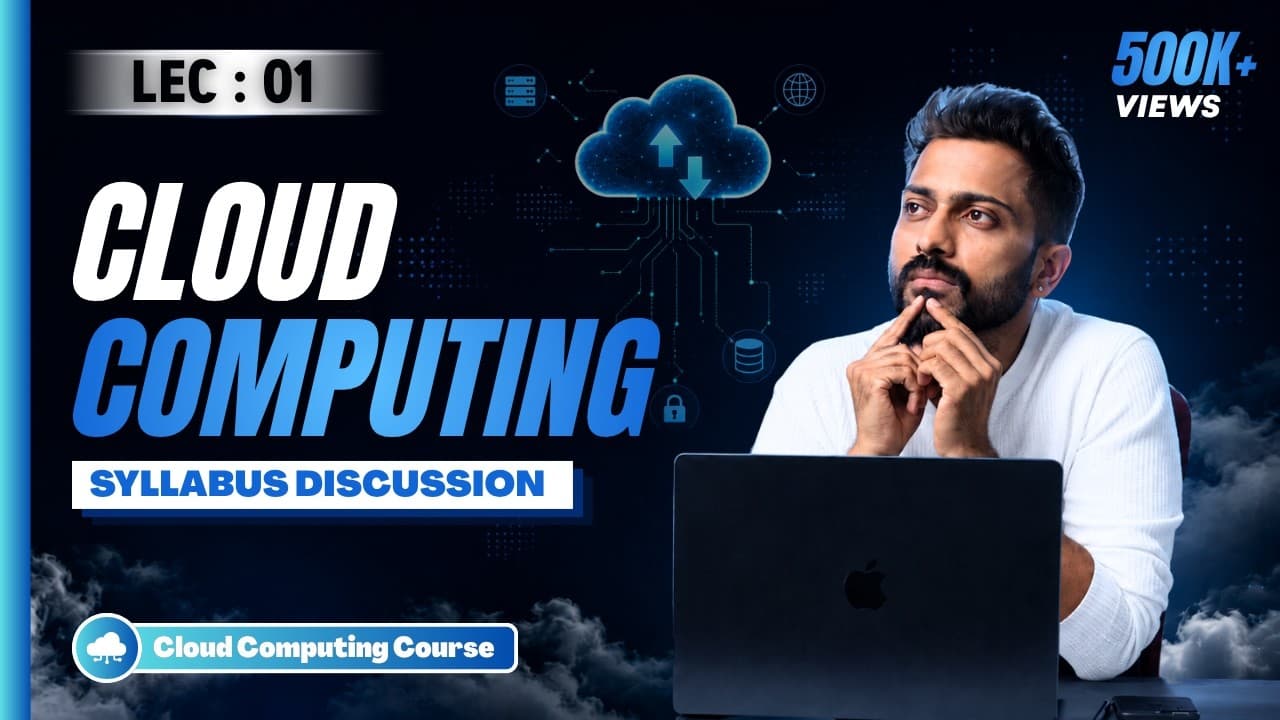
A complete cloud computing syllabus should cover service and deployment models, architecture, virtualization, storage, networking, security, application development, DevOps, platforms, and emerging trends. Practical skills should include provisioning resources, creating virtual machines, using containers, supporting deployment, and understanding how providers deliver computation, storage, networking, platforms, and runtime services on demand.
Transcript
Dear Students, welcome to Gate Smashers In today's video, I have brought The complete syllabus of Cloud Computing As you know, Cloud Computing It is one of the most important technologies It is also an emerging technology And all the emerging technologies in its parallel Whether you talk about AI or Big Data Or you talk about Blockchain In all of t... Read More
Key Insights
- Cloud computing is a utility-based approach that supplies computation, storage, networking, virtualization, development platforms, and runtime resources on demand. Customers pay according to usage instead of building and maintaining every required technology within their own organizations.
- Cloud service models are a central syllabus topic and include software as a service, platform as a service, and infrastructure as a service. Desktop and function services are also mentioned, but the main focus remains on the primary service categories.
- Cloud deployment models define how cloud environments are made available. The syllabus identifies public, private, and hybrid deployment as essential models that learners should understand when preparing for cloud interviews, examinations, practical work, or careers.
- Virtualization is the foundation of cloud architecture because physical resources are pooled and shared among many users instead of being permanently dedicated to one person. Relevant subjects include hypervisors, data centers, virtual machines, containers, and different virtualization types.
- Cloud storage supports growing data requirements by keeping information remotely accessible through the internet. A complete study plan should examine object, file, and block storage, provider approaches, backups, archives, recovery processes, and the management of older data.
- Cloud security and privacy are necessary because remotely stored resources and data require protection and responsible management. Interview preparation should therefore include privacy compliance, applicable standards, recovery concerns, and the security implications of operating services within cloud environments.
- Cloud networking connects backend resources and enables cloud services to operate together. Important topics include virtual private clouds, software-defined networking, and load balancing, along with the broader question of how computation, storage, applications, and other resources communicate.
- DevOps bridges development and operations by supporting work from resource provisioning and monitoring through deployment and maintenance. Its cloud-related topics include continuous integration and delivery, containerization, Kubernetes, and the processes used to move applications into operational environments.
Install to Summarize YouTube Videos and Get Transcripts
Explore YouTube Video Summarizer or Get YouTube Transcript Extractor
Questions & Answers
Q: What topics should a cloud computing syllabus include?
A cloud computing syllabus should include foundational definitions, evolution, characteristics, benefits, service models, deployment models, and cloud architecture. It should also cover virtualization, hypervisors, data centers, virtual machines, containers, storage, networking, security, privacy, compliance, application development, DevOps, emerging technology integration, major cloud platforms, resource provisioning, monitoring, deployment, maintenance, and practical tool usage.
Q: How does cloud computing provide resources on demand?
Cloud computing provides computation, storage, networking, virtualization, platforms, and runtime resources as utility services. Instead of establishing every resource locally, an organization requests what it needs from a provider and pays according to usage. This arrangement allows services to expand when demand rises and reduces the need to purchase and maintain all supporting infrastructure internally.
Q: What are the main cloud service models?
The main cloud service models are software as a service, platform as a service, and infrastructure as a service. They represent different ways of receiving software, development environments, or underlying computing resources from a provider. Desktop and function services are also mentioned, but the syllabus treats the main service categories as especially important for interviews and examinations.
Q: What are public, private, and hybrid cloud models?
Public, private, and hybrid clouds are deployment models that describe how cloud resources are made available and organized. The transcript identifies each as a required part of cloud computing study. Learners should examine them individually to understand deployment choices and prepare for career discussions, certification questions, academic examinations, and practical decisions about operating cloud environments.
Q: Why is virtualization important in cloud computing?
Virtualization enables cloud providers to pool physical resources and share them among many users instead of dedicating each resource permanently to one customer. It supports cloud architecture through hypervisors, virtual machines, containers, and data centers. Understanding its types and mechanisms helps explain how storage, networks, operating systems, and processing resources can be distributed efficiently.
Q: What cloud storage concepts should students study?
Students should study how cloud storage is organized and delivered, including object, file, and block storage. The syllabus should also address provider approaches, backups, archival processes, recovery, and management of older data. Cloud storage allows users to send information through the internet, keep it remotely, and retrieve it later when it is required.
Q: How does DevOps connect development and cloud operations?
DevOps fills the gap between separate development and operations teams by supporting the path from application creation to deployment and ongoing maintenance. Its responsibilities include resource provisioning, monitoring, and operational management. Related cloud topics include continuous integration and delivery, containerization, Kubernetes, and the tools used to run and maintain applications after development work is completed.
Q: What practical skills are useful for a cloud computing career?
Useful practical skills include operating major cloud platforms, provisioning resources, creating virtual machines, running workloads, using containers, and understanding deployment and monitoring. Basic programming knowledge is also valuable because computing careers cannot avoid programming entirely. The course emphasizes using cloud tools and managing resources, while stating that difficult coding is not the main requirement for these activities.
Summary & Key Takeaways
-
Cloud computing provides computation, storage, networking, virtualization, development platforms, and runtime resources as utility services. Organizations can obtain resources on demand instead of establishing and maintaining every component locally. The pay-as-you-use approach supports changing requirements while transferring much of the infrastructure integration and maintenance responsibility to cloud providers.
-
The syllabus begins with cloud definitions, evolution, characteristics, and benefits, then covers service models and deployment models. It continues into architecture, virtualization, hypervisors, data centers, virtual machines, containers, storage methods, backup, archival, recovery, security, privacy, compliance, networking, application development, DevOps, emerging trends, and provider tools.
-
Practical cloud preparation involves understanding how to provision resources, create and run virtual machines, work with containers, and use major cloud platforms. Programming fundamentals remain useful, but the course emphasizes resource management and tool usage rather than difficult coding. The proposed coverage is intended for interviews, certification examinations, college study, and cloud careers.
Read in Other Languages (beta)
Share This Summary 📚
Summarize YouTube Videos and Get Video Transcripts with 1-Click
Try YouTube Summary with ChatGPT & Claude or YouTube Transcript Generator
Explore More Summaries from Gate Smashers 📚


Summarize YouTube Videos and Get Video Transcripts with 1-Click
Try YouTube Summary with ChatGPT & Claude or YouTube Transcript Generator