How Can Coca-Cola’s Secret Protect Your Career After AI?
TL;DR
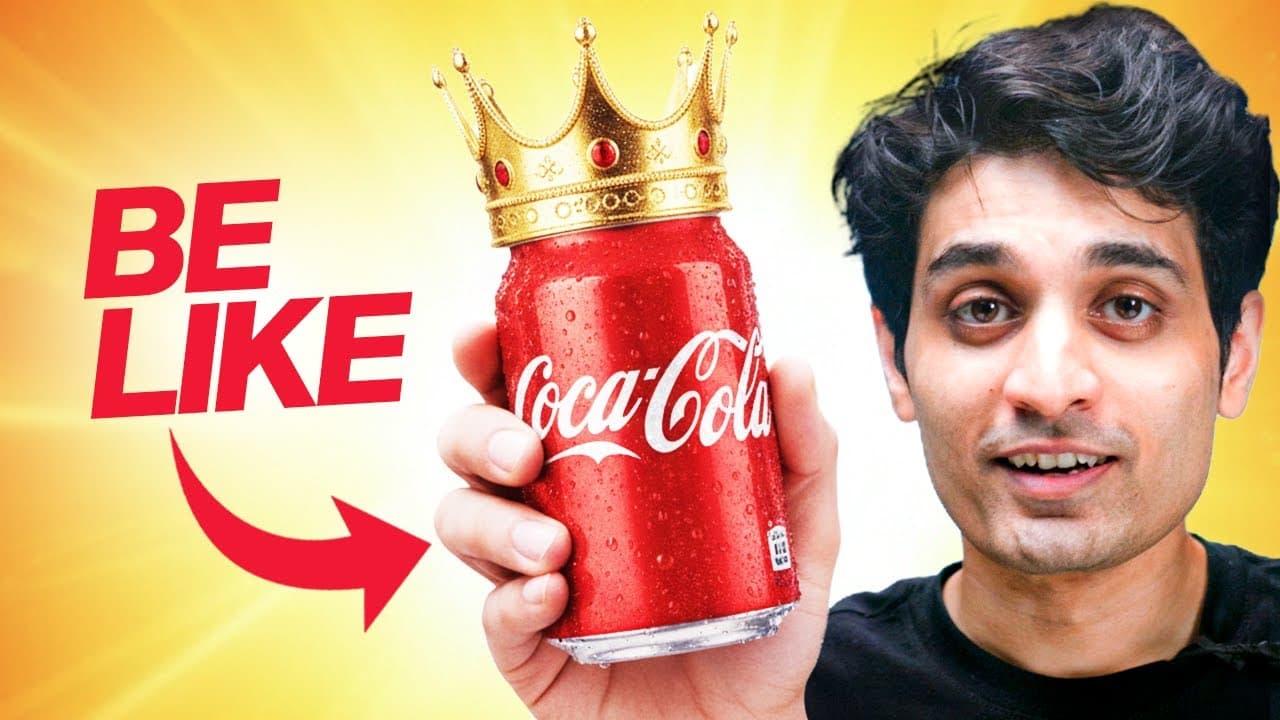
Coca-Cola’s secret for protecting a career after AI is to build a distinctive brand, coordinate resources, and take responsibility for complete outcomes instead of selling an interchangeable task. The transcript contrasts sugar water costing less than two rupees to make with Coca-Cola selling for 30 or 40 rupees, showing how a position in consumers’ minds can preserve a premium. Read on for eight practical explanations of this career strategy.
Transcript
Okay, so the problem that people have been facing online which is this AI thing is getting better and a lot of people believe that well AI is going to come for my job that if a machine can write or code or design or diagnose then the human value goes to zero and the main challenge that they are facing which they're not able to explain is something ... Read More
Key Insights
- Commoditization is the process by which initially distinctive goods, services, or skills become largely indistinguishable in consumers’ eyes. Once customers cannot identify meaningful differences among providers, competition shifts toward price, weakening the value of specialized execution alone.
- AI tools can intensify price competition because many workers use the same systems to produce similar logos, writing, code, designs, or diagnoses. A human provider may therefore compete not only with other people, but also with subscriptions priced at $20, $50, or $200.
- Coca-Cola is presented as proof that a cheap, imitable product can retain a large premium. Sugar water can reportedly be made at home for less than two rupees, while the branded drink sells for 30 or 40 rupees and continues attracting repeat purchases.
- A brand is something established in the consumer’s mind, not merely a collection of images or billboards. Because perceived identity and trust can distinguish an otherwise commoditized offering, developing a recognizable personal brand may protect workers from being selected solely on price.
- Management is valuable because managers coordinate resources and remain responsible for producing an outcome. Their defining skill is not necessarily superior execution of one specialized task, but the ability to align multiple contributors and ensure that their combined work reaches a destination.
- Human coordination is difficult because incentives, ego, politics, indifference, and deliberate obstruction can prevent separate contributions from fitting together. Managers and leaders reduce this risk by synchronizing people whose individual duties would otherwise remain disconnected from the organization’s final result.
- Future work is described as managing combinations of people and AI agents. A person might obtain a design from an agent, coordinate with a human who prints it, and combine both contributions into the operation of a poster company.
- Career differentiation after AI depends on becoming responsible for results rather than selling an isolated task. Workers who synthesize tools, agents, people, incentives, and brand value can occupy a role similar to managers, whose compensation reflects coordination and accountability rather than direct production alone.
Install to Summarize YouTube Videos and Get Transcripts
Explore YouTube Video Summarizer or Get YouTube Transcript Extractor
Questions & Answers
Q: How can you protect your career from AI commoditization?
Move beyond selling an isolated skill and become responsible for complete outcomes. Build a recognizable personal brand and coordinate tools, AI agents, and people so customers have reasons other than price to choose you.
Q: What is AI-driven commoditization of human skills?
Commoditization occurs when previously distinct skills or services become largely indistinguishable in consumers’ eyes. When many workers use similar AI tools for writing, coding, design, or diagnosis, customers may see their outputs as interchangeable and choose mainly by price.
Q: Why does AI commoditization create intense price competition?
When customers cannot identify a meaningful difference between providers, price becomes the clearest basis for choosing. Human workers may then compete with AI subscriptions costing $20, $50, or $200, making isolated task-based work difficult to defend on price.
Q: What does Coca-Cola reveal about surviving commoditization?
Coca-Cola shows that an inexpensive, reproducible product can still command a premium through its brand. The transcript says flavored sugar water can be made at home for less than two rupees, yet Coca-Cola sells for 30 or 40 rupees and attracts repeat purchases.
Q: What does personal branding mean in an AI-driven market?
A brand is something established in the consumer’s mind, not merely images or billboards. A personal brand can distinguish a worker even when AI makes the underlying output easier to reproduce, reducing the need to compete only on price.
Q: Why are managers valuable when they do not perform every specialized task?
Managers are valuable because their skill is getting things done through other resources and people. They coordinate separate contributions and accept responsibility for the overall outcome instead of performing every specialized task themselves.
Q: Why is coordinating people an important career skill?
Separate contributors can complete their own duties without ensuring that everything fits into one successful result. The transcript describes work as difficult to coordinate, which makes the person who aligns contributions and remains responsible for the destination valuable.
Q: What might a post-AI manager do each day?
A post-AI manager may direct combinations of tools, software agents, and human workers to create an outcome. The role centers on deciding what should be produced, coordinating the available resources, and taking responsibility for the final result.
Summary & Key Takeaways
-
AI accelerates commoditization by giving many workers access to the same writing, coding, design, and diagnostic capabilities. When providers appear interchangeable, customers choose primarily by price. Competing against inexpensive subscriptions is especially difficult because their cost can fall far below the minimum compensation that human workers are willing to accept.
-
Coca-Cola demonstrates how a widely reproducible product can maintain a premium through brand value. Its underlying sugar water is described as costing less than two rupees to make at home, yet customers repeatedly pay 30 or 40 rupees. The relevant differentiation exists in consumers’ minds, not merely in ingredients or production.
-
The proposed post-AI role resembles management: accepting responsibility for an outcome while coordinating specialized resources. Future managers may direct combinations of humans, agents, and tools rather than performing every task personally. Career value therefore shifts toward leadership, coordination, incentives, brand ownership, and the synthesis of many contributions into one coherent result.
Read in Other Languages (beta)
Share This Summary 📚
Summarize YouTube Videos and Get Video Transcripts with 1-Click
Try YouTube Summary with ChatGPT & Claude or YouTube Transcript Generator
Explore More Summaries from Varun Mayya 📚





Summarize YouTube Videos and Get Video Transcripts with 1-Click
Try YouTube Summary with ChatGPT & Claude or YouTube Transcript Generator