How Does Japan's $550 Billion U.S. Fund Work?
TL;DR
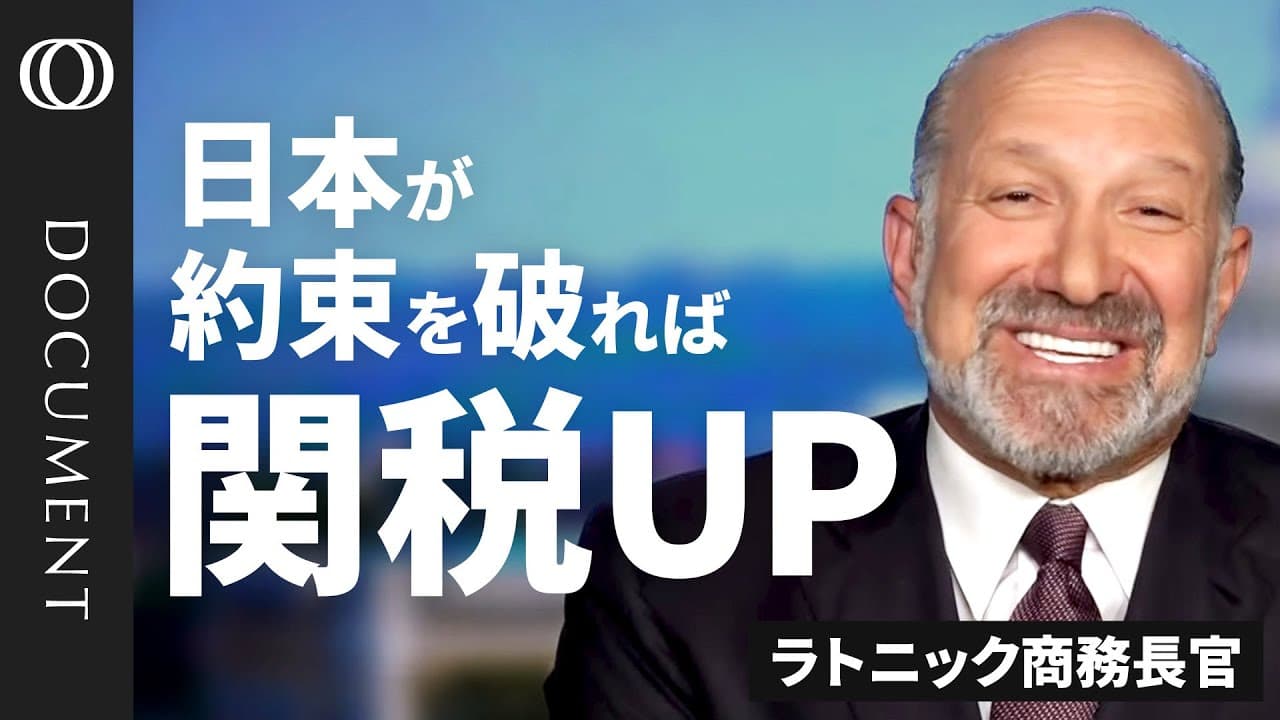
Japan committed $550 billion for U.S. projects selected by President Donald Trump, with Japan recovering its capital and 90% of profits going to American taxpayers, according to Commerce Secretary Howard Lutnick. The arrangement lowers Japan’s tariff to 15%, runs through January 2029, and allows tariffs to return if Japan refuses a capital call.
Transcript
Mr. Secretary, welcome to the program. Sir, I know you wanted to talk about Japan, so let's do that. I want you to share with us the terms of this $550 billion investment fund, a core pillar, of course, of the negotiations that you've been helping to lead with the Japanese. Can you share with us the details this morning, sir? Sure. So, this is a co... Read More
Key Insights
- Japan’s $550 billion commitment is described as government financing placed at the disposal of President Donald Trump for investment in American projects, rather than conventional investment by Japanese companies building and controlling their own factories in the United States.
- The proposed profit structure gives Japan its contributed money back while directing 90% of project profits to American citizens and taxpayers, according to Lutnick’s account of the signed agreement with Japanese minister Akazawa.
- The investment process works through presidential project selection followed by a capital call to Japan, after which Japanese funds would be transferred to construct the chosen project within the United States during the remainder of Trump’s term.
- The enforcement mechanism is tied to tariffs and project cash flows. If Japan stops meeting capital calls before January 2029, Lutnick says tariffs would rise again and Japan would no longer receive cash flow generated by the projects.
- Domestic pharmaceutical production is presented as a potential use of the fund because the United States buys generic antibiotics from China. Lutnick argues that Japanese financing could establish American manufacturing and reduce reliance on Chinese supplies.
- The Alaska pipeline is identified as another possible investment target, with Lutnick estimating a project scale of $50 billion to $100 billion and stating that Japanese financing could support Trump’s objective of advancing pipeline development.
- India’s purchase of Russian oil is portrayed as a major trade dispute because Lutnick says its Russian share rose from less than 2% before the conflict to 40%, driven by access to inexpensive sanctioned oil.
- The American consumer market is described as the administration’s central source of negotiating leverage. Lutnick argues that India, Switzerland, Canada, and other trading partners ultimately depend on access to the United States’ $30 trillion economy.
Install to Summarize YouTube Videos and Get Transcripts
Explore YouTube Video Summarizer or Get YouTube Transcript Extractor
Questions & Answers
Q: How does Japan's $550 billion U.S. investment fund work?
President Donald Trump can select projects to be built in the United States, after which the administration issues a capital call and Japan supplies the required financing. Lutnick says Japan will recover its contributed money, while 90% of profits will go to American citizens and taxpayers. He emphasizes that this is government-backed project financing, not ordinary investment by individual Japanese companies.
Q: Why did Japan agree to finance U.S. projects?
Japan made the $550 billion commitment as part of a trade arrangement that provides a 15% tariff and allows Japanese manufacturers to continue producing cars in Japan. Lutnick characterizes the money as the price of reducing Japan’s tariff burden. In exchange, the United States gains financing for domestically selected projects during the remainder of President Trump’s term.
Q: Who chooses the projects funded by Japan's investment commitment?
President Donald Trump chooses the projects, according to Lutnick’s description of the agreement. Once a project is selected, the United States makes a capital call and Japan sends the money needed for construction in America. Lutnick presents the president’s discretion as the defining feature separating this framework from conventional foreign direct investment by private Japanese corporations.
Q: What happens if Japan refuses a U.S. capital call?
If Japan stops supplying money requested for approved projects, Lutnick says the reduced tariff would rise again and Japan would lose access to cash flows from the projects. He gives a hypothetical example in which Japan has invested $250 billion and then refuses further funding. Under his account, the existing project benefits would remain entirely with the United States.
Q: What projects could receive financing from Japan?
Lutnick identifies generic pharmaceutical manufacturing and the Alaska pipeline as possible projects. Domestic production of generic antibiotics could reduce U.S. reliance on supplies from China. He also says an Alaska pipeline could require $50 billion to $100 billion and that Japanese financing could help President Trump pursue the development. No final project list is provided in the transcript.
Q: How long does Japan's U.S. investment commitment last?
Japan is expected to fund capital calls through the remainder of President Donald Trump’s term, ending in January 2029. Lutnick says construction funding must be provided during that period. He describes the full $550 billion commitment as equal to half a point of U.S. GDP, although the interview does not provide a detailed annual funding schedule.
Q: Why does Lutnick criticize India's purchases of Russian oil?
Lutnick says India bought less than 2% of its oil from Russia before the Russian conflict but now obtains 40% from Russia. He argues that India is exploiting heavily discounted sanctioned oil to make money and calls that decision wrong. He connects the issue to broader demands that India open its market, reconsider BRICS, and support the United States and the dollar.
Q: What trade leverage does Lutnick believe the United States has?
Lutnick identifies the American consumer as the decisive source of leverage, describing the United States as a $30 trillion economy and the consumer market of the world. He argues that countries selling heavily into America cannot replace that demand simply by trading with one another. In his view, economic pressure will eventually push governments and businesses back to negotiations with the Trump administration.
Summary & Key Takeaways
-
Japan’s government committed $550 billion to finance projects in the United States chosen by President Donald Trump. Lutnick distinguishes the arrangement from ordinary foreign corporate investment. Japan is expected to recover its contributed capital, while 90% of project profits would go to American citizens and taxpayers under the signed framework.
-
The investment commitment runs through January 2029 and is connected to a 15% tariff that allows Japanese companies to continue manufacturing cars in Japan. When the administration selects a project, it can issue a capital call. Refusal by Japan could restore higher tariffs and end Japan’s access to project cash flows.
-
Lutnick also argues that India should stop buying discounted Russian oil, reconsider its BRICS alignment, and negotiate with the United States. He describes the American consumer market as crucial leverage, expresses limited optimism about Swiss trade proposals, and defends the administration’s position despite a court ruling concerning presidential tariff authority.
Read in Other Languages (beta)
Share This Summary 📚
Summarize YouTube Videos and Get Video Transcripts with 1-Click
Try YouTube Summary with ChatGPT & Claude or YouTube Transcript Generator
Explore More Summaries from TBS CROSS DIG with Bloomberg 📚


Summarize YouTube Videos and Get Video Transcripts with 1-Click
Try YouTube Summary with ChatGPT & Claude or YouTube Transcript Generator