Is Claude Free Enough Now for Everyday Work Tasks?
TL;DR
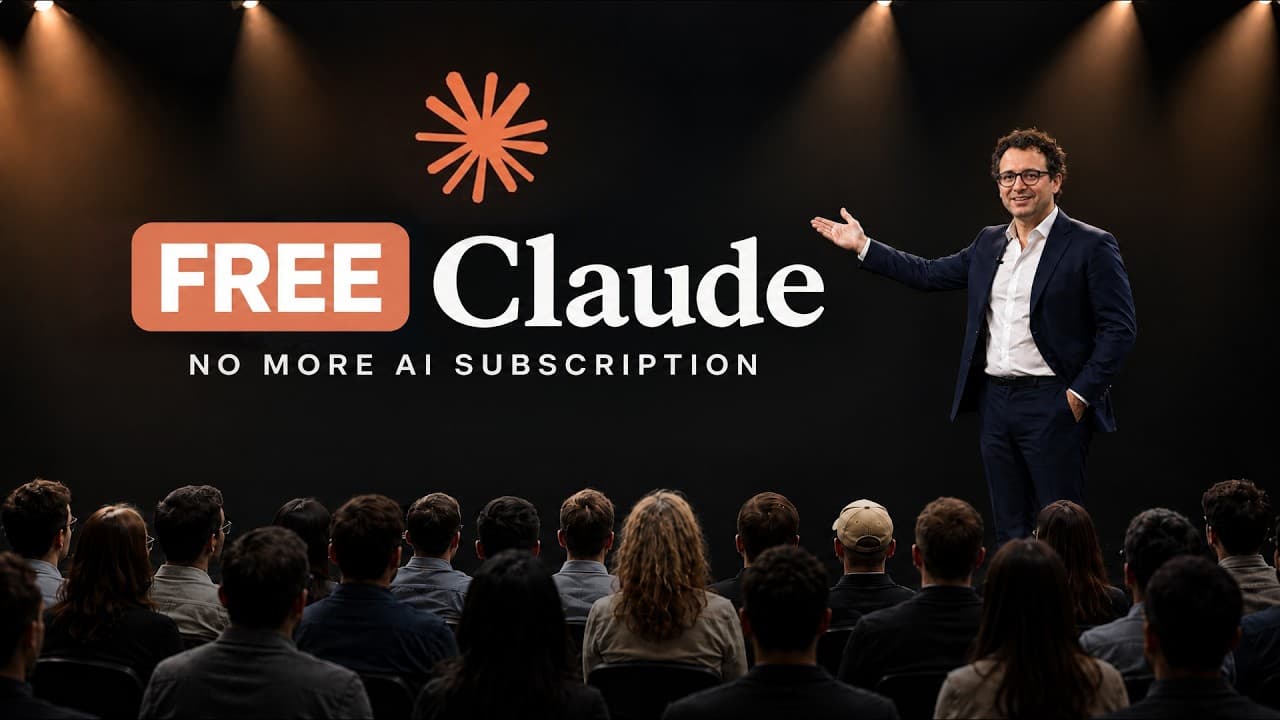
Claude Free offers a better mid tier with Sonnet 5, web search, memory, and file tools, but it remains meter-based and not unlimited. Free users get a real toolbox and workspaces like Projects and Artifacts, yet top features like Claude Code and Opus 5.5 stay behind paywalls. To decide, compare your workflow against the 5 hour session budget and potential limits.
Transcript
Half the internet is freaking out over the massive new upgrade to Claude free. So the big question is, do you still need to pay $20 a month for Claude Pro or is the free plan enough now that Anthropic has expanded it so much? Instead of reading you a change lock, let me just show you my account. This is a clean free account with no subscription att... Read More
Key Insights
- Claude Free uses a five-hour session budget that resets periodically.
- The default free model is Sonnet 5, with access to web search and basic tools.
- Memory, Projects, Artifacts, and Voice Mode are available on the free plan.
- Opus 5.5 and Fable 5.1 remain behind the paywall.
- Claude Code is restricted to paid plans or higher tiers.
- Chrome integration and priority access are benefits of paid plans.
- Free users can still publish artifacts and use viral features within the platform.
- Pricing dynamics depend on usage, with metered access and no published message count for the free plan.
Install to Summarize YouTube Videos and Get Transcripts
Explore YouTube Video Summarizer or Get YouTube Transcript Extractor
Questions & Answers
Q: A real search query question about the video (e.g. 'How to...', 'What is...', 'Why does...', 'When should...'). Question 1
How does Claude Free compare to Claude Pro in terms of model access and features, and what does this mean for everyday work tasks? The video shows that Claude Free uses Sonnet 5 as the default model, offers web search, memory, and file handling, and includes Projects, Artifacts, and Skills, but top-tier models like Opus 5.5 and Claude Code remain behind a paywall. For many users, that means a robust toolbox without unlimited usage, while power users still need Pro for heavy coding or long-running tasks.
Q: Question 2
What exactly is the five-hour session budget and how does it affect usage on Claude Free? The narration explains that free accounts have a session budget that resets every five hours and that the budget depends on question length, attached files, and the tools used. A short question costs little, while long or file-heavy interactions can consume the budget quickly. When the budget runs dry, users must wait or upgrade.
Q: Question 3
Which features are clearly limited to paid plans and why would a user consider upgrading? The video points out that Claude Code, Opus 5.5, Fable 5.1, and the Chrome extension are paid options. Paid plans offer priority access during busy times, more usage per session, and access to templates and other advanced tools. If your workflow relies on these capabilities, upgrading provides faster results and broader tool access.
Q: Question 4
How does Claude Free handle web search and code execution, and what are the implications for a typical user? Claude Free can perform web searches and even run code within its sandbox for free, according to the demonstration. This enables up-to-date results and runnable code without paying, but the caveat is that the session budget, message limits, and feature access are still constrained by the free tier.
Q: Question 5
What is the difference between Claude Free and other free AI offerings in terms of usage limits and ads? The video notes that Claude Free is metered with a session budget rather than an unlimited chat, unlike some other platforms. Web fetch and search count toward the budget, and there is no published message count for the free plan. The comparison with ChatGPT Free emphasizes metered access rather than ad-free unlimited text.
Q: Question 6
What role do memory and Projects play in Claude Free and how might they affect productivity? Memory is enabled by default on the free plan, allowing conversation context to carry over between chats, while Projects let users store files and instructions in one place. These features support ongoing workflows, making Claude more usable for multi-step tasks and long-term projects, though limits still apply to storage and usage.
Q: Question 7
What should a user consider when deciding whether to stay with Claude Free or move to Claude Pro? Consider factors like required models (Sonnet vs Opus), need for Claude Code, Chrome integration, templates, and priority access. If a user relies on long-running tasks, heavy coding, or requires the most powerful models during peak times, Pro or higher tiers may be worth the cost, while casual or initial experimentation can stay on Free.
Q: Question 8
How does the video frame the revenue and platform strategy behind Claude Free and other providers, and what does this imply for users? The video suggests that free offerings are not unlimited and reflect the company’s pricing and product strategy. The comparison with other providers shows each company balances free access with paid upgrades, affecting how a user builds workflows and tools, potentially driving dependence on a single ecosystem or encouraging cross-platform testing.
Summary & Key Takeaways
-
Claude Free provides a stronger toolbox and memory features while remaining limited by a five-hour session budget, which affects web fetch and file processing. The free plan includes Sonnet 5 as the default model and adds tools like memory, Projects, and Artifacts, but critical capabilities stay paid. Users can publish artifacts, run code, and access voice mode on free.
-
Paid plans unlock advanced models and features such as Opus 5.5, Fable 5.1, Claude Code, and Chrome integration, with priority server access and templates. The pricing landscape varies by usage, with token-based generation and a larger context window for high-end tasks.
-
The video argues that Claude Free is not unlimited, and the choice between free and paid depends on your workflow, whether you need coding and long-running tasks, and how you value access to advanced models and integrations.
Read in Other Languages (beta)
Share This Summary 📚
Summarize YouTube Videos and Get Video Transcripts with 1-Click
Try YouTube Summary with ChatGPT & Claude or YouTube Transcript Generator
Explore More Summaries from AI Master 📚





Summarize YouTube Videos and Get Video Transcripts with 1-Click
Try YouTube Summary with ChatGPT & Claude or YouTube Transcript Generator