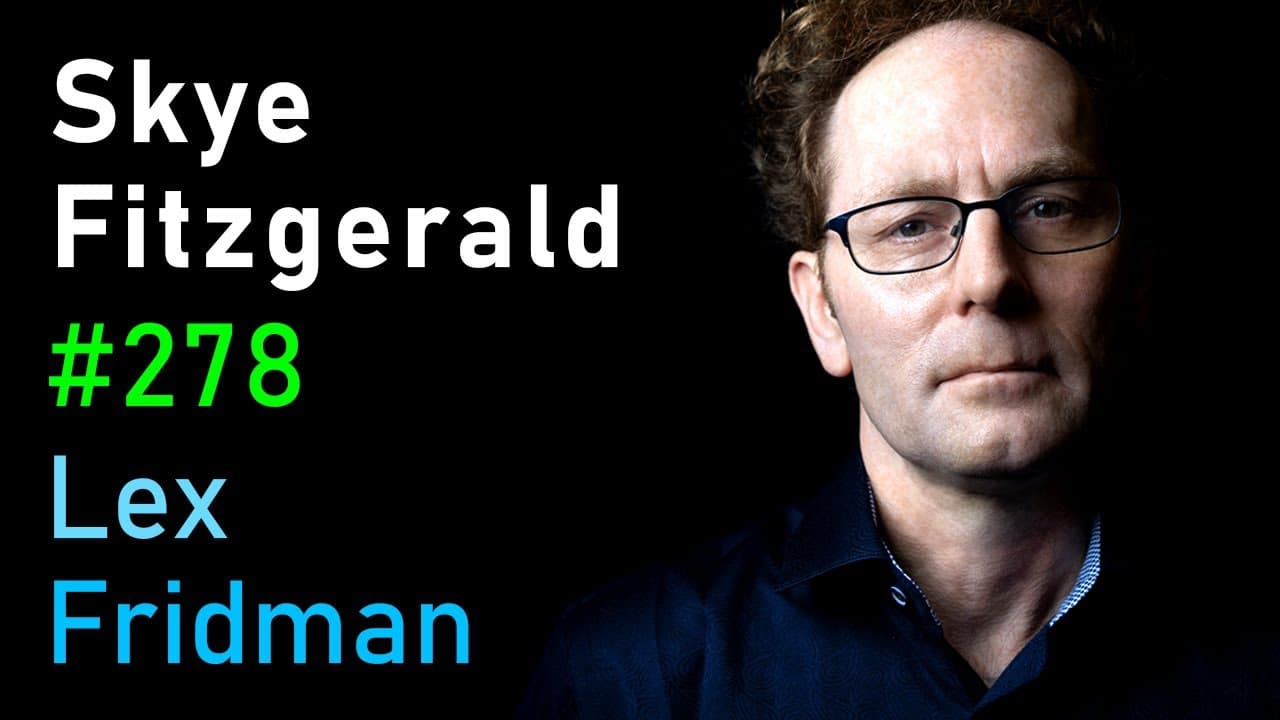
Skye Fitzgerald: Hunger, War, and Human Suffering | Lex Fridman Podcast #278
TL;DR
Starvation is increasingly used as a weapon in conflicts like Yemen, Ukraine, and Ethiopia, driven by political leaders' decisions. Skye Fitzgerald, an Oscar-nominated filmmaker, emphasizes that the means to nourish those affected exist, but accountability and intervention are crucial for resolving this humanitarian crisis.
Transcript
we would come up to these rafts and these boats that were in really dire shape and people would be pushed off and people would jump off and people would fall into the water and um some of them couldn't swim and so we found ourselves in this moment where we had a choice we could film someone drown in front of us or we could put our cameras down and ... Read More
Key Insights
- 🫱 Starvation as a weapon of war continues to be used in countries like Yemen, Ethiopia, Ukraine, and Syria, despite international laws against it.
- 😋 The access to food exists to feed starving populations, highlighting the need for political accountability and intervention to address the issue effectively.
- 🖐️ Filmmakers have a powerful role in raising awareness about humanitarian crises, and their access and approach play crucial roles in telling the stories of those suffering.
- 🥹 Holding leaders accountable for their actions and enacting concrete measures like sanctions can help prevent and mitigate the suffering caused by starvation.
- 🏛️ Building relationships and trust with the individuals and communities affected by hunger is vital in telling their stories accurately and respectfully.
Install to Summarize YouTube Videos and Get Transcripts
Explore YouTube Video Summarizer or Get YouTube Transcript Extractor
Questions & Answers
Q: What is the most disturbing aspect of the high number of people suffering from hunger and famine today?
Fitzgerald highlights that many of those suffering are victims of intentional acts by leaders to starve entire populations, a clear violation of humanitarian laws.
Q: How can we alleviate the suffering caused by starvation?
Fitzgerald emphasizes the need for aggressive humanitarian intervention and holding leaders accountable for their actions to address the suffering caused by starvation.
Q: Why is it important to speak up about the decisions and actions of leaders that lead to starvation?
Fitzgerald notes that leaders who start wars and use starvation as a weapon need to be held accountable for their actions in order to end the suffering and create change.
Q: Can we truly understand the suffering caused by hunger without experiencing it ourselves?
Fitzgerald believes that generating empathy and understanding among those who have never experienced hunger is crucial to mobilizing the global community to solve the issue.
Key Insights:
- Starvation as a weapon of war continues to be used in countries like Yemen, Ethiopia, Ukraine, and Syria, despite international laws against it.
- The access to food exists to feed starving populations, highlighting the need for political accountability and intervention to address the issue effectively.
- Filmmakers have a powerful role in raising awareness about humanitarian crises, and their access and approach play crucial roles in telling the stories of those suffering.
- Holding leaders accountable for their actions and enacting concrete measures like sanctions can help prevent and mitigate the suffering caused by starvation.
- Building relationships and trust with the individuals and communities affected by hunger is vital in telling their stories accurately and respectfully.
- Active consent and transparency are important principles in documentary filmmaking, ensuring collaboration and respect for the subjects involved.
Summary:
In this video, Skye Fitzgerald, a two-time Oscar-nominated documentary filmmaker, discusses his films Hunger Ward, Lifeboat, and 50 Feet from Syria, all of which explore the effects of war and famine in Yemen, Libya, and Syria, respectively. Fitzgerald expresses his deep concern and distress about the millions of people suffering from hunger and famine worldwide, emphasizing how much of this suffering is caused by intentional acts of war and starvation carried out by leaders. He discusses the importance of holding these leaders accountable and the need for both humanitarian and political intervention to address these crises. Fitzgerald shares personal stories and experiences from his filmmaking journey, shedding light on the individuals affected by these conflicts and the hope and inspiration he finds in their resilience and compassion. He also touches on the power of storytelling and the challenges of capturing and portraying such difficult subject matter.
Questions & Answers:
Q: How do you make sense of the millions of people suffering from hunger and famine worldwide?
Fitzgerald finds it deeply disturbing that so many people are suffering from hunger when there is enough food and resources to feed them. He highlights the fact that much of this suffering is caused intentionally by leaders as a weapon of war, which is the most disturbing aspect for him.
Q: How does the use of starvation as a weapon of war continue despite efforts to ban it?
Fitzgerald explains that despite international humanitarian laws, starvation as a weapon of war continues to be used in various conflicts, including Yemen, Ethiopia, and Ukraine. He expresses disgust towards the lack of enforcement by international bodies and nation-states, highlighting the need to hold these leaders accountable.
Q: How does personal experience and empathy impact understanding the suffering of hunger?
Fitzgerald shares that personal experience and empathy are crucial in understanding the impact of hunger and starvation. He emphasizes that until individuals can directly connect with the suffering of hunger and its consequences, it will be challenging to mobilize the global community to address the issue.
Q: How can we help alleviate the suffering of hunger and famine?
Fitzgerald believes that aggressive humanitarian intervention is necessary to provide immediate assistance to those in need. He also emphasizes the importance of political accountability and holding leaders responsible for their actions. By speaking up and raising awareness about the decisions that lead to suffering, individuals can contribute to bringing about change.
Q: What is "Hunger Ward" about and what motivated you to create this documentary?
"Hunger Ward" is a short documentary that aims to illustrate the effects of the conflict in Yemen on civilians, particularly children suffering from malnutrition. Fitzgerald wanted to bring awareness to the conflict in Yemen and the complicity of the United States in it, as well as inspire action to change the political status quo.
Q: Who are the bad actors causing suffering in Yemen, and what is the narrative used to justify the war?
Fitzgerald explains that the Saudi coalition, consisting mainly of Saudi Arabia and the United Arab Emirates with support from the United States, France, and Britain, is primarily responsible for the suffering in Yemen. The Saudi narrative claims that the Houthis, who receive support from Iran, are an illegitimate government. However, Fitzgerald asserts that the conflict is driven by Saudi Arabia and that the reality is different from the narrative presented.
Q: What is the power dynamic and military situation in the Yemen conflict?
Fitzgerald describes the Yemen conflict as asymmetrical, with the Saudi coalition having a significant advantage in terms of military firepower, primarily through airstrikes. The de facto authorities in the north, the Houthi rebel group, do not have an air force but rely on proxies to fight on the ground.
Q: How does filming difficult and emotional moments, such as a child dying of starvation, affect you as a filmmaker and human being?
Fitzgerald acknowledges the immense responsibility and emotional impact of filming such tragic moments. He explains that while he did not enjoy filming "Hunger Ward," he felt a responsibility to do justice to the realities faced by the people of Yemen. Fitzgerald emphasizes the importance of capturing and sharing these stories to raise awareness and motivate action.
Q: How did filming "Hunger Ward" change you as a person and filmmaker?
Fitzgerald explains that every documentary he works on changes him in different ways. "Hunger Ward" reinforced his belief in the capacity for compassion within human beings, citing the example of a ten-year-old girl named Omama who exhibited incredible kindness and compassion despite her own suffering. Fitzgerald finds inspiration in the resilience and actions of individuals like Omama, which motivates him to continue his work.
Q: How do you connect with people despite language barriers and cultural differences when filming?
Fitzgerald believes that there are universals that transcend language and facilitate connections. He aims to capture universal emotions and experiences through visual storytelling, using the vocabulary of cinema. Fitzgerald shares examples of individuals in "Hunger Ward" who formed deep relationships and exhibited compassion without the need for language.
Q: What lessons can be drawn from famines in history, and what needs to be done to prevent them?
Fitzgerald argues that famines, especially those manufactured by authoritarian leaders as weapons of war, do not have to exist. He highlights the need to hold leaders accountable and use the levers of power, such as military might, sanctions, and diplomacy, to prevent and address famines. He mentions missed opportunities, like in Syria, where military intervention could have saved lives.
Q: How can suffering under authoritarian regimes be lessened, and what role does the international community play?
Fitzgerald believes that the international community must prioritize moral paradigms over maintaining relationships with authoritarian regimes. He advocates for concrete individual sanctions and consequences for leaders responsible for suffering. Fitzgerald emphasizes that leaders should set aspirational examples and ring alarm bells for other authoritarian leaders.
Takeaways:
Skye Fitzgerald's conversation highlights the urgent need to address the suffering caused by hunger and famine worldwide. He stresses the responsibility of both humanitarian and political interventions to alleviate suffering and hold leaders accountable. Fitzgerald also emphasizes the power of storytelling and visual language to convey universal emotions and bridge cultural barriers. By sharing stories of resilience and compassion in the face of tragedy, Fitzgerald inspires hope and calls for action to prevent and address the man-made causes of famine and war.
Summary & Key Takeaways
-
Skye Fitzgerald's documentaries focus on the effects of conflict and starvation on civilians in Yemen, Libya, and Syria, aiming to raise awareness and intervene.
-
He highlights the disturbing use of starvation as a weapon of war by leaders and the failure of international bodies to enforce laws against it.
-
Fitzgerald believes that access to food exists to feed starving populations, but political accountability is necessary to address the issue effectively.
Read in Other Languages (beta)
Share This Summary 📚
Summarize YouTube Videos and Get Video Transcripts with 1-Click
Try YouTube Summary with ChatGPT & Claude or YouTube Transcript Generator
Explore More Summaries from Lex Fridman Podcast 📚






Summarize YouTube Videos and Get Video Transcripts with 1-Click
Try YouTube Summary with ChatGPT & Claude or YouTube Transcript Generator