How Jefferson Shaped US Indian Land History?
TL;DR
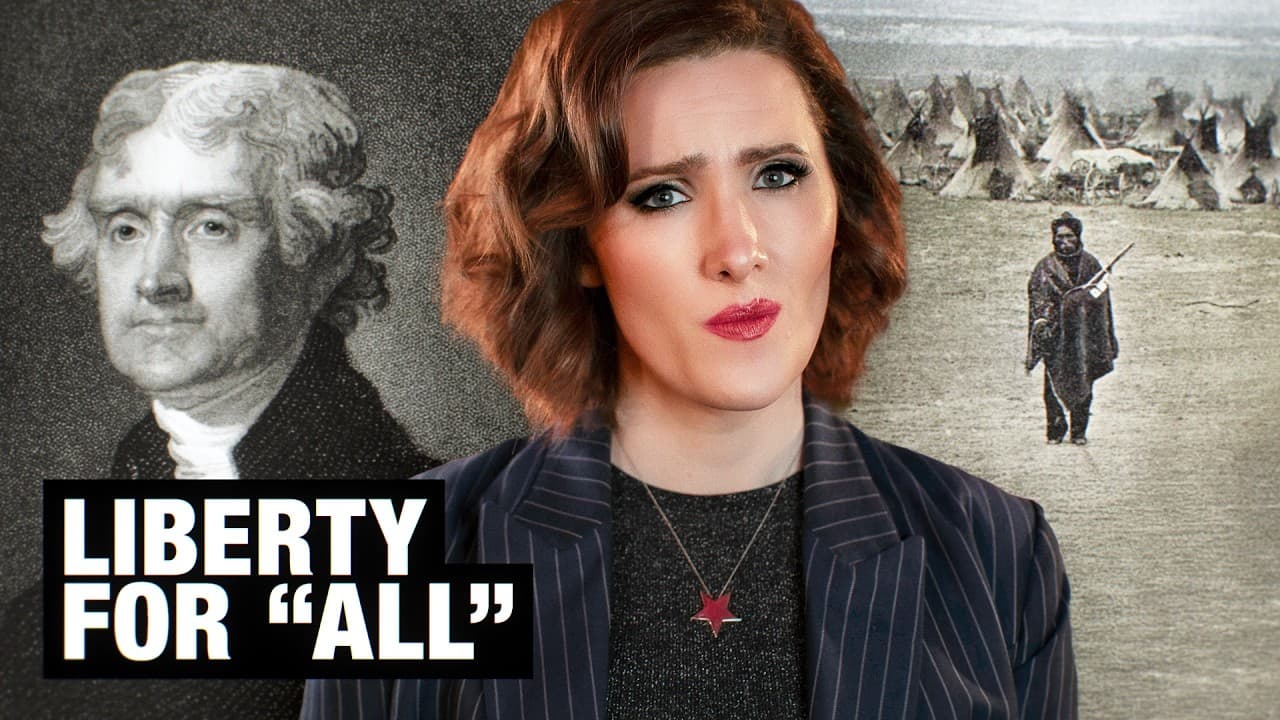
Jefferson influenced early US policy and ideas about Indigenous peoples that helped justify land seizure. The video links his writings, beliefs, and actions to a broader pattern of conquest in American history, while noting both his praise of Indigenous potential and the darker side of removal and desecration.
Transcript
- [Voice of Jonathan Frakes] "In matters of style, swim with the current. In matters of principle, stand like a rock." - Hey everybody! Today's episode's gonna be a little bit different. There's gonna be no fancy costumes or gimmicks. Let's just use our brains. I wanna talk about the founding of the USA, how the land was taken from the American Ind... Read More
Key Insights
- Jefferson drafted the Declaration of Independence and was the third president, making him a pivotal figure in early American policy.
- The host argues the central questions are about why Jefferson spoke and acted as he did and how that shaped the United States today.
- Jefferson engaged with Indian languages and collected vocabularies, showing an academic curiosity that intersected with political aims.
- Buffon claimed North America could not sustain life, a claim Jefferson rebutted by citing American flora, fauna, and the existence of indigenous societies.
- Jefferson believed Indians were equal in mind and body in certain contexts, reflecting a complex view that mingled respect with policy critique.
- He described desecrating an Indian burial mound by taking bones, illustrating a pattern of treating Indigenous sites as resources.
- A recurring theme is that American Indian lives are ongoing and diverse, with modern statistics showing a large Indigenous population and continued cultural presence.
- The narrative connects Jeffersons ideas to a broader pattern of conquest and state powers that can override Indigenous rights under evolving political systems.
- More videos from this channel:
- More from this channel: Philosophy Tube
Install to Summarize YouTube Videos and Get Transcripts
Explore YouTube Video Summarizer or Get YouTube Transcript Extractor
Questions & Answers
Q: A real search query question about the video (e.g. 'How to...', 'What is...', 'Why does...', 'When should...'). Question 1
How did Thomas Jefferson influence the way the United States treated Indigenous lands and peoples, and what contradictions appear in his views and actions? The video explains that Jefferson wrote Notes on the State of Virginia and engaged in collecting Indian vocabularies, showing a scholarly interest that coexisted with and sometimes supported removal policies and land seizure. It also notes his belief in Indian equality in certain contexts, alongside an undercurrent of imperial expansion.
Q: Question 2
What are the three guiding questions the video sets to analyze Jefferson and US history, and why are they important for understanding current American policy toward Indigenous lands? The host separates whether Jefferson was a good man from why he said and did what he did, and finally asks how those ideas explain the modern shape of the United States. This framework helps viewers see the philosophical underpinnings of policy rather than a simple moral judgment.
Q: Question 3
How does the video contrast Jeffersons early scientific curiosity with the harsher realities of land seizure and burial mound desecration? It shows Jefferson collecting artifacts and studying languages while also noting his removal of bones from an Indian burial mound without permission, illustrating a tension between cultural curiosity and disrespect for Indigenous sacred sites.
Q: Question 4
Whatrole does Buffon play in the narrative, and how does Jefferson respond to colonial-era racial stereotypes about Native Americans? The transcript mentions Buffon claiming North America was inferior, while Jefferson defended the vitality of its flora, fauna, and Indigenous peoples, challenging some racist assumptions though within a framework that still allowed for conquest and unequal treatment.
Q: Question 5
What does the video say about Indigenous identity and population in contemporary America, and why is that relevant to the Jefferson era? It cites Bureau of Indian Affairs estimates and census data showing millions identifying as Indigenous or mixed heritage, underscoring that Indigenous presence persists despite historical dispossession and policy shifts.
Q: Question 6
How does the video frame the Trump administration as part of a longer pattern of executive overreach, and why is this connected to Indigenous history? The video argues that presidential powers to imprison, deport, and take military action echo earlier patterns of disregard for rights and sovereignty experienced by American Indians, illustrating a historical continuity of executive power in policy.
Q: Question 7
What is the central historical question about how the United States became the way it is today, according to the video? It states that the early history of the US and Jeffersons role are crucial to understanding the modern state, not just superficially similar but in a direct, structural sense that informs current governance and Indigenous policy.
Q: Question 8
How does the video relate Jeffersons ideas to the wider field of Indigenous scholarship and advocacy? It lists several scholars and works in the bibliography, positioning Jefferson within a broader conversation about Indigenous history, law, and policy and highlighting how later analyses reassess his legacy in light of land dispossession and cultural change.
Summary & Key Takeaways
-
Jefferson shaped how early Americans viewed Indians through his writings and notes, influencing policy directions that facilitated land appropriation. The episode contrasts his nuanced views with the reality of removal and cultural erasure that followed. It also shows how his personal curiosity about languages and tribes intersected with a larger colonial framework.
-
The discussion ties Jeffersons philosophical positions to the United States being shaped by conquest and control over Indigenous lands, highlighting the tension between admiration for Indigenous wisdom and ongoing dispossession.
-
The episode emphasizes the continuing presence of American Indians in the US today and frames Jeffersons era as foundational to current policy, while acknowledging the complexities of historical judgment and the limits of evaluating him as simply good or bad.
Read in Other Languages (beta)
Share This Summary 📚
Summarize YouTube Videos and Get Video Transcripts with 1-Click
Try YouTube Summary with ChatGPT & Claude or YouTube Transcript Generator
Explore More Summaries from Philosophy Tube 📚


Summarize YouTube Videos and Get Video Transcripts with 1-Click
Try YouTube Summary with ChatGPT & Claude or YouTube Transcript Generator