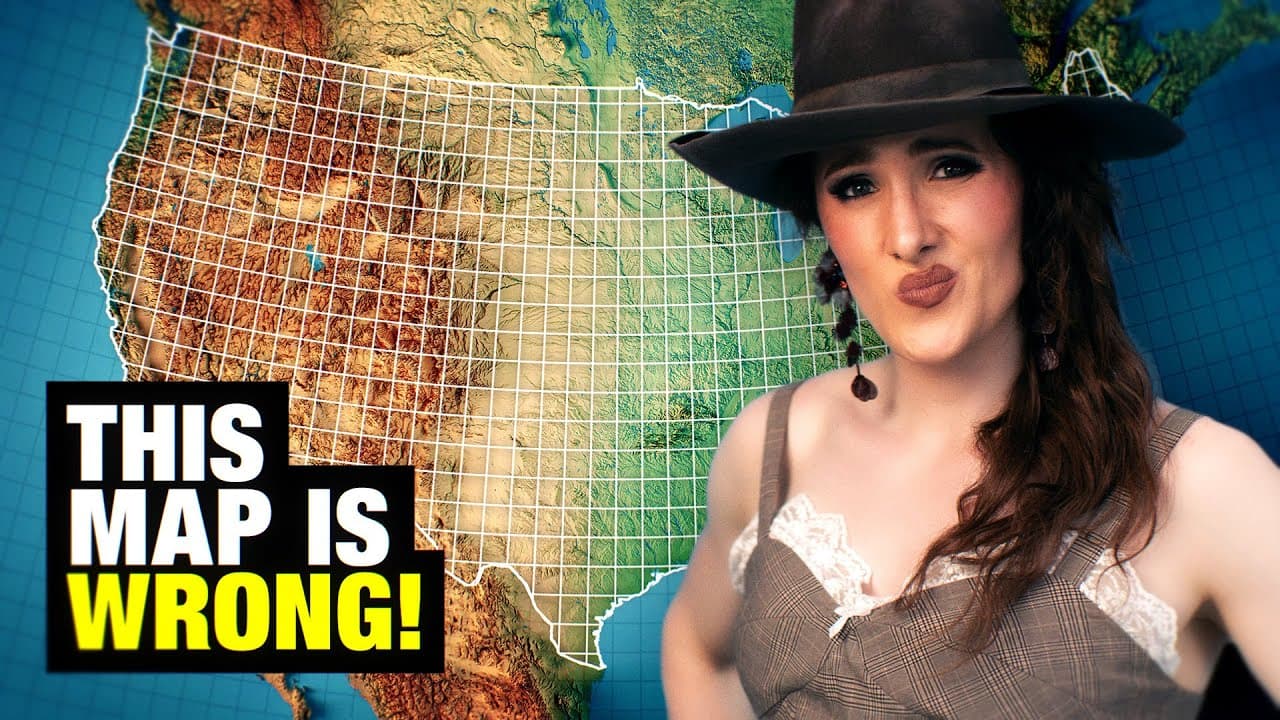
Why did Jefferson push a US land grid system?
TL;DR
The grid was a philosophy driven plan rather than a practical map of reality, and its flaws are highlighted by tracing ideas from Aristotle and Descartes to Newton. The video exposes bias in sources, questions the cost and danger of surveying across a continent, and shows how a well meaning project can produce misinformation in video essays.
Transcript
- Check out these satellite images of the American countryside. As you can see, it's divided into squares. This is an odd thing that not many countries do. The story of how it came to happen is really interesting and says a lot about the USA so I decided to make a video essay about it. As research, I read this book, "Liberty's Grid" by Amir Alexand... Read More
Key Insights
- The grid originated from a philosophical motive rather than simple practicality.
- The surveying effort would require extensive labor, resources, and would involve confronting natural and human obstacles.
- Geography and science shifts, from Aristotle through Newton, influenced how people thought about space and physical existence.
- Descartes argued for infinite space and matter occupying space, challenging earlier celestial models.
- Newton presented gravity as a universal force acting across space, replacing vortex concepts.
- The video connects historical philosophy to modern media practices by examining biases in source material.
- Gridding the land could slow settlement because of complexity and cost, contrary to popular assumptions.
- The critique includes the idea that what seems efficient in theory can be impractical in real expansion efforts.
- More videos from this channel:
- More from this channel: Philosophy Tube
Install to Summarize YouTube Videos and Get Transcripts
Explore YouTube Video Summarizer or Get YouTube Transcript Extractor
Questions & Answers
Q: How is the grid described as a concept in the video?
The grid is presented as a deliberate philosophical project rather than a purely practical land division. The narrator discusses how Thomas Jefferson and his supporters framed the grid through a specific set of beliefs about order, universality, and the intent to shape the American landscape according to an overarching plan rather than simply mapping it.
Q: What does the video say about surveying challenges in building a grid?
Surveying the land to create a uniform grid would require teams to travel across difficult terrain, clear obstacles, and carry specialized equipment. The narration emphasizes the logistical burden, the need for interpreters and guides, and the dangers and costs involved, highlighting that such an enterprise would be lengthy and risky.
Q: How does the video connect philosophy to the grid idea?
The video traces the grid idea to a lineage of philosophical thought from Aristotle to Descartes to Newton. It explains how ideas about space, matter, and the nature of the universe influenced the belief that land could be organized in a universal, compass aligned grid, reflecting an attempt to impose order on nature.
Q: What role does Descartes play in the video’s narrative?
Descartes is shown as a shift in thinking about space. He argued for infinite space without absolute up or down and introduced the extents of matter taking up space. This contrasted with earlier vortex ideas and influenced later Newtonian thought about space and physical existence, which in turn fed the grid concept.
Q: Why does the narrator criticize the practical value of the grid?
The narrator points out that the grid would slow settlement, be costly, and require resources and labor that would likely cause harm. The argument is that even if the grid aimed to simplify land division, the actual travel, logistics, and conflicts with indigenous lands would undermine any efficiency gains.
Q: What bias concern is raised about historical sources?
The video raises concerns that relying on a single book or author, such as Liberty’s Grid, can bias interpretation. It emphasizes the importance of testing claims, examining competing evidence, and acknowledging bias when constructing narratives about historical events and planning decisions.
Q: How does the video describe the role of science in the grid debate?
Science is presented as a changing field where models of the universe shift over time. The video shows how historical scientific ideas about space and matter influenced planning concepts, while also noting that later revisions and new evidence can overturn earlier models, complicating claims about why the grid was pursued.
Q: What is the featured larger message about video essays in the transcript?
The transcript uses the grid argument to illustrate how bias can creep into video essays. It argues for careful sourcing, transparent methodology, and willingness to revise conclusions when new information challenges prior assumptions, encouraging creators to avoid presenting outdated or biased interpretations as definitive truth.
Summary & Key Takeaways
-
The video explains that the grid was proposed to reflect a coherent philosophical order rather than just land surveying practicality, and this mindset shaped planning decisions.
-
It argues that early surveying would require massive resources, risks, and including tribes and difficult landscapes, making the project expensive and potentially harmful.
-
It exposes how reliance on a single source can bias an argument in video essays, and why critical revision matters when testing historical claims.
Read in Other Languages (beta)
Share This Summary 📚
Summarize YouTube Videos and Get Video Transcripts with 1-Click
Try YouTube Summary with ChatGPT & Claude or YouTube Transcript Generator
Explore More Summaries from Philosophy Tube 📚



Summarize YouTube Videos and Get Video Transcripts with 1-Click
Try YouTube Summary with ChatGPT & Claude or YouTube Transcript Generator