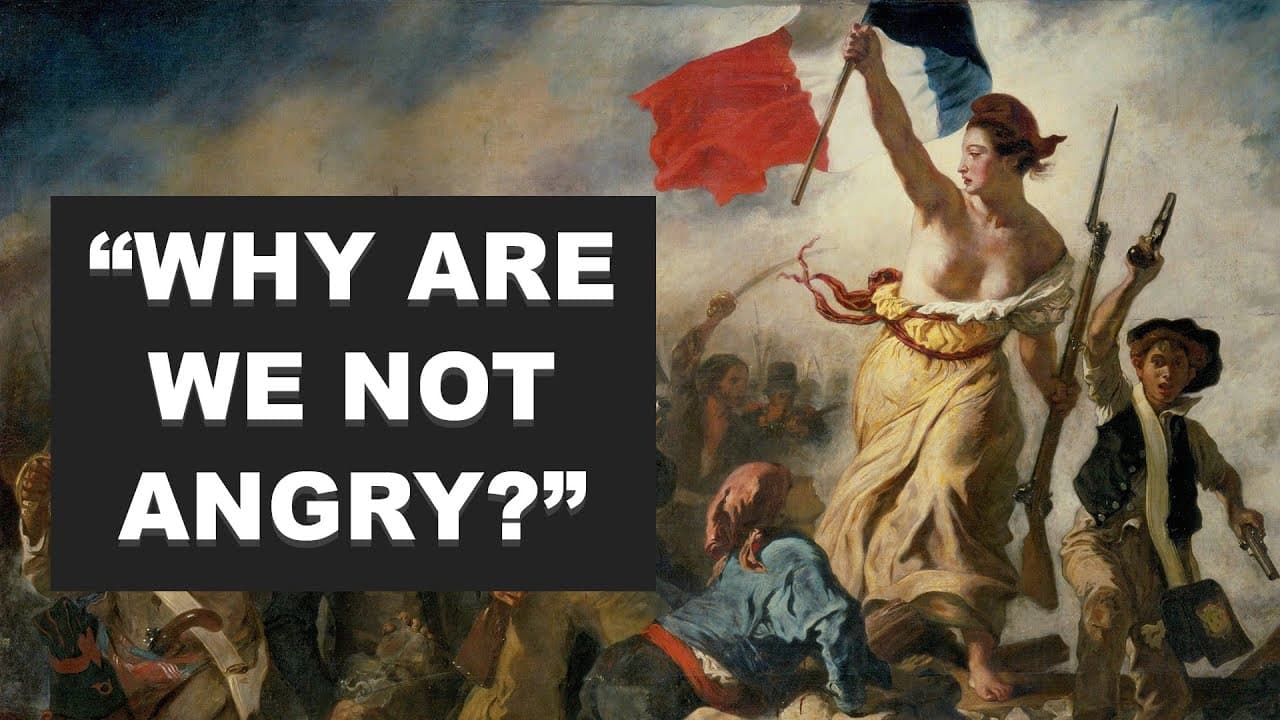
"Why are People Not Angry?" Martin Wolf on 2008 and The Crisis of Democratic Capitalism (part 2)
TL;DR
Superpowers navigate military tensions and economic aspirations amidst global uncertainty.
Transcript
foreign one of the books that came out at the end of last year Abyss by Max Hastings about the Cuban Missile Crisis I think is very compelling in saying how dangerous it is to be in a world where two superpowers that don't understand each other or nervous about each other could easily move towards nuclear war partly because of pressure from the two... Read More
Key Insights
- 😀 Superpower relations face risks of misinterpretation and military escalation.
- 🍉 Economic integration comes with challenges of unresolved issues and unequal terms.
- ❓ Populist movements stem from economic disparities and disillusionment with elites.
- ❓ Democratic stability hinges on restoring trust, citizenship, and civic engagement.
- ❓ Financial crises can breed political upheaval and demand transformative policies.
- 💠 Innovation, technological advancements, and energy reforms can shape future economies.
- 🥳 Political parties need bold programs and coherent policies to address societal challenges.
Install to Summarize YouTube Videos and Get Transcripts
Explore YouTube Video Summarizer or Get YouTube Transcript Extractor
Questions & Answers
Q: How did the Cuban Missile Crisis impact global perceptions of military tensions?
The crisis underscored the risks of escalating superpower conflicts and the need for effective communication to prevent nuclear war.
Q: What were the economic implications of integrating China into the global trading system?
While beneficial, China's entry lacked clear graduation criteria, sparking concerns over unresolved issues in trade relations.
Q: How did the financial crisis contribute to the rise of populism?
Economic disruptions and elite failures post-crisis fueled anti-elite sentiments, shaping the surge in populist movements worldwide.
Q: How can societies restore citizenship and trust in democratic systems?
Enhancing civic engagement, fostering shared values, and reimagining national service may help rebuild a sense of citizenship and belonging.
Summary & Key Takeaways
-
The Cuban Missile Crisis highlighted the dangers of superpower miscommunications and military pressures.
-
Economic concerns led to welcoming China to the global trade table, but with unresolved issues.
-
Rise of populism post-financial crisis signals discontent with elite governance and economic stagnation.
Read in Other Languages (beta)
Share This Summary 📚
Summarize YouTube Videos and Get Video Transcripts with 1-Click
Try YouTube Summary with ChatGPT & Claude or YouTube Transcript Generator
Explore More Summaries from How To Academy Mindset 📚




Summarize YouTube Videos and Get Video Transcripts with 1-Click
Try YouTube Summary with ChatGPT & Claude or YouTube Transcript Generator