How to Handle Sales Objections With a Full Loop

TL;DR
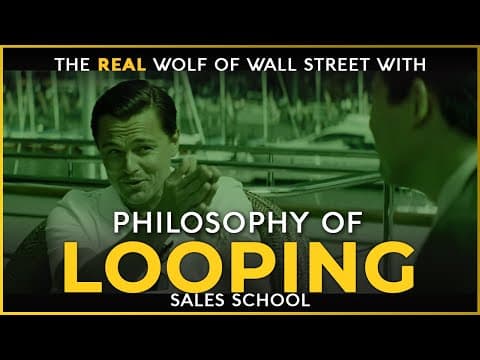
Handle an initial sales objection by acknowledging it, checking the prospect’s certainty, and then rebuilding confidence in the idea, yourself, and your company. Match the prospect’s current level of certainty before leading them higher through logic and tonality, then return to the close with a clear recommendation and directly ask for the order.
Transcript
i'm jordan belfort and this is sales school all right so if you're a business owner do not let quickbooks and spreadsheets slow you down anymore now it's time to upgrade to netsuite by oracle the world's number one cloud-based business system network gives you the visibility and control over your financials inventory and more schedule your free pro... Read More
Key Insights
- A full sales loop starts when a prospect raises a common objection. The salesperson acknowledges the concern, preserves rapport, and redirects the conversation toward whether the underlying product, program, process, or idea makes sense before attempting to resolve the deeper uncertainty.
- The three areas of certainty are the offer, the salesperson, and the company. An effective loop revisits all three because enthusiasm for the product alone may not produce a purchase when the prospect lacks trust in the representative or the organization.
- The prospect’s wording reveals an approximate level of certainty. A response such as "pretty good" indicates less conviction than an intensely positive reaction, allowing the salesperson to identify where more logic, explanation, and emotional confidence are needed.
- Mirroring means entering the prospect’s current emotional world before leading them toward greater certainty. The salesperson initially reflects the prospect’s measured language, then gradually increases confidence and positivity while delivering a prepared follow-up presentation.
- The follow-up pattern strengthens the logical case by filling gaps left during the initial presentation. Belfort compares this process to completing a house after its foundation, frame, walls, roof, and paint are already in place by adding the essential internal systems.
- A trust reframe can turn "let me think about it" into recognition that the prospect likes the offer but does not yet know the salesperson. Asking whether an established record of successful transactions would change the decision helps isolate personal trust as the concern.
- A personal credibility pattern should explain the salesperson’s role, credentials, values, client commitment, and long-term support. It is followed by a company pattern covering relevant benefits, reputation, customer service, and reasons the organization deserves the prospect’s confidence.
- Every loop ends with a direct request for the order. The wording and qualifying questions should be adapted to the product, but the salesperson should still address all three areas of certainty and recommend a clear next step with confident, controlled tonality.
Install to Summarize YouTube Videos and Get Transcripts
Explore YouTube Video Summarizer or Get YouTube Transcript Extractor
Questions & Answers
Q: How do you handle the first objection in a sales conversation?
Acknowledge the objection without arguing, using language that shows you heard and understood the prospect. Then redirect with a question about whether the idea, program, process, or product makes sense to them. Their response reveals how certain they currently feel, giving you a basis for rebuilding confidence while preserving rapport and continuing the conversation.
Q: What are the three areas of certainty in a sales loop?
The three areas are certainty in the offer, certainty in the salesperson, and certainty in the company. The salesperson first strengthens the prospect’s logical and emotional belief in the product or idea. Next, personal credibility and trust are established. Finally, the company’s benefits, reputation, service, and relevant strengths are presented before another direct close.
Q: How can a salesperson measure a prospect’s certainty?
A salesperson can listen closely to how strongly the prospect describes the offer. A mild response such as "it sounds all right" signals less certainty than an enthusiastic endorsement. The point is not merely to obtain agreement, but to judge the strength of that agreement and determine how much additional explanation and emotional reinforcement the prospect needs.
Q: How does mirroring help overcome a sales objection?
Mirroring helps the salesperson remain aligned with the prospect instead of suddenly sounding disconnected or overly forceful. The salesperson reflects the prospect’s present level of confidence, then begins a prepared follow-up pattern. As the explanation progresses, the salesperson gradually increases positive and certain tonality, leading the prospect from their current emotional position toward stronger conviction.
Q: What should a follow-up sales pattern include?
A follow-up pattern should fill the missing pieces in the original logical case. It can add relevant benefits, explanations, and supporting details that make the offer easier to understand and value. The salesperson delivers it with increasingly confident tonality, then ends with a checking question such as whether the prospect now sees the point or follows the reasoning.
Q: How can a salesperson reframe a prospect’s request to think about it?
The salesperson can ask whether the prospect would still hesitate if they had worked together successfully for several years and previous recommendations had consistently worked out. Agreement reframes the situation: the prospect may like the offer but lack a personal track record with the salesperson. This creates a natural opening to establish credentials, values, reliability, and commitment.
Q: How should a salesperson build trust in themselves and their company?
To build personal trust, the salesperson should reintroduce their role, credentials, values, work ethic, client support, and intention to maintain a long-term relationship. They should then present the company’s relevant strengths, including its benefits, reputation, customer service, and customer satisfaction where applicable. Both patterns should be tailored to facts that are genuinely true for the situation.
Q: How should the first full sales loop end?
The loop should end with a smooth transition from rebuilding certainty into a specific recommendation to begin. The salesperson restates the practical starting point, uses controlled closing tonality, directly asks for the order, and then stops talking. The language should not be vague or evasive because the salesperson is expected to recommend what the prospect should do next.
Summary & Key Takeaways
-
A full sales loop begins after the prospect raises an objection such as needing time to think, wanting a callback, already using a competitor, or facing poor timing. The salesperson first acknowledges the concern without losing rapport, then asks whether the underlying idea, program, process, or product still makes sense to the prospect.
-
The salesperson identifies the prospect’s current certainty and mirrors it before presenting a prepared follow-up pattern. That pattern fills gaps in the original logical case while increasingly confident tonality builds emotional certainty. A confirmation question, such as whether the prospect now follows the reasoning, checks whether confidence in the offer has risen.
-
After rebuilding belief in the offer, the salesperson addresses trust in the individual and the company. Personal credentials, values, service, and commitment strengthen confidence in the salesperson, while company reputation, benefits, and customer service strengthen institutional trust. The loop ends with a smooth transition into a direct request for the order.
Read in Other Languages (beta)
Share This Summary 📚
Summarize YouTube Videos and Get Video Transcripts with 1-Click
Try YouTube Summary with ChatGPT & Claude or YouTube Transcript Generator
Explore More Summaries from The Wolf of Wall Street 📚




Summarize YouTube Videos and Get Video Transcripts with 1-Click
Try YouTube Summary with ChatGPT & Claude or YouTube Transcript Generator