How to Turn Sales Objections Into Confident Yeses

TL;DR
Turn a hesitant prospect toward yes by supplying new, relevant information that increases certainty about the product, deal, and support. Use looping only for common objections, not firm refusals, and return to presentation mode with a carefully prepared language pattern whose words, tonality, and body language make the offer clearer and more valuable.
Transcript
i'm jordan belfort and this is sales school all right short message from my number one sponsor netsuite here's the deal if you're a business owner you don't need them that's me to tell you it's tough to run a business because it is right we all know that don't let quickbooks and spreadsheets slow you down anymore now is the time to upgrade to netsu... Read More
Key Insights
- Looping is a method for addressing common sales objections after the salesperson first asks for the order. It focuses on prospects who express hesitation or uncertainty, rather than customers who immediately agree or people who give a firm and unambiguous refusal.
- A firm no is not the intended target of looping because the method is not designed to convert every rejection into agreement. Salespeople should avoid wasting time on people who are genuinely uninterested and concentrate on prospects whose objections indicate unresolved uncertainty.
- A common objection can function as a screen for uncertainty rather than a final decision. Moving the prospect toward agreement requires increasing certainty through additional information, logical reasoning, vocal tonality, body language, and evidence that makes the offer more understandable and attractive.
- The back half of the sale exists to move a hesitant prospect from an objection toward a decision. The salesperson should reason backward from a successful close and identify what the prospect would need to hear, see, or verify before becoming comfortable enough to proceed.
- New information is the central mechanism of a productive loop. Repeating pressure-based rebuttals is less useful than presenting fresh reasons, documents, websites, guarantees, support details, or an airtight logical case that answers the uncertainty behind the prospect's stated objection.
- The first presentation should frame the offer without using every persuasive point. Preserving strong material gives the salesperson meaningful information for the first loop, helping the prospect fill in missing details and recognize why the product or deal has greater value.
- The first loop should end with improved understanding, even if it does not immediately secure the purchase. A response such as recognizing that the offer now makes sense or appears more valuable shows that the new language pattern has raised the prospect's certainty.
- Strategic preparation is essential to strong sales language patterns. Belfort recommends spending 15 minutes reviewing the first follow-up pattern and refining its words, tonality, and body language so the delivery is deliberate, persuasive, and ready before the next sales conversation.
Install to Summarize YouTube Videos and Get Transcripts
Explore YouTube Video Summarizer or Get YouTube Transcript Extractor
Questions & Answers
Q: What is looping in a sales conversation?
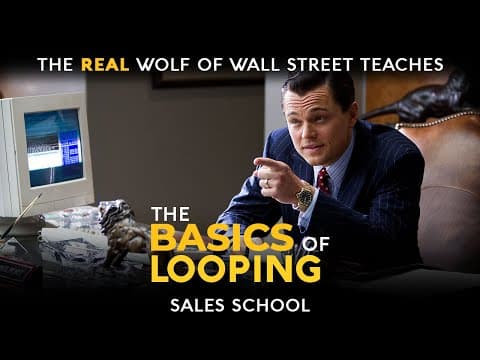
Looping is a process used after a salesperson asks for the order and receives a common objection instead of an immediate yes or a firm no. The salesperson returns to presentation mode, offers new and relevant information, and raises the prospect's certainty through logic, words, tonality, body language, supporting materials, or explanations of value and support.
Q: When should a salesperson use looping?
A salesperson should use looping when a prospect raises a common objection that suggests uncertainty, such as wanting to think about the offer, call back later, wait for a better time, address limited liquidity, or consult a partner. The approach is meant for hesitant prospects who may reconsider after receiving clearer and more persuasive information.
Q: When should a salesperson avoid looping?
A salesperson should avoid looping when the prospect has already agreed to buy or has delivered a firm refusal. A buyer should move into a separate process focused on becoming a long-term client, buying again, and providing referrals. Someone who is genuinely uninterested should not consume time because looping is not designed to turn hard refusals into agreement.
Q: Why does new information help overcome sales objections?
New information can resolve the uncertainty hidden behind an objection. A prospect may change direction after hearing a stronger logical case, seeing relevant documents or websites, understanding why the deal offers value, or learning about support and a money-back guarantee. These details fill gaps in the original presentation and make the decision feel clearer and more certain.
Q: How should the first sales presentation support looping?
The first presentation should establish a clear frame without front-loading every strong argument. When the prospect later raises an objection, the salesperson still has valuable material available for a follow-up language pattern. That reserved information can clarify the offer, fill missing details, and create the reaction that the product now makes more sense or appears more valuable.
Q: What result should the first loop produce?
The first loop should leave the prospect with greater understanding and certainty, even if it does not immediately produce a purchase. After hearing the follow-up pattern, the prospect should be able to recognize why the offer makes more sense or carries more value. The salesperson can test this progress by asking whether the explanation makes sense and whether the prospect likes the idea.
Q: Why are standard objection rebuttals not enough?
Standard rebuttals that pressure prospects not to think, warn that they may forget to call back, or criticize delay do not address the main reason a hesitant person changes direction. The stronger approach is to provide something new: a logical case, useful evidence, clearer value, support details, or another piece of information that directly increases certainty.
Q: How can a salesperson improve a looping language pattern?
A salesperson can improve the first follow-up pattern by spending 15 minutes reviewing whether it represents the best possible presentation. Every word, vocal tone, and element of body language should support the intended message. Strategic preparation matters because salespeople who have not built their patterns in advance may achieve some success but fail to deliver consistently strong follow-up presentations.
Summary & Key Takeaways
-
Looping begins after the first request for the order produces a common objection such as needing time, lacking liquidity, or consulting a partner. The technique is intended for uncertain prospects, while buyers move into client development and people giving a firm refusal should not consume further selling time.
-
The salesperson returns to presentation mode and introduces information that was deliberately reserved rather than front-loaded. Strong logic, supporting documents, websites, guarantees, or explanations of assistance can fill knowledge gaps and increase certainty until the prospect better understands the offer's value, even if the purchase is not yet complete.
-
Effective looping depends on strategic preparation because certainty can fade quickly. The first follow-up pattern should contain some of the salesperson's strongest material and finish by checking whether the idea now makes sense. Belfort recommends spending 15 minutes reviewing and improving every word, tone, and element of body language.
Read in Other Languages (beta)
Share This Summary 📚
Summarize YouTube Videos and Get Video Transcripts with 1-Click
Try YouTube Summary with ChatGPT & Claude or YouTube Transcript Generator
Explore More Summaries from The Wolf of Wall Street 📚




Summarize YouTube Videos and Get Video Transcripts with 1-Click
Try YouTube Summary with ChatGPT & Claude or YouTube Transcript Generator