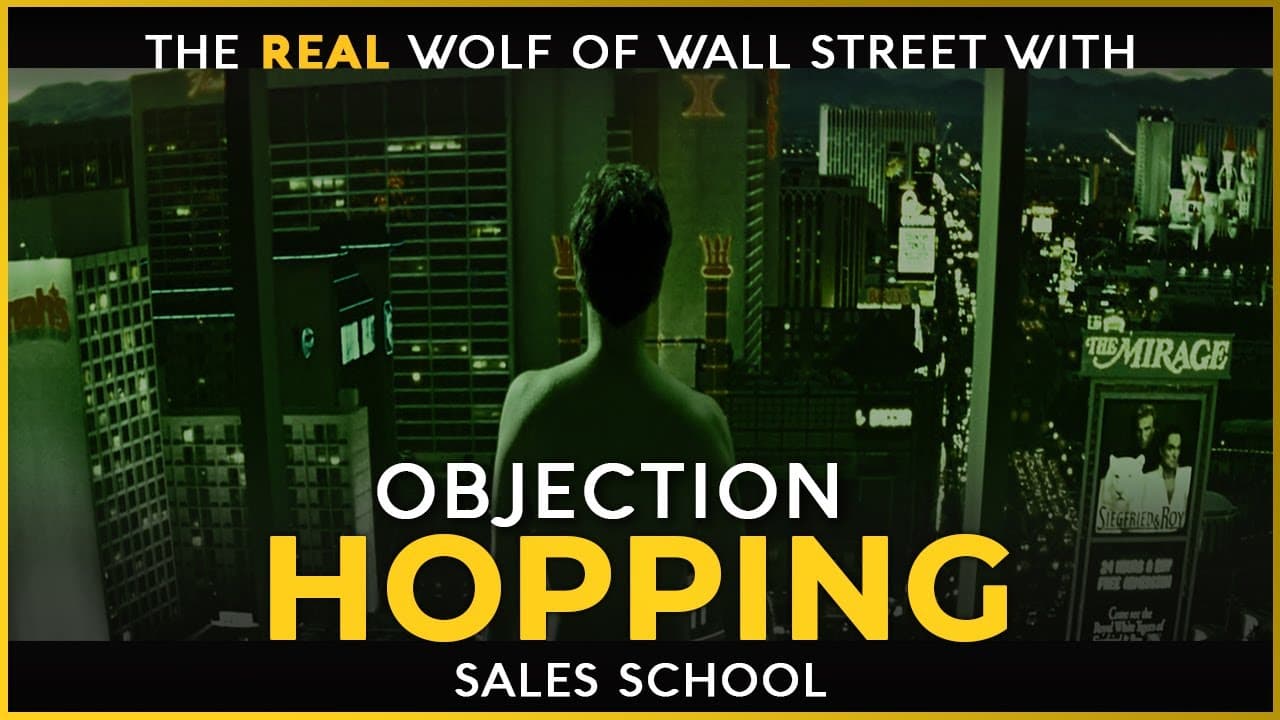
How to Stop Prospects From Hopping Objections
TL;DR
Objection hopping usually signals insufficient certainty rather than a series of unrelated concerns. Address each objection, then return to presentation mode to strengthen the prospect’s logical and emotional certainty about the product, salesperson, and company before asking for the order again. Prospects with higher action thresholds generally require more loops.
Transcript
i'm jordan belfort and this is sales school a loop is a response to someone saying let me think about it let me call you back it's a bad time of year right santa claus the tooth fairy the whole thing right so remember this the the idea is this phenomenon called objection hopping so what happens is when you answer an objection right in in the loopin... Read More
Key Insights
- Objection hopping is the movement from one stated concern to another after each concern is addressed. A prospect might first request time to think, then mention speaking with a spouse, and finally ask for a later callback.
- Changing objections are often smoke screens for insufficient certainty. The prospect may lack enough confidence in the product, the salesperson, the company, or all three, so resolving only the stated concern does not create a purchase decision.
- The action threshold is the level of certainty a prospect requires before buying. It reflects accumulated beliefs about taking action, trusting people, making quick decisions, conducting research, and whether salespeople are likely to be trustworthy.
- A high action threshold requires a correspondingly high level of collective certainty. The lesson’s example states that a prospect with a threshold of nine would need certainty above that level, such as 9.1, before acting.
- The first loop begins by deflecting the objection rather than confronting it directly. When a prospect says the offer sounds good but requires thought, the salesperson focuses first on whether the idea makes sense and whether the prospect likes it.
- Product certainty comes before trust in the salesperson or company. A prospect who trusts the seller but dislikes the product still has no reason to buy, so the initial loop first reinforces the product’s logical and emotional value.
- A complete loop returns to presentation mode before another close. The salesperson strengthens the logical case, sells personal credibility, resells the company, adds emotional certainty through future pacing, and only then asks for the order again.
- Later loops work on both sides of the decision barrier. They raise certainty by reselling the product, salesperson, and company, while patterns aimed at buying beliefs can lower the action threshold until certainty becomes strong enough to support action.
Install to Summarize YouTube Videos and Get Transcripts
Explore YouTube Video Summarizer or Get YouTube Transcript Extractor
Questions & Answers
Q: What is objection hopping in sales?
Objection hopping occurs when a prospect replaces one objection with another after the salesperson responds. A request to think may become a need to consult a spouse, followed by a request for a later callback. The lesson treats this sequence as evidence that the objections are often smoke screens for insufficient certainty rather than separate underlying problems.
Q: Why do prospects move from one objection to another?
Prospects move between objections because answering the surface concern may not resolve the underlying lack of certainty. They may remain unconvinced about the product, the salesperson, the company, or all three. If their certainty still falls below the level required for action, they produce another reason to delay instead of proceeding with the purchase.
Q: What is an action threshold in sales?
An action threshold is the amount of certainty a person needs before taking buying action. It comes from beliefs about trusting people, dealing with salespeople, making quick decisions, and needing research. A skeptical prospect has a higher threshold, while someone who generally feels comfortable acting and trusting others has a lower threshold.
Q: How does a high action threshold affect a sales conversation?
A high action threshold means the prospect needs greater collective certainty before buying. Even a reasonably persuasive initial presentation may be insufficient if the prospect strongly distrusts salespeople or prefers extensive research. The salesperson must generally move farther through the process, use more loops, strengthen certainty across all three areas, and potentially lower the threshold itself.
Q: How should the first sales loop handle an objection?
The first loop should begin with deflection when the prospect gives a compound response such as saying the offer sounds good but requires thought. Instead of immediately arguing against the delay, the salesperson asks whether the idea makes sense and whether the prospect likes it. This brings the conversation back to building product certainty before another close.
Q: What should happen between answering an objection and closing?
The salesperson should return to presentation mode rather than moving directly from a rebuttal to another request for the order. That middle section strengthens the airtight logical case, reinforces the salesperson’s credibility, resells the company, and adds emotional certainty. This work addresses the underlying uncertainty that the stated objection may merely be concealing.
Q: How does future pacing increase emotional certainty?
Future pacing asks prospects to imagine how they will feel after receiving the desired result. Examples in the lesson include enjoying a vacation rental, driving a car with the wind in their hair, or feeling reassured that an insurance policy will protect their children. These imagined outcomes help make the offer emotionally compelling, not merely logical.
Q: When should a salesperson ask for the order again?
A salesperson should ask again after using the objection as an opportunity to rebuild certainty. The loop should address or deflect the concern, strengthen the case for the product, reinforce trust in the salesperson and company, and add emotion. If certainty rises above the prospect’s action threshold, the prospect can buy. Otherwise, another objection may appear.
Summary & Key Takeaways
-
Objection hopping occurs when a prospect moves from needing time to think, to consulting a spouse, to requesting a later call. These changing objections are often smoke screens for insufficient certainty about the product, the salesperson, the company, or some combination of all three areas.
-
A prospect’s action threshold reflects buying beliefs about trust, research, quick decisions, and salespeople. Someone with a high threshold needs exceptionally strong collective certainty before acting. Someone with a lower threshold may buy with less certainty because their existing beliefs do not resist action as strongly.
-
The looping process uses objections as opportunities to resume the presentation. The salesperson deflects or answers the stated concern, strengthens the logical case, builds personal and company trust, creates emotional certainty through future pacing, and asks for the order again. Later loops can also lower the action threshold.
Read in Other Languages (beta)
Share This Summary 📚
Summarize YouTube Videos and Get Video Transcripts with 1-Click
Try YouTube Summary with ChatGPT & Claude or YouTube Transcript Generator
Explore More Summaries from The Wolf of Wall Street 📚



Summarize YouTube Videos and Get Video Transcripts with 1-Click
Try YouTube Summary with ChatGPT & Claude or YouTube Transcript Generator