2019 College Fed Challenge: What Monetary Policy Did Pace University Recommend?
TL;DR
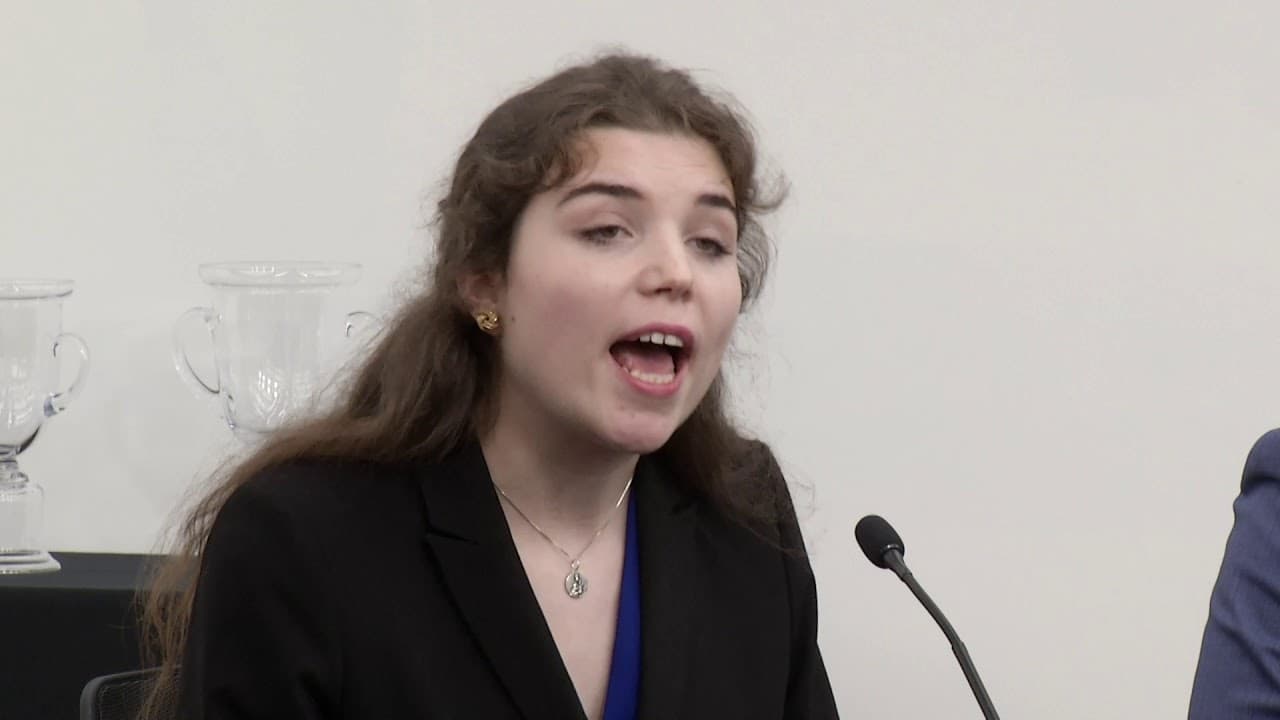
Pace University recommends maintaining the current interest-rate range while adding a standing repo facility and temporary price-level targeting. The team’s 2019 analysis weighs 2% GDP growth and 1.3% headline PCE inflation against a strong labor market averaging 167,000 new jobs per month. Read on to understand the evidence, risks, and policy reasoning behind its recommendation.
Transcript
Transcript of Pace University's College Fed Challenge Finals Presentation November 27, 2019 JOSEPH DRENNAN: Hi, I'm Joseph Drennan. MARISSA KLEINBAUER: My name is Marissa Kleinbauer. SCARLETT BEKUS: I'm Scarlett Bekus. DYLAN SEALS: I'm Dylan Seals. SEAN FREDA: I'm Sean Freda. ANTULIO BOMFIM: Good morning and welcome. I'm Antulio Bomfim. I'm a Senio... Read More
Key Insights
- 🐢 GDP growth has slowed due to trade policy uncertainty and declining nonresidential fixed investment.
- 💪 Consumption remains strong, supported by household income and consumer sentiment.
- 😘 The labor market is robust, with strong job growth and low unemployment, but wages have not translated into higher inflation.
- 🧑🏭 Inflation is below the 2% target but may be influenced by factors such as increased price discovery and globalization.
- 💗 Financial stability is a concern due to high asset valuations and growing business debt.
Install to Summarize YouTube Videos and Get Transcripts
Explore YouTube Video Summarizer or Get YouTube Transcript Extractor
Questions & Answers
Q: What monetary policy did Pace University recommend in the 2019 College Fed Challenge?
The team recommended maintaining the current interest-rate range while implementing a standing repo facility and temporary price-level targeting. It also proposed communicating a commitment to average 2% inflation over a specified period.
Q: Why did the team expect U.S. GDP growth to slow?
GDP growth had fallen to 2% after robust growth in 2018 and was converging toward potential GDP growth of 1.8% per year. The team identified trade-policy uncertainty, declining nonresidential fixed investment, and slowing global growth as major headwinds.
Q: How was trade-policy uncertainty affecting business investment?
The team said trade-policy uncertainty had contributed to weakness in investment. New orders for nondefense capital goods excluding aircraft had declined 0.8% from the prior year, suggesting weaker future investment demand.
Q: What was supporting consumer spending and housing investment?
Consumption remained consistently strong and accounted for most recent growth, supported by household income, wealth, and consumer confidence. Housing investment benefited from three previous rate cuts, while the 30-year fixed mortgage rate fell to 3.7% from around 5% in 2018.
Q: How strong was the U.S. labor market in 2019?
Nonfarm payrolls averaged 167,000 new jobs per month, exceeding the 70,000 to 100,000 jobs needed monthly to absorb new labor-market entrants. Unemployment was 3.6%, near a 50-year low, and the quits rate was near its highest level at 2.3%.
Q: Why was inflation below the Federal Reserve’s 2% target despite a strong labor market?
Headline PCE inflation was 1.3%, or 70 basis points below the Federal Reserve’s symmetric 2% target. The team suggested that globalization, increased price discovery through e-commerce, changing inflation expectations, and changes in the Phillips curve could help explain the shortfall.
Q: What financial-stability risks did the team identify?
The team highlighted moderately high asset valuations and elevated business debt as financial-stability concerns. It recommended monitoring these risks and using a standing repo facility to improve control over the federal funds rate.
Q: Why did the team support temporary price-level targeting?
The team proposed temporary price-level targeting to stimulate the economy when interest rates reach the zero lower bound. Its approach included a communicated commitment to average 2% inflation over a specified period.
Summary & Key Takeaways
-
GDP growth has dropped to 2% and faces headwinds from trade policy uncertainty and slowing global growth. However, consumption remains strong, supported by household income and strong consumer sentiment. Housing investment has also been supported by rate cuts.
-
The labor market is strong, with nonfarm payrolls averaging 167,000 new jobs per month and unemployment at a 50-year low. Wages are growing but have not translated into higher inflation.
-
Inflation remains below the 2% target, potentially due to factors such as globalization and increased price discovery through e-commerce.
-
Financial stability is a concern, with moderately high asset valuations and high business debt. The Federal Reserve should implement a standing repo facility to improve control over the federal funds rate.
-
The team recommends maintaining the current interest rate range and implementing temporary price level targeting to stimulate the economy during the zero lower bound. They also suggest communicating a commitment to average 2% inflation over a specified period.
Read in Other Languages (beta)
Share This Summary 📚
Summarize YouTube Videos and Get Video Transcripts with 1-Click
Try YouTube Summary with ChatGPT & Claude or YouTube Transcript Generator
Explore More Summaries from Federal Reserve 📚


Summarize YouTube Videos and Get Video Transcripts with 1-Click
Try YouTube Summary with ChatGPT & Claude or YouTube Transcript Generator