What Is Friction and How Does It Affect Productivity?
TL;DR
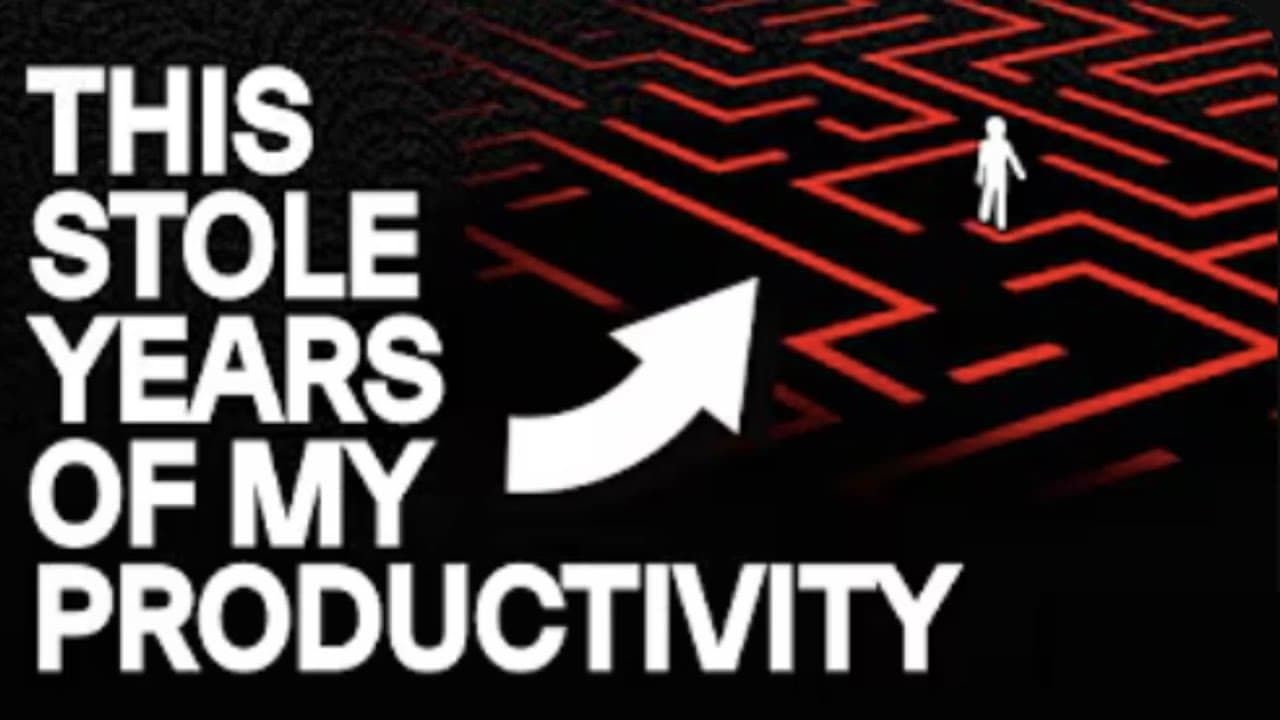
Friction refers to minor irritations and interruptions that can significantly impede productivity by increasing stress and draining attention. It can be utilized to deter unwanted behaviors or promote desired actions. Minimizing systemic friction through strategic environmental adjustments is crucial for achieving 'super fluidity,' allowing individuals to transition effortlessly between high-value tasks.
Transcript
an invisible unnamed enemy is sabotaging your performance you encounter it dozens if not hundreds of times every day it makes all your work harder and by the way this enemy is not your phone or social media or dopamine distractions or anything that the productivity gurus tell you it is it's something different now I'm bringing to our CEO and co-fou... Read More
Key Insights
- 💁 Friction, in the form of small irritations and interruptions, can have a significant impact on productivity and attention.
- ❓ Friction can be both a deterrent to unwanted behaviors and a catalyst to promote desired behaviors.
- 💐 Systemic friction, which disrupts the flow of effort, can be minimized by recognizing its impact and implementing strategies to reduce or eliminate it.
- ✋ Super fluidity, where individuals effortlessly move from one high-value activity to another, can be achieved by managing and reducing friction.
- 🔺 By engineering their environment to remove small points of friction, individuals can maximize their overall sense of productivity and performance.
- 🔺 Small points of friction may seem insignificant, but they add up over time and can have a significant cumulative impact.
- ✋ Effort spent on resolving systemic friction is effort that could have been directed towards high-value tasks and goals.
Install to Summarize YouTube Videos and Get Transcripts
Explore YouTube Video Summarizer or Get YouTube Transcript Extractor
Questions & Answers
Q: What is friction and how does it affect productivity?
Friction refers to small interruptions and irritations throughout the day that hinder productivity by causing stress, wasting time, and sapping attention. It can be as simple as searching for a power cable or being put on hold for a long time.
Q: How can friction be used as a deterrent?
Friction can be used as a deterrent to unwanted behaviors by adding small obstacles that make individuals think twice before engaging in those behaviors. For example, making it slightly more difficult to access social media apps can reduce the frequency of checking them while working.
Q: How can friction be used as a catalyst?
Friction can be used as a catalyst to promote desired behaviors by reducing the effort required to engage in those behaviors. For instance, setting up a dedicated workspace with a ready-to-go desktop can eliminate the friction of setting up in a coffee shop.
Q: What is systemic friction and how can it be minimized?
Systemic friction refers to interruptions and inconveniences that disrupt the smooth flow of effort towards a goal. It can be minimized by recognizing its impact and committing to its eradication, even with seemingly small or trivial tasks. Strategies may include optimizing workflows, organizing essential accessories, and streamlining password management.
Summary & Key Takeaways
-
Friction, often overlooked, is a pervasive enemy that hinders performance by causing stress, wasting time, and sapping attention.
-
Friction can be used both as a deterrent to unwanted behaviors and as a catalyst to promote desired behaviors.
-
Systemic friction, which interrupts the smooth flow of effort, can be minimized by recognizing its impact and implementing strategies to eradicate it.
Read in Other Languages (beta)
Share This Summary 📚
Summarize YouTube Videos and Get Video Transcripts with 1-Click
Try YouTube Summary with ChatGPT & Claude or YouTube Transcript Generator
Explore More Summaries from Rian Doris 📚
Summarize YouTube Videos and Get Video Transcripts with 1-Click
Try YouTube Summary with ChatGPT & Claude or YouTube Transcript Generator