Mike Hudack on AI startup strategy and pricing
TL;DR
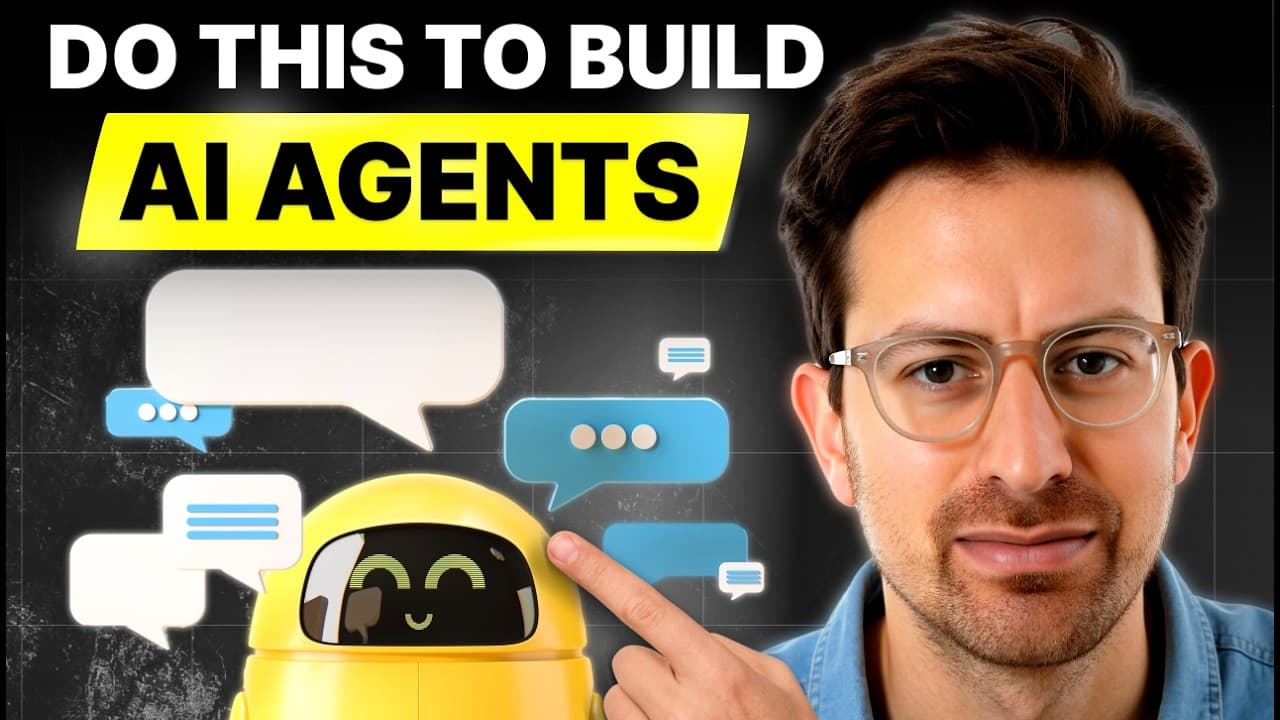
AI agents should perform a single clear action with instant feedback and bounded decisions, creating zero friction for the user. The conversation highlights three promising AI companies in fin crime, note taking, and customer service, and discusses how to balance B2B and B2C approaches while prioritizing real pain points and meaningful product design.
Transcript
what haven't we covered that we should pricing monetization how you make money yeah it's important oh yeah um the first thing I'll say is that one of my favorite lines about this is um I think it's originally Walt Disney quote which is um we don't make movies to make money we make money to make more movies and Facebook co-opted this and it's in the... Read More
Key Insights
- An AI agent framework should start with a single clear action to be effective.
- Instant feedback loops are essential for agents to improve over time and avoid friction.
- Bounded decisions help keep AI behavior predictable and user friendly.
- Zero friction means reducing obstacles to adoption, enabling quick value realization.
- Targeted AI products in niche domains can demonstrate strong value with focused scope.
- Agents that learn from every interaction can expand capabilities gradually without overreaching.
- Pricing and monetization should align with the core value delivered and the chosen go-to-market strategy.
- Building meaningful products requires solving genuine pain points rather than chasing novelty.
- More videos from this channel:
- More from this channel: Greg Isenberg
Install to Summarize YouTube Videos and Get Transcripts
Explore YouTube Video Summarizer or Get YouTube Transcript Extractor
Questions & Answers
Q: How should founders decide between a B2B and a B2C AI product strategy?
Founders should assess market dynamics, predictability, and-scale potential. B2B offers more predictable outcomes through enterprise needs, long sales cycles, and potential for deep integrations, while B2C presents higher growth potential but comes with greater uncertainty and competition. The discussion suggests weighing pain point severity, pricing tolerance, and go-to-market capabilities to choose the path that aligns with the startup’s strengths and long-term goals.
Q: What makes an AI agent effective in everyday use according to the talk?
An effective AI agent focuses on one actionable task, provides instant feedback, makes bounded decisions, and operates with zero friction. This combination allows the user to delegate routine work confidently, see tangible results quickly, and avoid frustrating ambiguous outcomes. Over time, the agent learns from interactions and broadens its scope in a controlled, useful manner.
Q: What are the three example AI companies mentioned and why are they significant?
Greenlight, Granola, and Gradient Labs are cited as three promising AI efforts. Greenlight targets financial crime compliance, Granola serves as a collaborative AI note-taking tool, and Gradient Labs focuses on customer service automation. They illustrate how specialization and domain focus can yield strong initial traction and proof of concept for AI products.
Q: What is the suggested approach to building AI agents for startups?
The suggested approach starts with identifying tasks that are repetitive and time consuming, then creating agents that can handle the one key action well. Build basic understanding with LLMs, establish tight feedback loops, learn from each interaction, and expand the agent’s capabilities gradually. This discipline helps avoid scope creep and ensures reliable early value.
Q: Why does the speaker emphasize solving real pain points in product development?
Solving real pain points grounds product design in practical value rather than abstract potential. By focusing on genuine user needs, the startup can craft features that users are willing to pay for and engage with consistently. This mindset helps maintain product relevance, guides pricing decisions, and reduces the risk of building attractive but unused capabilities.
Q: How can AI agents be monetized effectively according to the discussion?
Monetization should reflect the core value delivered, aligning with the chosen market strategy whether B2B or B2C. The conversation implies starting with services that automate tedious tasks, then expanding as the product proves its worth and user willingness to pay grows. Clear value propositions and measurable improvements in productivity are key to sustainable pricing.
Q: What role do partnerships and niche focus play in growing an AI startup?
Partnerships, especially in niche domains, can accelerate market entry and credibility. By aligning with established players and targeting specific industries, startups can tailor solutions to exact needs, create defensible positioning, and deploy faster than broader consumer moves. A narrow focus with strong domain knowledge often yields faster traction and better product-market fit.
Q: How should founders think about competition in AI startups?
Founders should evaluate competitors by their domain focus, customer base, and differentiators rather than chasing every trend. Understanding where their solution uniquely fits helps in positioning and messaging. Emphasizing a clear value proposition, reliable performance, and better user experience can sustain competitive advantage even in a crowded market.
Summary & Key Takeaways
-
The discussion emphasizes a framework for AI agents that centers on a single action, immediate feedback, bounded choices, and zero friction, enabling practical value with minimal user effort. The idea is to design agents that learn from mistakes and expand gradually as confidence grows.
-
Three example companies are highlighted as proof of concept: Greenlight for financial crime, Granola for note taking, and Gradient for customer service, illustrating how focused domains can drive early success for AI products.
-
The speakers compare B2B and B2C paths, arguing that B2C can scale quickly but carries higher risk, while B2B offers more predictable outcomes and a path to sustainable growth through targeted offerings and partnerships.
Read in Other Languages (beta)
Share This Summary 📚
Summarize YouTube Videos and Get Video Transcripts with 1-Click
Try YouTube Summary with ChatGPT & Claude or YouTube Transcript Generator
Explore More Summaries from Greg Isenberg 📚




Summarize YouTube Videos and Get Video Transcripts with 1-Click
Try YouTube Summary with ChatGPT & Claude or YouTube Transcript Generator