10 Year Futures (vs. What's Happening Now)
TL;DR
The tech industry is constantly evolving with new S-curves, such as AI, mixed reality, and cryptocurrencies, disrupting existing platforms and creating new opportunities for innovation.
Transcript
there's a few things I wanted to talk about today and I think a good place to start is thinking about the s-curve that's dominated really created the tech industry in the last couple of decades it's the growth of the PC which went from nothing to about one and a half billion units installed around the world in the last couple of decades and of cour... Read More
Key Insights
- 🧑💻 The tech industry follows the pattern of S-curves, with new technologies replacing and building upon existing platforms.
- 🏛️ Innovation may seem stagnant in the mature stage of an S-curve, but new opportunities arise from building on top of existing platforms.
- 🧑💻 Tech giants have emerged with unprecedented scale and control in the industry, but history shows that no company is invulnerable to disruption.
- 👶 Emerging technologies like AI, mixed reality, and cryptocurrencies are reshaping the tech industry and opening up new possibilities for innovation.
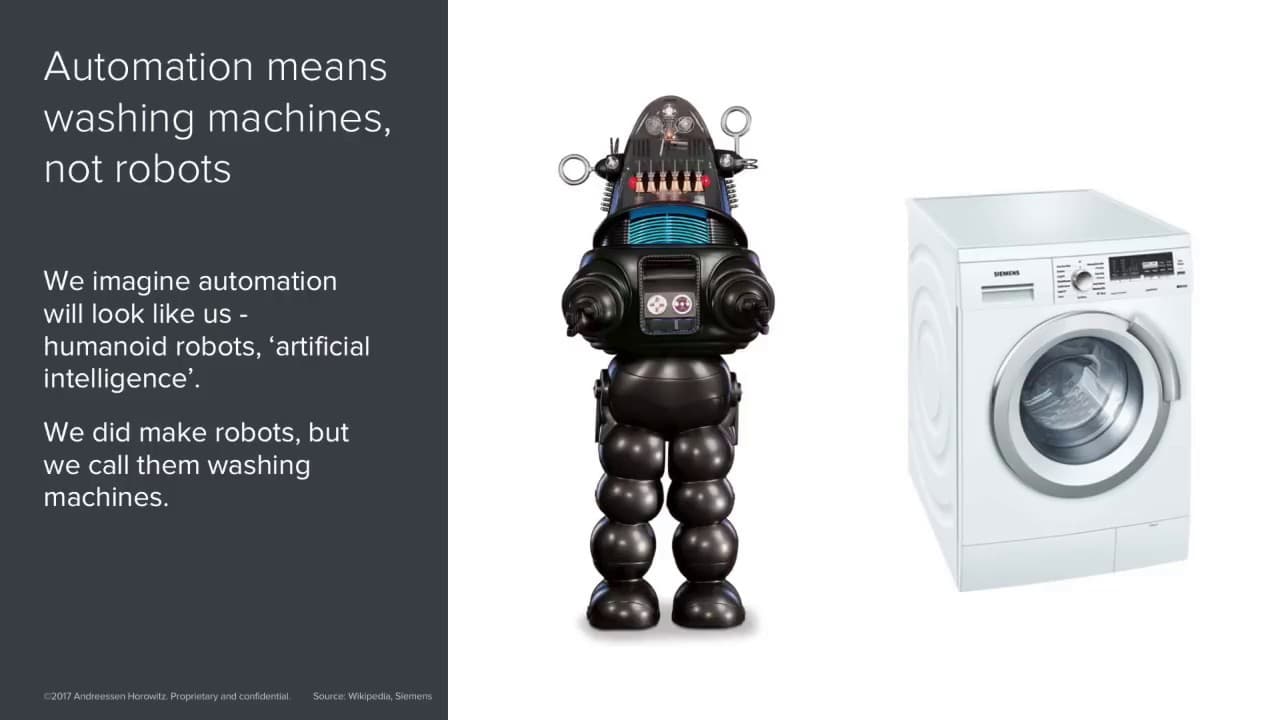
- 🤗 Machine learning enables automation and the ability to process complex data, while mixed reality redefines human-computer interaction and opens up new applications.
- 💁 Cryptocurrencies are automating trust, creating distributed databases that can do more than traditional forms of storing and exchanging value.
- ❓ Each of these technologies is at different stages of development, with AI and cryptocurrencies further along while mixed reality is still in the early stages of commercialization.
Install to Summarize YouTube Videos and Get Transcripts
Explore YouTube Video Summarizer or Get YouTube Transcript Extractor
Questions & Answers
Q: How do S-curves shape the tech industry?
S-curves dominate the tech industry, starting slowly before reaching explosive growth and then slowing down again. They replace and build upon existing platforms, creating new opportunities for innovation.
Q: How do tech giants like Google, Apple, Facebook, and Amazon impact the industry?
These tech giants control the industry due to their scale and founder-led decision making. However, previous dominant companies have fallen, showing that no company is invulnerable.
Q: What are some emerging technologies within the tech industry?
AI, mixed reality, and cryptocurrencies are among the emerging technologies. AI is at the mature stage and enabling automation of various tasks, while mixed reality and cryptocurrencies are still in the early stages of development.
Q: What are some potential applications of machine learning and mixed reality?
Machine learning can automate tasks like trend analysis, image recognition, and data processing. Mixed reality can revolutionize various industries, such as e-commerce, driving, and even city planning.
Summary
This video discusses the concept of S-curves in technology and how they have shaped the industry over the past few decades. The speaker talks about the growth of various platforms such as PCs, smartphones, and mobile phones, and how each platform reaches a point of maturity before the next one comes along. The speaker also discusses the current state of innovation and the challenges of competing with tech giants like Google, Apple, Facebook, and Amazon. The video then explores four emerging S-curves: autonomy, mixed reality, cryptocurrencies, and AI, and discusses the potential applications and impact of each.
Questions & Answers
Q: What are S-curves in technology?
S-curves are a concept used to describe the growth and lifecycle of technologies or platforms. They start slowly, reach a point of rapid growth, and then plateau as they mature.
Q: How have S-curves shaped the tech industry?
S-curves have had a significant impact on the tech industry by driving innovation and creating new platforms. For example, the growth of PCs paved the way for the growth of smartphones, and smartphones have now led to the rise of mobile internet.
Q: What are the current billion-scale platforms being discussed?
The current billion-scale platforms being discussed are primarily mobile internet and smartphones. These platforms have reached a level of stability and maturity, which has shifted the focus to what can be built on top of them.
Q: What challenges are faced when talking about mobile innovation?
When talking about mobile innovation, there is often a perception that innovation is dead and that the latest devices offer nothing new. People may feel that the new iPhone is similar to the previous one, leading to a sense of boredom. However, this has been a common sentiment throughout the history of technology.
Q: How are tech giants like Google, Apple, Facebook, and Amazon viewed in the industry?
Tech giants are often seen as dominating the industry and being difficult to compete with. However, it is important to note that the concept of big, powerful tech companies is not new, and similar concerns have been raised in the past. It is also important to remember that these companies are not invulnerable, and previous dominant companies in the industry have fallen.
Q: How has the scale of tech companies changed over time?
The scale of tech companies has grown exponentially over time. IBM, the dominant tech company in the past, had 45,000 employees in 2000. In comparison, Apple, Facebook, and Google now have significantly larger workforces, making them even bigger companies. Amazon, in particular, has seen a dramatic increase in employee numbers, with around 600,000 people expected to be employed by the end of the year.
Q: What impact have tech giants had on the advertising industry?
Tech giants like Google and Facebook have had a significant impact on the advertising industry by capturing a substantial portion of advertising revenue. Half of the print industry's advertising revenue has shifted to online platforms, with Google and Facebook accounting for a large portion of that share. As a result, creating an ad-funded content business has become more challenging.
Q: What is unique about today's tech giants like Google, Apple, Facebook, and Amazon?
Today's tech giants, often referred to as gaffer companies, are characterized by their massive scale and the fact that they are controlled by founders. Their size and control give them a competitive advantage, as founders have significant decision-making power. This is a significant change compared to previous dominant tech companies.
Q: Are tech giants invulnerable?
While tech giants may appear invulnerable, history has shown that no company remains dominant forever. Previous generations of tech giants, such as IBM and Microsoft, once seemed invulnerable but eventually fell. It is impossible to predict how or why a company will fall, but it is almost certain that something will come along to disrupt the industry again.
Q: What are the potential new s-curves that could disrupt the industry?
The speaker discusses four potential new s-curves: autonomy, mixed reality, cryptocurrencies, and AI. Each of these areas is at a different stage in the s-curve process. Autonomy, such as self-driving cars, is still in the early stages. Mixed reality, like augmented reality, is just reaching the point where it is becoming a real product. Cryptocurrencies, while the technology works, are still being explored to determine market applications. AI is in the phase of rapid growth and is already being widely used.
Takeaways
Innovation in the tech industry follows a pattern of S-curves, where new platforms and technologies emerge, reach maturity, and then open the door for the next wave of innovation. The current focus is on building on top of the existing billion-scale platforms, such as smartphones and mobile internet, while also exploring potential new s-curves like autonomy, mixed reality, cryptocurrencies, and AI. Tech giants like Google, Apple, Facebook, and Amazon may seem invulnerable, but history has shown that previous dominant companies have fallen. Therefore, it is crucial to continue exploring new technologies and looking for the next s-curves that will disrupt the industry.
Summary & Key Takeaways
-
The tech industry has been driven by the growth and replacement of S-curves, from PCs to smartphones, and now to emerging technologies like AI, mixed reality, and cryptocurrencies.
-
Innovation is often perceived as stagnant when reaching the stable and mature stage of each S-curve but new opportunities arise as we explore what can be built on top of existing platforms.
-
The dominance of tech giants like Google, Apple, Facebook, and Amazon indicates a new scale and control within the industry, but the history of tech shows that no company is invulnerable and new disruptive forces will emerge.
Read in Other Languages (beta)
Share This Summary 📚
Summarize YouTube Videos and Get Video Transcripts with 1-Click
Try YouTube Summary with ChatGPT & Claude or YouTube Transcript Generator
Explore More Summaries from a16z 📚






Summarize YouTube Videos and Get Video Transcripts with 1-Click
Try YouTube Summary with ChatGPT & Claude or YouTube Transcript Generator