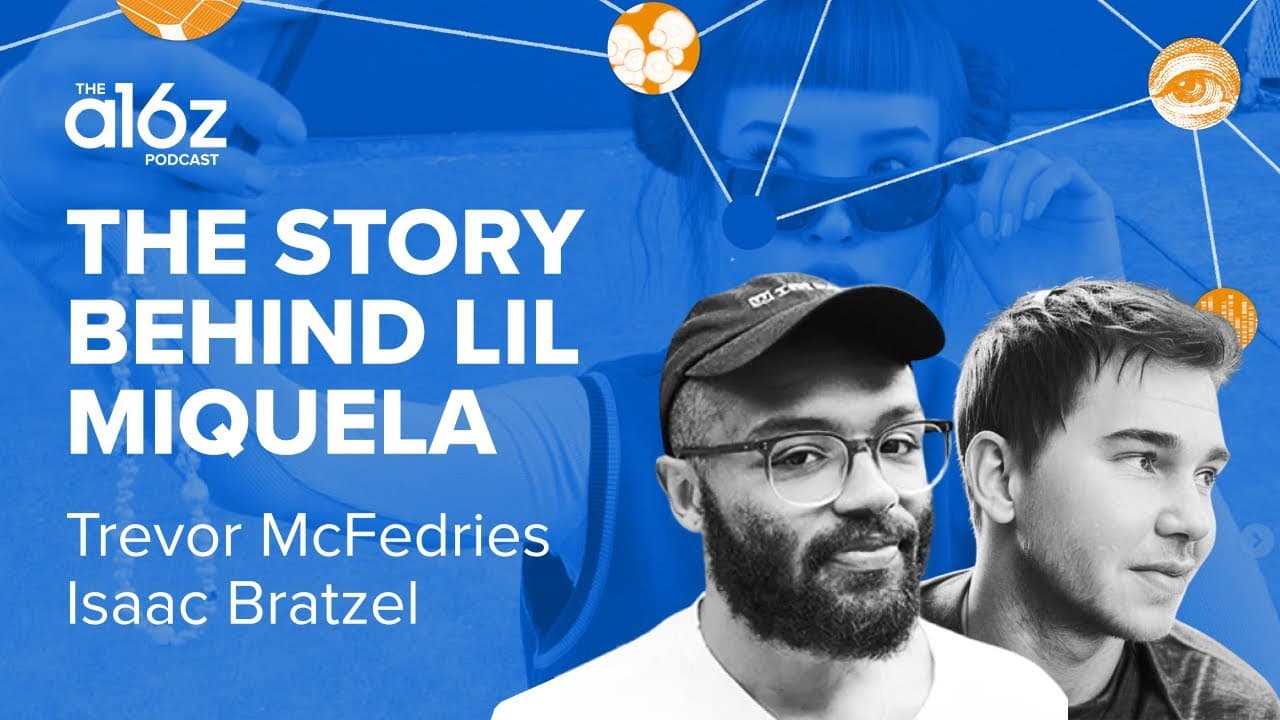
Digital Humans and the Story Behind Lil Miquela
TL;DR
Lil Miquela is a virtual influencer created by Bread in 2016, who has successfully partnered with major brands and gained a significant following. Her story illustrates how innovative storytelling and technology can engage audiences, challenging traditional notions of authenticity in influencer marketing. As advancements in generative AI and 3D animation continue, the landscape of social media and influencer dynamics is likely to shift dramatically.
Transcript
remember we were talking and she was like you keep saying scalable celebrity were like what does that mean like what does that look like and I was like you've probably heard of Loma Kayla also known as Michaela Souza a 19 year old Brazilian American influencer with millions of followers online she's partnered with the likes of Samsung and Prada but... Read More
Key Insights
- ❓ Virtual influencers like Lil Miquela have the potential to disrupt traditional notions of authenticity and influencer marketing.
- 🖐️ The storytelling and narrative behind virtual influencers play a crucial role in engaging audiences and creating resonance.
- ❓ Technology advancements, such as generative AI and 3D animation, make it easier to create lifelike virtual influencers and enable interactions with audiences.
- 😮 The rise of virtual influencers may change the dynamics of social media and shape the future of influencer marketing.
Install to Summarize YouTube Videos and Get Transcripts
Explore YouTube Video Summarizer or Get YouTube Transcript Extractor
Questions & Answers
Q: How did the creators come up with the idea of Lil Miquela?
The creators were inspired by the evolving media landscape and the power of narratives in shaping beliefs and ideologies, especially among young people. They saw an opportunity to tell fictional stories through a virtual influencer on social media platforms.
Q: What were the early signs that Lil Miquela was resonating with audiences?
Lil Miquela's growing fan base and the emergence of fan fiction about her were early indicators that she was capturing people's attention and creating a strong connection. Her collaborations with brands like Samsung and Prada further solidified her status as a successful virtual influencer.
Q: How did the creators navigate the challenges of creating a lifelike virtual human character?
The creators focused on creating a character that appeared realistic while avoiding the "Uncanny Valley" effect, where something looks too human but not human enough. They embraced constraints, such as maintaining recognizable features like freckles and space buns, to ensure instant recognizability.
Q: How does technology advance the creation of virtual influencers?
Advancements in technology, such as generative AI and 3D animation, enable the creation of lifelike virtual influencers. This technology also opens up possibilities for synchronicity, where virtual influencers can interact with their audiences in real-time, and for scalability, allowing for the creation of multiple virtual influencers.
Summary
In this video, Trevor McFedries and Isaac Bratzel discuss the creation of Lil Miquela, a virtual influencer. They explore the origins of the idea, the challenges they faced in designing and animating a realistic character, and the narrative that they built around Lil Miquela. They also discuss the future of virtual influencers and the impact they may have on our relationship with creators and influencers.
Questions & Answers
Q: What inspired the creation of Lil Miquela?
Trevor McFedries was inspired by the political and cultural climate of the time, as well as the potential to tell engaging fictional stories on social media platforms. He also wanted to tap into underserved audiences, such as those in Latin America, and create narratives that address important issues and engage young people.
Q: How did the team overcome the challenge of making Lil Miquela look realistic?
The team experimented with creating a photorealistic human character, which was unique at the time. They wanted to avoid the "uncanny valley" effect and make Lil Miquela recognizable and relatable. They also made strategic decisions, such as incorporating recognizable features like space buns and freckles, to make her instantly recognizable.
Q: How did fan fiction and fan engagement contribute to Lil Miquela's success?
Fan fiction played a significant role in Lil Miquela's narrative, as fans created their own stories and speculations about her. This engagement showed that people truly cared about the character and helped shape the narrative. The team listened to fan feedback and incorporated it into their storytelling, making it a collaborative process.
Q: What technologies were used to create Lil Miquela and her content?
The team used various technologies to bring Lil Miquela to life. They employed 3D design and animation software to create her realistic appearance. They also used data science to analyze what resonated with the audience and iterate on their content. However, they faced operational challenges in creating longer-form video content due to the limitations of technology at the time.
Q: How did the team decide to expand beyond Lil Miquela and create other virtual influencers?
The team recognized that the future of media lies in spatial computing and generative media. They wanted to build scalable digital characters that could connect with an audience in a three-dimensional virtual world. They explored creating other characters, such as Blawko and Bermuda, and aimed to tell narratives that engaged fans and offered more substance than traditional media.
Q: How does the rise of virtual influencers change our relationship with creators and influencers?
The rise of virtual influencers raises questions about authenticity and substance in media. While virtual influencers may not be "real" people, they can still offer engaging content and narratives. The perception of authenticity is subjective, and people may associate it with different criteria such as skill, craft, or relatability. Virtual influencers challenge traditional notions of what makes a creator or influencer valuable, and they may offer unique perspectives and experiences.
Q: How does technology enable the creation of virtual influencers?
Technology, particularly generative AI, is making it easier to create virtual influencers. However, creating excellent content still requires skill, creativity, and the ability to resonate with an audience. While technology may lower barriers to entry, it does not guarantee success. Virtual influencers can take advantage of technology to create immersive experiences and connect with fans in innovative ways.
Q: How does the concept of substance and authenticity apply to virtual influencers?
The idea of substance and authenticity is subjective and can vary across different audiences and cultures. Virtual influencers can be scripted and fictional but still resonate as authentic if they are presented in an engaging and transparent manner. Authenticity can also be found in the meaningful connections a virtual influencer fosters with their audience, regardless of their physical reality.
Q: How can narrative be a differentiating factor for virtual influencers in a saturated market?
Narrative is crucial for virtual influencers as it provides substance and depth to their character. Virtual influencers can create engaging narratives that prompt fans to speculate, engage, and develop fan fiction. The ability to build a narrative universe that extends across different media formats allows virtual influencers to stand out and provide a unique and immersive experience for their audience.
Q: How can virtual influencers impact the future of media and storytelling?
Virtual influencers have the potential to revolutionize media and storytelling by creating immersive experiences, integrating with emerging technologies like spatial computing, and engaging audiences in new ways. They challenge traditional media models and provide opportunities for more collaborative and interactive storytelling. Virtual influencers can drive the evolution of media towards deeper and more engaging narratives that resonate with diverse audiences.
Takeaways
Virtual influencers like Lil Miquela offer an innovative and immersive way to engage with audiences on social media. The creation of photorealistic characters presents technical challenges, but it also opens up new possibilities for storytelling and brand partnerships. The concept of authenticity and substance in virtual influencers is subjective and can vary across different cultures and age groups. Technology continues to play a significant role in enabling the creation of virtual influencers, but it is the creativity, skill, and ability to connect with an audience that truly sets them apart. In a saturated market, narrative becomes a crucial factor in differentiating virtual influencers and creating engaging experiences for fans. The future of virtual influencers lies in exploring spatial computing, generative media, and deeper narratives that challenge traditional media models.
Summary & Key Takeaways
-
Lil Miquela, a virtual influencer created in 2016 by Bread, has become a trailblazer in the digital influencer space, partnering with major brands and garnering a devoted following.
-
The creators, Trevor McFedries and Isaac Bratzel, discuss the inspiration behind Lil Miquela, the early signs of her success, and the challenges they faced in creating a virtual human character that resonated with audiences.
-
They discuss the importance of storytelling, maintaining authenticity, and navigating the ethical implications of virtual influencers.
-
The advancement of technology, such as generative AI and 3D animation, has enabled the creation of lifelike virtual influencers and opens up possibilities for their interactions with audiences.
-
The rise of virtual influencers may change the landscape of social media and challenge traditional notions of authenticity and influencer marketing.
Read in Other Languages (beta)
Share This Summary 📚
Summarize YouTube Videos and Get Video Transcripts with 1-Click
Try YouTube Summary with ChatGPT & Claude or YouTube Transcript Generator
Explore More Summaries from The a16z Podcast 📚



Summarize YouTube Videos and Get Video Transcripts with 1-Click
Try YouTube Summary with ChatGPT & Claude or YouTube Transcript Generator