Top 5 Stock Market News of February 2024
TL;DR
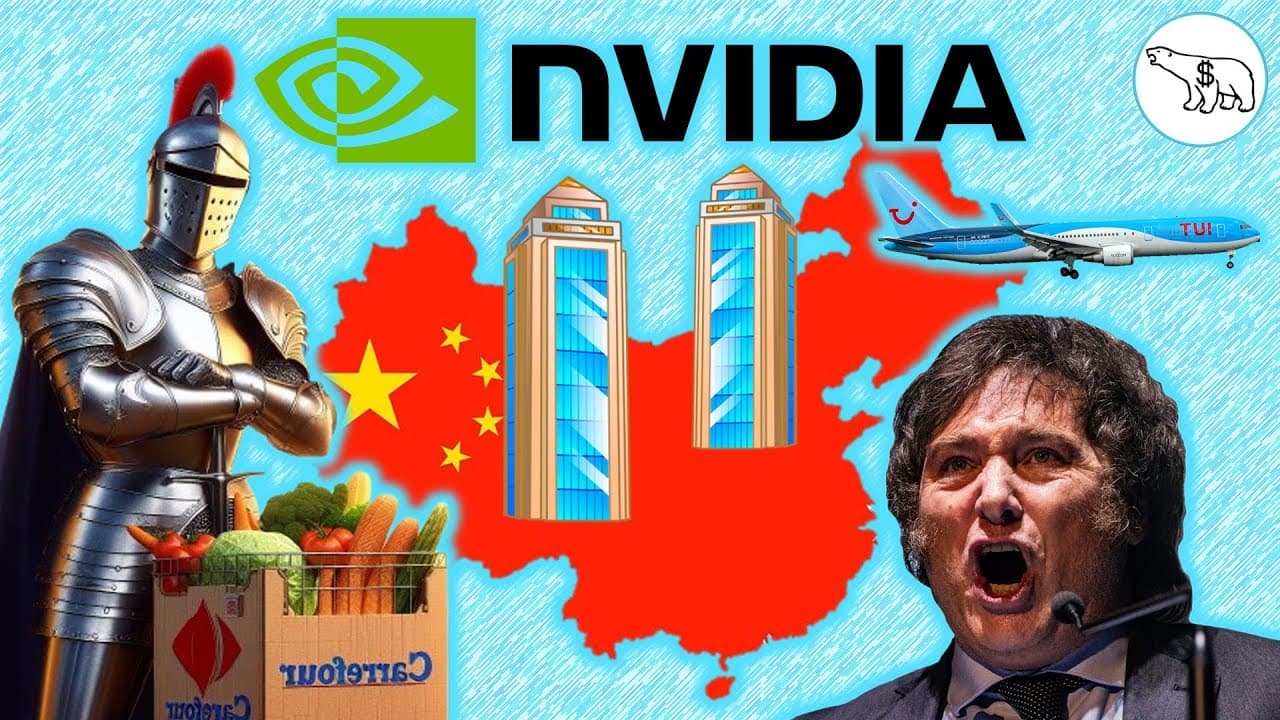
February 2024’s leading stock-market stories were China’s housing-driven turmoil, Nvidia’s exceptional Q4 growth, Argentina’s anti-inflation shock therapy, Carrefour’s resistance to PepsiCo price increases, and resilient tourism companies. Nvidia increased sales by 265% while operating expenses rose only 25%, whereas China’s Shanghai Composite reached a five-year low. Read on for the figures, policies, and market tensions behind each story.
Transcript
hello there and welcome to a financial news sweep for February while the suspicious death of Alexa Naval the imprisoned Russian opposition leader to Putin was Major news it doesn't really fit in a financial sweep such as this one but let's start off in another communistic dictatorship namely China xiin Ping's NeverEnding headache I guess you all re... Read More
Key Insights
- 🥺 China's housing bubble causes economic ripple effects, leading to stock market declines and stricter regulation.
- 👁️🗨️ Nvidia's Q4 success is driven by its strong business model and production partnership, but concerns about a potential bubble persist.
- 🫢 Argentina's shock therapy aims to address long-standing economic issues, but initial consequences include accelerated inflation and increased poverty.
- 💠 Carrefour's resistance against PepsiCo's price hikes reflects the ongoing battle between companies and consumers in shaping market dynamics.
- ❓ The current state of the tourism industry challenges traditional cyclical patterns, with companies like Tui and Expedia experiencing resilience and growth.
- 😮 Rising inflation affects consumers' purchasing power, as shown by Carrefour's decision to remove PepsiCo products.
- ✊ The ongoing debate between pricing power and consumer choices continues, highlighting the delicate balance in the market.
Install to Summarize YouTube Videos and Get Transcripts
Explore YouTube Video Summarizer or Get YouTube Transcript Extractor
Questions & Answers
Q: What were the top five stock market news stories of February 2024?
The five highlighted stories concerned China’s housing bubble and stock-market decline, Nvidia’s Q4 performance, Argentina’s economic shock therapy, Carrefour’s dispute with PepsiCo, and resilience in the tourism industry. Together, they illustrate how regulation, inflation, corporate pricing, technology growth, and consumer demand were influencing markets.
Q: How did Evergrande’s collapse affect China’s economy and stock market?
Evergrande crashed in 2021 after decades of urbanization, overbuilding, and stricter credit limits on real-estate developers. Its collapse damaged China’s housing sector, wiped out savings paid upfront by many hundreds of thousands of apartment buyers, and spread instability into the broader economy and stock market.
Q: How far did China’s stock market fall by February 2024?
On February 5, the Shanghai Composite fell to a five-year low. The index was down by more than 20% since early 2022, while Western markets were trading at all-time highs.
Q: What actions did China take to stabilize its markets?
Authorities imposed stricter censorship on public communication about markets and urged officials to promote the economy’s bright prospects. They also strengthened short-selling regulation and prevented institutional investors from selling more shares than they bought during the first and last 30 minutes of each trading day.
Q: Why did Nvidia’s February 2024 Q4 results attract attention?
Nvidia reported Q4 results on February 21 with strong revenue and margin development. Its sales increased by 265% in the last quarter while operating expenses rose by only 25%, demonstrating substantial operational leverage.
Q: Why were investors concerned that Nvidia and AI could be forming a bubble?
Nvidia traded at roughly 60 times its last 12 months’ earnings, or about 38 times Q4 earnings multiplied by four. Analysts’ guidance put the ratio near 30 for the following year’s earnings, but those valuations still required stellar future performance, making Nvidia difficult for the speaker to value.
Q: What was Argentina’s shock therapy, and how did it affect inflation?
Javier M’s program included devaluing the peso and abolishing price controls to steer Argentina away from hyperinflation. Inflation rose to 254.4% in January from 211% in December, an acceleration presented as part of the expectation that conditions would worsen before improving.
Q: Why did Carrefour remove PepsiCo products from its shelves?
Carrefour removed PepsiCo products because it considered the company’s price increases unacceptable. The dispute highlighted the tension between corporate pricing power, inflation’s effect on purchasing power, and consumers’ ability to shape market behavior through their choices.
Summary & Key Takeaways
-
China's housing bubble, triggered by the crash of the real estate company Evergrande, leads to economic instability and stricter censorship in an attempt to stabilize the situation.
-
Nvidia's Q4 results showcase strong revenue and margin growth, leading to a surge in market capitalization and potential bubble concerns.
-
Argentina's new leader, Javier M, implements shock therapy to combat hyperinflation, which initially causes accelerated inflation but aims to stabilize the economy in the long run.
-
Carrefour removes PepsiCo products from its shelves due to unacceptable price increases, sparking a debate on pricing power and consumer choices.
Read in Other Languages (beta)
Share This Summary 📚
Summarize YouTube Videos and Get Video Transcripts with 1-Click
Try YouTube Summary with ChatGPT & Claude or YouTube Transcript Generator
Explore More Summaries from The Swedish Investor 📚





Summarize YouTube Videos and Get Video Transcripts with 1-Click
Try YouTube Summary with ChatGPT & Claude or YouTube Transcript Generator