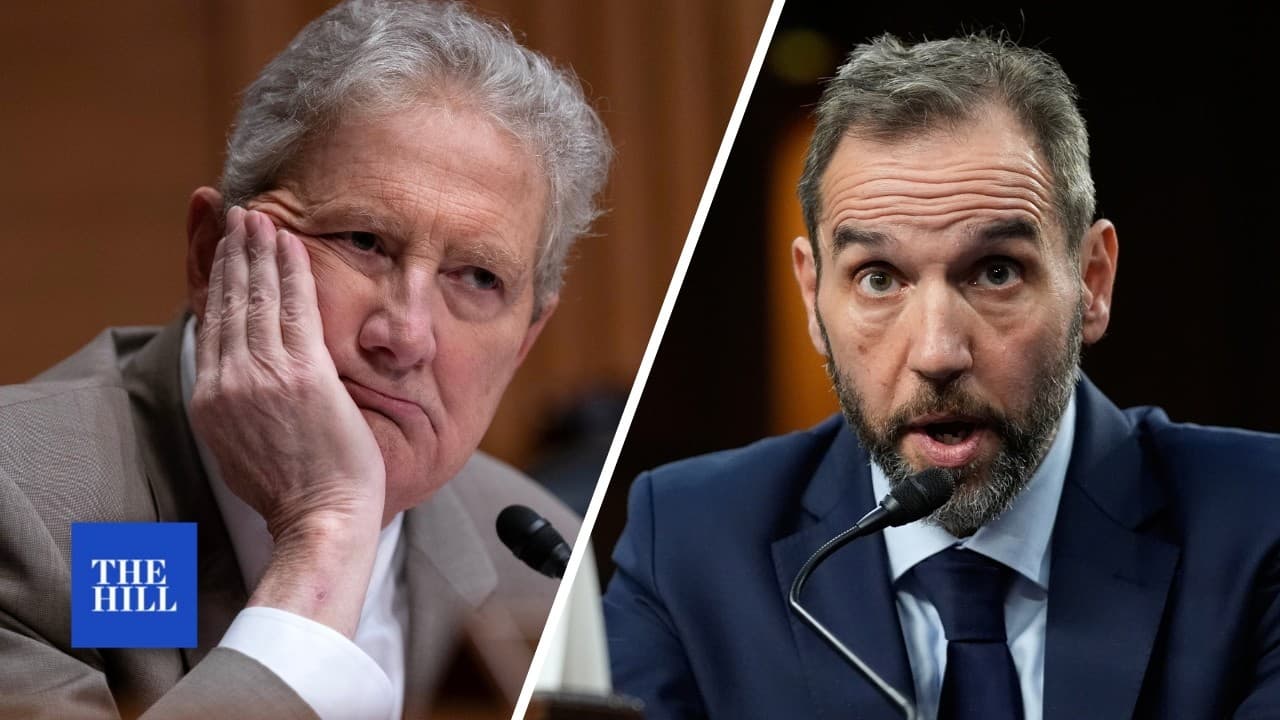
John Kennedy on Jack Smith and the Trump probe
TL;DR
Smith says he acted independently and would prosecute regardless of party, while Kennedy presses on political influence, personal ties, and procedural choices. The exchange covers whether the White House directed actions, the use of toll records, and the handling of family and peers in high profile investigations. The hearing highlights tension between prosecutorial independence and political scrutiny.
Transcript
So, you're telling me that you're about to prosecute a former president of the United States? First time in history. Not only that, you're about to prosecute a former president of the United States who's also the current opponent of Judge Garland's boss. [snorts] Mr. Smith, you were uh pretty well known around Washington even before you decided to ... Read More
Key Insights
- Smith says he made independent prosecutorial decisions and would pursue cases without regard to political affiliation.
- Kennedy questions potential political pressure from the White House and Judge Garland’s boss, seeking to connect leadership with prosecutorial choices.
- The exchange probes the use of toll records during the investigation and whether that action respected constitutional constraints.
- Smith characterizes his career as a nonpartisan prosecutor with decades of experience.
- Kennedy challenges the transparency and candor of communications with the Attorney General regarding prosecutions.
- The discussion touches on personal aspects, including spouses' political views, and how that relates to professional duties.
- The hearing emphasizes the tension between congressional oversight and prosecutorial independence.
- Both participants emphasize the historical significance and potential consequences of prosecuting a former president.”
Install to Summarize YouTube Videos and Get Transcripts
Explore YouTube Video Summarizer or Get YouTube Transcript Extractor
Questions & Answers
Q: What is Jack Smith saying about prosecutorial independence in this exchange
Jack Smith asserts that his decisions were made independently, with staff input and strong evidence, and he would conduct the case the same way regardless of whether the defendant or political party was involved. He emphasizes his 30 years as a nonpartisan prosecutor and his duty to enforce the law, indicating he did not let political considerations alter the pursuit of the prosecution.
Q: Did Senator Kennedy imply White House involvement in the decision to prosecute
Yes, Kennedy suggests that Biden or the White House staff told Merrick Garland to prosecute Trump, framing the issue as potential political influence on prosecutorial decisions. He presses on whether Garland checked with the President, aiming to establish whether political guidance affected legal actions, though Smith denies knowledge of such instructions.
Q: What does the transcript reveal about toll records and the speech and debate clause
The transcript shows Kennedy questioning whether toll records of lawmakers were sought, and whether doing so violated the speech and debate clause. Smith responds that they sought records relevant to the investigation and says they complied with constitutional constraints, while Kennedy pushes on the potential legal and constitutional implications of those actions.
Q: How does Smith describe his career when asked about partisanship
Smith describes his career as a nonpartisan prosecutor who investigated many types of cases and aimed to apply the law equally, irrespective of political affiliation. He says his decisions were guided by evidence and legal standards, not by partisan considerations, and he emphasizes his commitment to independence in office.
Q: What personal details does Kennedy raise about Smith’s family
Kennedy references Smith’s spouse and her political views and documentary work to probe potential conflicts of interest or biases. Smith declines to discuss his family, reiterating that his focus is on his professional work as special counsel, while Kennedy uses the personal angle to challenge credibility and impartiality.
Q: What is the core topic of the heated exchange between Kennedy and Smith
The core topic is whether there was political influence over prosecutorial decisions, including whether the White House guided the actions against a former president. The discussion also covers the legitimacy and handling of investigations, the independence of the prosecutor, and the ethics of sharing information with government leaders in high profile prosecutions.
Q: What does the transcript indicate about the time pressure in the hearing
The transcript capture notes a ten minute limit, indicating that the hearing was tightly timed. This constraint contributes to a rapid questioning pace and a sense of urgency in obtaining direct, unambiguous answers about prosecutorial decisions, independence, and potential political interference.
Q: How does the hearing portray the role and authority of the Attorney General
The hearing frames the Attorney General as a figure who can countermand prosecutorial decisions, though Smith asserts that he made independent decisions and that Garland could have overridden them. The dialogue explores the balance of power between the Attorney General, the prosecutor, and the political leadership while emphasizing the independence of the investigative process.
Summary & Key Takeaways
-
Smith asserts independence and nonpartisanship in prosecutions, while Kennedy challenges potential political influence and procedural decisions. The dialogue emphasizes the complexity of special counsel roles and the scrutiny they face from lawmakers, especially when investigating a former president. The exchange underlines concerns about how investigations are conducted and communicated to the public.
-
The conversation traverses the balance between national security interests and congressional oversight, particularly around the use of toll records and non-disclosure orders. Kennedy questions the legality and transparency of prosecutorial actions, while Smith defends adherence to rules and procedures. The dynamic reveals how partisan perspectives shape interpretations of legal proceedings.
-
The discussion showcases how public accountability is sought for high-stakes investigations, including the interactions between prosecutors, senators, and the judiciary. It illustrates how questions about influence, timing, and ethical considerations can shape public trust in the justice system.
Read in Other Languages (beta)
Share This Summary 📚
Summarize YouTube Videos and Get Video Transcripts with 1-Click
Try YouTube Summary with ChatGPT & Claude or YouTube Transcript Generator
Explore More Summaries from The Hill 📚



Summarize YouTube Videos and Get Video Transcripts with 1-Click
Try YouTube Summary with ChatGPT & Claude or YouTube Transcript Generator