Why Are U.S. Job Cuts Rising as Markets Cool?

TL;DR
October job cuts reached their highest level for that month in more than two decades, intensifying concerns about a cooling labor market and pushing investors from stocks toward bonds. Yet strong corporate earnings, continued consumer spending, and an upbeat holiday forecast complicate the outlook, while inflation, tariffs, credit pressure, and Federal Reserve policy remain major risks.
Transcript
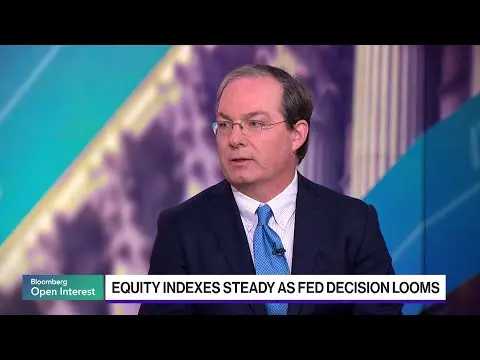
A COOLING LABOR MARKET PUTS A CHILL ON FINANCIAL MARKETS. KATIE: WE'RE KICKING OFF TO THE CLOSING BELL HERE IN THE U.S.. IT LOOKS CHILLY OUT THERE, THE S&P DOWN BY ABOUT .7%. IT'S REALLY RISK OFF ACROSS ASSET CLASSES RIGHT NOW. YOUR BIG TECH NAMES DOWN ABOUT 1.3%. THE RUSSELL 2000 DOWN ABOUT 1.3% AS WELL. INTERESTINGLY THOSE SMALL GUYS NOT GETTI... Read More
Key Insights
- October job cuts were the highest for that month in more than two decades and the third-highest monthly level since 2020. The increase raised questions about whether labor weakness would persist and command more attention from the Federal Reserve.
- The market reaction was broadly risk-off, with the S&P 500 down about 0.7% and both big technology stocks and the Russell 2000 down about 1.3%. Investors moved toward Treasuries, lowering the 10-year yield by about seven basis points.
- Federal Reserve policy depends on conflicting labor and inflation signals. Investors treated falling yields as a possible bet on further rate cuts, while the Cleveland Fed president warned that embedded inflation remained a serious risk that could outweigh labor-market weakness.
- Corporate earnings remained stronger than the market mood suggested. S&P companies reported 14% year-over-year earnings growth, almost twice analysts' expectations, creating tension between solid corporate results and growing concerns about employment, consumer credit, and economic momentum.
- Consumer spending was still growing, but the pace appeared to be decelerating and the average concealed meaningful differences among households. Lower-income consumers were under pressure, while some businesses benefited from higher-income customers trading down to less expensive options.
- Tariff costs had reached consumers more slowly and with less magnitude than initially feared because companies absorbed part of the burden. The discussion anticipated that margin pressure could increasingly reach consumers during the first two quarters of 2026.
- Bonds may regain their traditional diversification role as relationships among asset classes normalize. After a period when bonds, commodities, and equities often moved together, conflicting economic signals could restore a more balanced relationship into year-end and during 2026.
- LendingClub's core value proposition is replacing costly revolving credit with lower-cost personal loans. With credit-card rates cited at 23% for borrowers carrying balances, the company said refinancing through its products saves customers about 30% on average.
Install to Summarize YouTube Videos and Get Transcripts
Explore YouTube Video Summarizer or Get YouTube Transcript Extractor
Questions & Answers
Q: Why did rising U.S. job cuts unsettle financial markets?
October job cuts reached their highest level for that month in more than two decades and their third-highest monthly level since 2020. That increase suggested the labor market could be cooling more sharply. Investors responded by reducing exposure to stocks and buying bonds, while considering whether continued labor weakness might push the Federal Reserve toward additional rate cuts.
Q: How did stocks and Treasury yields react to labor-market concerns?
The market shifted toward safety. The S&P 500 fell about 0.7%, while big technology stocks and the Russell 2000 each declined about 1.3%. The 10-year Treasury yield dropped approximately seven basis points to around 4.1%. The simultaneous stock selling and bond buying reflected a risk-off session and increased expectations of further Federal Reserve easing.
Q: What factors were driving the market outlook?
Two major forces were shaping both equities and bonds: Federal Reserve direction and corporate earnings growth. Federal Reserve decisions depended on labor conditions and inflation, while earnings determined whether stock valuations retained fundamental support. Markets were also between most mega-cap earnings reports and Nvidia's results, as well as the December Federal Reserve meeting, giving investors reasons to pause.
Q: Why was the Federal Reserve outlook uncertain?
The Federal Reserve faced conflicting risks. Rising job cuts and a cooling labor market supported the case for lower rates, but persistent inflation argued for caution. The Cleveland Fed president emphasized the danger of embedding high inflation in the economy. Investors nevertheless moved into bonds, and one guest projected the 10-year Treasury yield could reach 3.75% by mid-next year.
Q: How strong were corporate earnings despite the market decline?
S&P companies posted earnings growth of 14% compared with the prior year, nearly double what analysts had expected. Those results showed that corporate profitability remained strong even as investors worried about job cuts, inflation, and consumer credit. The contrast created a mixed environment in which solid earnings support competed with weakening economic indicators and risk-off positioning.
Q: What was the outlook for U.S. consumer spending?
Consumer spending was still growing, and the National Retail Federation issued an upbeat forecast for the holiday season that began November 1. However, some spending growth reflected inflation, and overall growth appeared to be slowing. Lower-income consumers faced particular pressure, while some higher-income customers traded down to less expensive businesses, producing clear winners and losers across retailers and restaurants.
Q: How could tariffs affect companies and consumers in 2026?
Tariff effects had appeared with less magnitude and at a slower pace than initially expected because many companies absorbed incremental costs instead of passing them directly to customers. The discussion suggested that this restraint might not last. During the first two quarters of 2026, continued tariff costs could pressure corporate margins and increasingly be transferred to consumers through higher expenses.
Q: How does LendingClub help borrowers reduce credit costs?
LendingClub primarily serves deliberate borrowers who rely heavily on credit and often carry student loans, unsecured loans, or credit-card balances. The company offers personal loans that can replace revolving card debt. With credit-card interest cited at 23% for people carrying balances, LendingClub said its alternative saves customers about 30% while also financing purchases, treatments, and home improvements.
Summary & Key Takeaways
-
Markets turned risk-off as rising job cuts raised concerns about labor-market weakness. The S&P 500 declined about 0.7%, big technology stocks and the Russell 2000 fell about 1.3%, and the 10-year Treasury yield dropped roughly seven basis points as investors sought safety and anticipated possible Federal Reserve rate cuts.
-
The economic outlook remained mixed. S&P companies posted 14% earnings growth from a year earlier, almost double analysts' expectations, while the National Retail Federation issued a positive holiday-spending forecast. Consumer growth was continuing but decelerating, with lower-income households facing pressure from debt, inflation, tariffs, and a government shutdown.
-
LendingClub CEO Scott Sanborn distinguished labor-market cracks from credit-market cracks, describing borrowers as resilient and performance as stable for several years. LendingClub primarily helps responsible borrowers replace expensive credit-card balances with personal loans, and its home-improvement expansion adds staged disbursements and payments to multiple providers through capabilities acquired with Mosaic.
Read in Other Languages (beta)
Share This Summary 📚
Summarize YouTube Videos and Get Video Transcripts with 1-Click
Try YouTube Summary with ChatGPT & Claude or YouTube Transcript Generator
Explore More Summaries from Bloomberg Television 📚



Summarize YouTube Videos and Get Video Transcripts with 1-Click
Try YouTube Summary with ChatGPT & Claude or YouTube Transcript Generator