How to Achieve Flow State Consistently in Four Steps
TL;DR
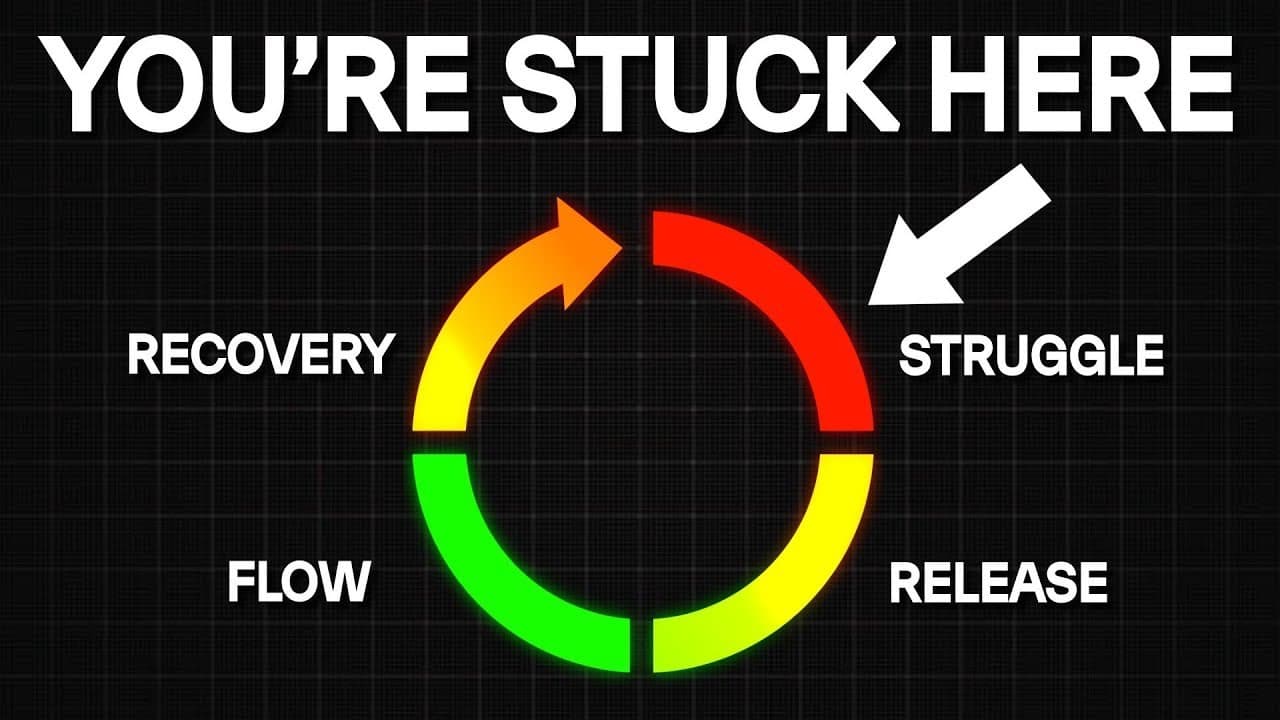
To achieve a flow state consistently, follow the four phases of the flow cycle: struggle, release, flow, and recovery. Begin by pushing your limits in the struggle phase, then step back to allow relaxation and subconscious processing. The flow state enhances creativity and focus, and recovery is essential for replenishing neurotransmitters and preparing for the next cycle.
Transcript
most people think that flow States work like a light switch we are either in the zone or you're not but in reality flow is cyclical it's one stage in a four-stage cycle and if you don't understand this cycle each of its stages and how to move through them then flow States and the Deep profound performance they bring will remain elusive to you now I... Read More
Key Insights
- 💐 Flow is not an elusive state, but part of a cyclical process that can be intentionally accessed.
- 💨 Struggle is a necessary phase to acclimate to a task and pave the way for flow.
- 🤯 Release allows the subconscious mind to take over, leading to relaxation and alpha brainwave patterns.
- 💐 Flow is characterized by heightened creativity, focus, and the release of neurochemicals.
- 💐 Recovery is crucial after flow to replenish neurotransmitters and clear allostatic load.
- 💐 Engaging in the struggle phase is the hardest part of the flow cycle, but it is necessary to initiate the process.
- 🥺 Understanding and mastering the flow cycle can lead to consistently accessing peak performance.
Install to Summarize YouTube Videos and Get Transcripts
Explore YouTube Video Summarizer or Get YouTube Transcript Extractor
Questions & Answers
Q: What is the flow cycle?
The flow cycle consists of four stages: struggle, release, flow, and recovery. Each stage plays a crucial role in achieving deep performance consistently.
Q: How can struggle be helpful in accessing flow?
Struggle is the first phase of the flow cycle and is essential for acclimating to a task. It may seem unsolvable, but persisting through the discomfort is necessary to reach flow.
Q: What happens during the release phase?
Release involves stepping back from a task, providing relaxation for the subconscious mind to take over. This shift in brainwave patterns triggers the body's relaxation response.
Q: What neurochemicals are released during flow?
Flow is characterized by the release of dopamine, serotonin, nandamide, and endorphins. These chemicals amplify focus, creativity, and pattern recognition.
Q: Why is recovery important after flow?
During recovery, the body replenishes neurotransmitters and clears allostatic load. Active recovery, such as ice baths, saunas, and sleep, helps return the body to baseline faster and boosts resilience.
Summary & Key Takeaways
-
Flow states are not an on/off switch, but rather a four-stage cycle: struggle, release, flow, and recovery.
-
The struggle phase involves pushing limits and grappling with a task, characterized by stress and elevated neurochemicals.
-
Release allows the subconscious mind to take over, leading to relaxation and alpha brainwave patterns.
-
Flow is the main event, where creativity and focus are heightened through the release of neurochemicals.
-
Recovery is necessary after flow, allowing the body and mind to replenish neurotransmitters and clear allostatic load.
Read in Other Languages (beta)
Share This Summary 📚
Summarize YouTube Videos and Get Video Transcripts with 1-Click
Try YouTube Summary with ChatGPT & Claude or YouTube Transcript Generator
Explore More Summaries from Rian Doris 📚


Summarize YouTube Videos and Get Video Transcripts with 1-Click
Try YouTube Summary with ChatGPT & Claude or YouTube Transcript Generator