Why Did the Fed Delay a 2015 Interest Rate Hike?
TL;DR
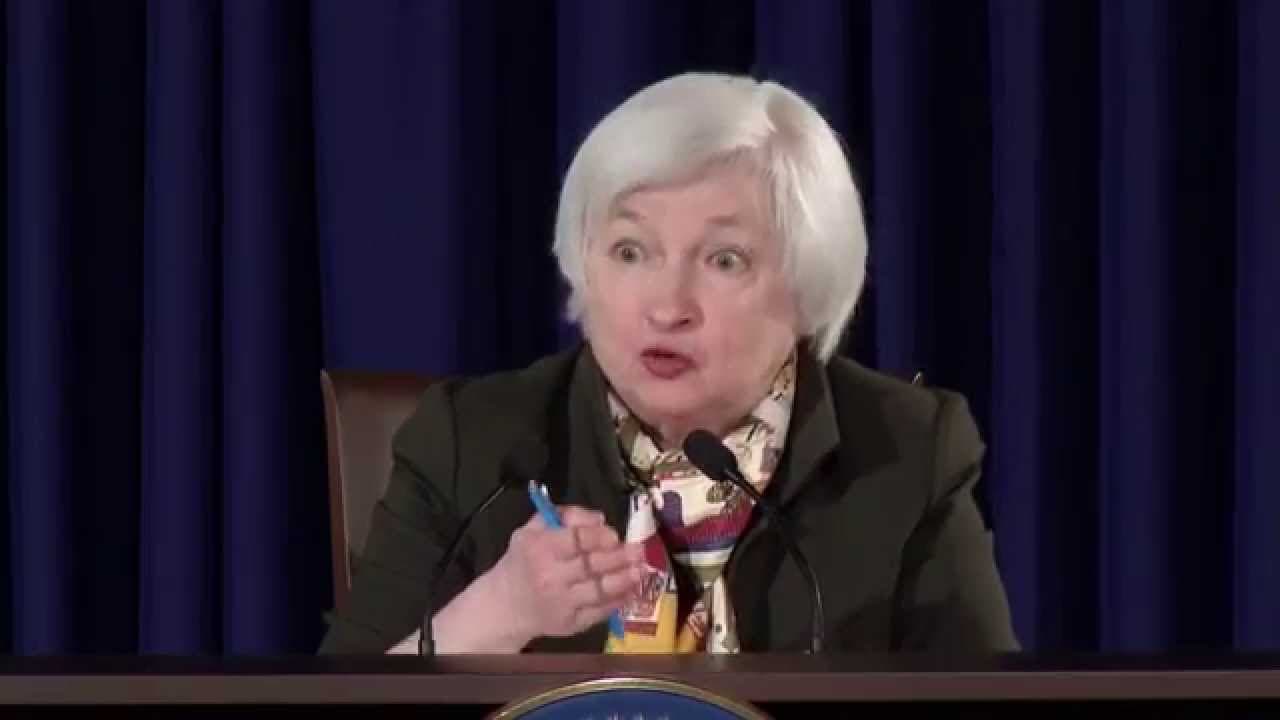
The Federal Reserve kept the federal funds rate target at 0 to 0.25 percent and said an April increase remained unlikely, while leaving later meetings open. A rate increase required further labor-market improvement and reasonable confidence that inflation would return to 2 percent, and even after liftoff, policy was expected to remain highly accommodative and dependent on incoming economic data.
Transcript
CHAIR YELLEN. Good afternoon. As you know, the Federal Open Market Committee this afternoon reaffirmed the current 0 to one quarter percent target range for the federal funds rate. We also updated our forward guidance, indicating that an increase in the target range for the federal funds rate remains unlikely at our next meeting in April. With cont... Read More
Key Insights
- The federal funds rate target remained at 0 to 0.25 percent because the Committee judged that highly accommodative policy was still appropriate for supporting progress toward maximum employment and 2 percent inflation.
- Removing the word "patient" did not establish a timetable for raising rates. The Committee considered an April increase unlikely but allowed for action at any later meeting if incoming economic information justified it.
- The threshold for raising rates was further labor-market improvement and reasonable confidence that inflation would return to 2 percent over the medium term, based on employment, inflation, financial, and international indicators.
- The labor market was improving strongly, with job gains averaging nearly 290,000 per month over three months and unemployment falling to 5.5 percent in February, although wage growth remained sluggish.
- Labor-market slack had diminished but had not disappeared. A labor-force participation rate below most estimates of its trend and the presence of people wanting full-time work indicated continuing cyclical weakness.
- Inflation was below the Committee's longer-run objective largely because of lower energy and import prices. Dollar appreciation was expected to restrain import prices further, while these influences were viewed as transitory.
- Economic growth appeared to slow in the first quarter after real GDP expanded about 2.5 percent during 2014. Moderating household spending, subdued housing, and weaker export growth contributed to the softer assessment.
- Policy projections were conditional rather than promises. Stronger growth and higher inflation could produce a steeper rate path, while weaker conditions could result in a lower and less steep trajectory.
Install to Summarize YouTube Videos and Get Transcripts
Explore YouTube Video Summarizer or Get YouTube Transcript Extractor
Questions & Answers
Q: Why did the Federal Reserve keep interest rates unchanged in March 2015?
The Committee kept the federal funds rate target at 0 to 0.25 percent because it still considered that range appropriate for achieving maximum employment and 2 percent inflation. Employment had improved considerably, but labor-force participation remained below most estimates of its trend, wage growth was sluggish, inflation was below the objective, and first-quarter economic growth appeared to have moderated.
Q: What did removing the word "patient" mean for the timing of a rate increase?
Removing "patient" meant the Committee was no longer signaling that a rate increase was unlikely for at least the next couple of meetings. It did not mean policymakers had selected a date or would act impatiently. An increase remained unlikely at the April meeting, while June and subsequent meetings remained possible depending on incoming information and the economy's evolution.
Q: What conditions did the FOMC require before raising the federal funds rate?
The Committee anticipated raising the target range after seeing further improvement in the labor market and becoming reasonably confident that inflation would move back toward 2 percent over the medium term. Its assessment would use a broad range of information, including labor-market measures, inflation pressures, inflation expectations, financial developments, and international developments rather than any single indicator.
Q: How strong was the labor market at the time of the press conference?
The labor market had made considerable progress. Employment gains averaged nearly 290,000 per month during the preceding three months, and the unemployment rate reached 5.5 percent in February, three-tenths below the reading available at the December meeting. Broader measures also improved, but low participation, sluggish wages, and involuntary part-time employment indicated that further improvement remained possible.
Q: Why was inflation running below the Federal Reserve's 2 percent objective?
Inflation had fallen further below 2 percent largely because energy prices were lower. Declining import prices also restrained inflation, and the dollar's recent appreciation was expected to continue exerting downward pressure on import prices in the following months. Policymakers expected these factors to be transitory and projected inflation to rise gradually as their effects dissipated and the labor market improved.
Q: How did the stronger dollar affect the Federal Reserve's outlook?
The stronger dollar affected the outlook through trade and prices. Yellen said it was probably one reason export growth had weakened, contributing to reduced growth projections and a weaker outlook for net exports. Dollar appreciation also held down import prices and temporarily pushed inflation lower. At the same time, she noted that the dollar's strength partly reflected the strength of the U.S. economy.
Q: What were the FOMC's economic projections in March 2015?
Participants projected unemployment at 5 to 5.2 percent at the end of the year and expected it to decline somewhat further during 2016 and 2017. Their central growth tendency for the current year and the next was 2.3 to 2.7 percent. Inflation was projected below 1 percent for the year, then 1.7 to 1.9 percent the next year and 1.9 to 2 percent in 2017.
Q: What interest-rate path did FOMC participants project after liftoff?
Most participants lowered their projected federal funds rate paths compared with December, consistent with weaker projections for GDP growth and inflation and somewhat lower estimates of normal unemployment. The median projection was just below 2 percent in late 2016 and slightly above 3 percent in late 2017. Actual policy remained data dependent, so stronger or weaker conditions could alter that trajectory.
Summary & Key Takeaways
-
The Committee maintained the federal funds rate target at 0 to 0.25 percent and removed the word "patient" from its guidance. Yellen stressed that the wording change did not establish a rate-increase date. An April move remained unlikely, while June and later meetings could not be ruled out.
-
Labor conditions continued to improve, with payroll gains averaging nearly 290,000 per month over the prior three months and unemployment reaching 5.5 percent in February. However, low labor-force participation and sluggish wage growth suggested remaining cyclical weakness, giving policymakers reasons to seek further progress before raising rates.
-
Economic growth appeared to slow during the first quarter, while weak exports, subdued housing, lower energy prices, declining import prices, and dollar appreciation shaped the outlook. Participants reduced projections for growth, inflation, and the appropriate interest-rate path, but still expected moderate expansion and inflation gradually returning toward 2 percent.
Read in Other Languages (beta)
Share This Summary 📚
Summarize YouTube Videos and Get Video Transcripts with 1-Click
Try YouTube Summary with ChatGPT & Claude or YouTube Transcript Generator
Explore More Summaries from Federal Reserve 📚


Summarize YouTube Videos and Get Video Transcripts with 1-Click
Try YouTube Summary with ChatGPT & Claude or YouTube Transcript Generator