How did the asteroid kill the dinosaurs and what survived
TL;DR
The asteroid caused a rapid, global die off by creating an impact layer and intense heat that killed non buried dinosaurs instantly. Surviving animals included burrowing mammals, lizards, crocodilians, and birds that could shelter underground. The Yucatan crater confirms the impact, and humans can still influence extinctions through conservation and policy changes.
Transcript
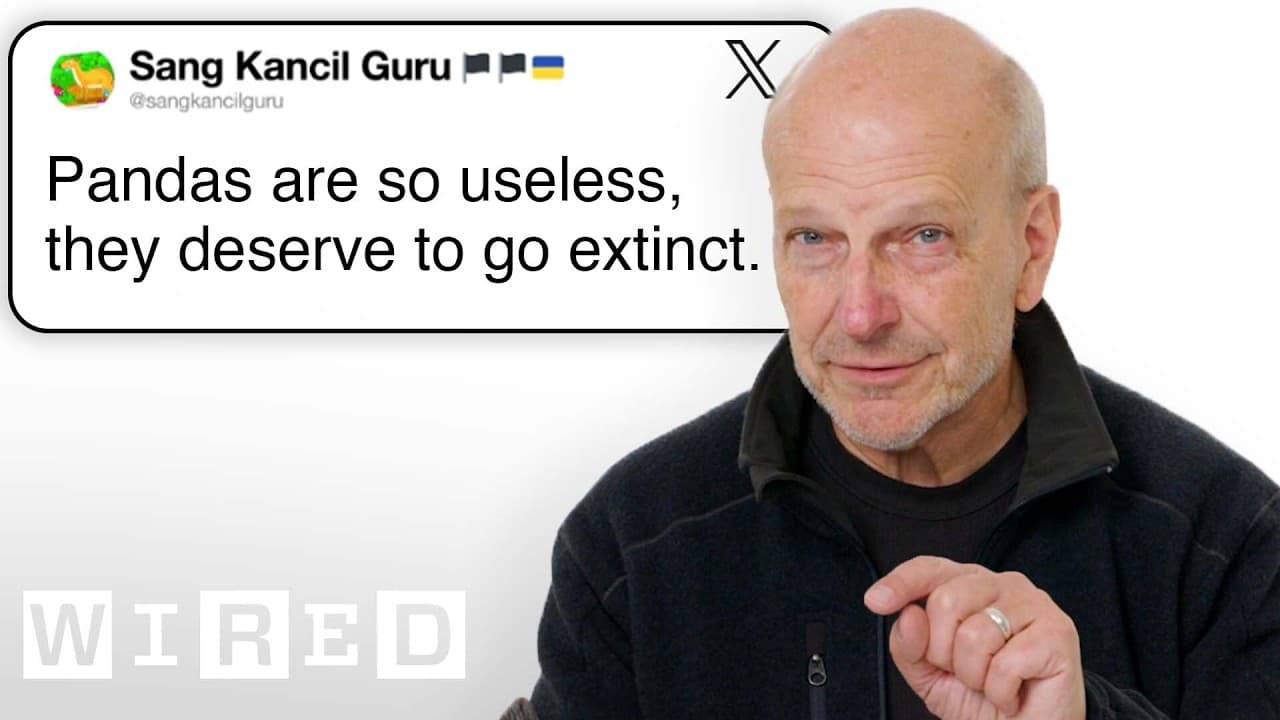
- I'm Dr. Kenneth Lacovara, Paleontologist and Executive Director of the Edelman Fossil Park Museum of Rowan University. I'm here to answer your questions from the internet. This is "Extinction Support." [upbeat music] @LindseyKinsell2 asked, "How do we know an asteroid killed the dinosaurs?" Well, dinosaurs dominated Earth's terrestrial ecosystems... Read More
Key Insights
- The extinction event is evidenced by an abrupt boundary in the fossil record and an ash layer that marks a rapid turnover in life forms.
- Survivors were often small burrowers or animals able to hide underground during the heat pulse of the impact.
- The Chicxulub crater is a key piece of evidence locating the asteroid impact that caused the dinosaurs’ demise.
- Heat from the impact was identified as the biggest killer on the day of impact for animals on the surface.
- Birds survived the extinction event and are considered avian dinosaurs or descendants of dinosaurs onward.
- Conservation actions, such as banning lead ammunition and captive breeding, can help endangered species recover from near extinction.
- In the long term, evolutionary trajectories are contingent and mass extinctions reshape which lineages dominate life after the event.
- Alternative extinction hypotheses exist but are less supported by the immediate, global extinction pattern seen in the fossil record.
Install to Summarize YouTube Videos and Get Transcripts
Explore YouTube Video Summarizer or Get YouTube Transcript Extractor
Questions & Answers
Q: What evidence shows the asteroid killed the dinosaurs?
The evidence includes an impact layer and ash in the geological record, a wide absence of in place dinosaur fossils above that boundary, and a recognized crater off the Yucatan Peninsula. The asteroid was about 18 kilometers across, traveled at high velocity, and produced enough energy to cause global environmental upheaval. This combination explains the rapid disappearance of non avian dinosaurs and supports the asteroid extinction scenario.
Q: Where is the asteroid impact site located?
The impact site is a crater off the Yucatan Peninsula on the east coast of Mexico. It is about 110 miles wide and 12 miles deep, and it was published as a significant finding in 1991. Petroleum industry knowledge predates public disclosure, but scientific confirmation solidified the link between the crater and the dinosaur extinction event.
Q: Which animals likely survived the day of impact and why?
Animals that could hide underground or burrowed past the heat pulse had a better chance to survive. Examples include little shrew like mammals, lizards, crocodilians, and birds. These groups could retreat underground or find shelter, avoiding the extreme heat and immediate destruction that hit surface dwellers.
Q: How many California condors survived the brink and what helped recover them?
California condors dropped to about 22 individuals in 1972 due to DDT causing eggshell fragility and lead poisoning from ingested bullets. A coordinated effort captured all remaining condors, bred them in captivity, and released individuals back into the wild. This intensive program, together with policy changes, has helped the population rebound to about 550 individuals, showing what proactive conservation can achieve.
Q: What happens if insects like mosquitoes and flies disappear, according to the expert?
Insects at the base of the food chain support many organisms, including birds, frogs, amphibians, and small mammals. Eliminating major insect groups could trigger ecosystem collapse through loss of food sources. The discussion frames this as a potential trigger for broader ecological disruption rather than a minor issue.
Q: Could humans go extinct due to a future asteroid impact, and what would this look like?
A future asteroid impact could be calamitous for humans, especially if it causes global climate disruption and dust resettling into the atmosphere. However, many humans live underground or in protected facilities, so pockets of humanity could survive while others experience severe disruption. The aftermath could resemble a Mad Max scenario for a time, dependent on resilience and response.
Q: Why are some people skeptical about a single cause for the dinosaur extinction?
Skeptics point to multiple potential causes such as volcanism, climate shifts, and complex ecosystem dynamics. The evidence most strongly supports a rapid, asteroid-driven boundary with an instantaneous extinction signal rather than a slow, multi phase decline. Nonetheless, scientific discourse acknowledges possible contributing factors while emphasizing the abrupt post boundary turnover.
Q: What does it mean that birds are considered avian dinosaurs and why is that important?
Birds are considered avian dinosaurs because they are descendants of theropod dinosaurs, sharing key anatomical features. This classification explains why some dinosaurs did not go extinct and highlights the continuity of dinosaur lineage in modern species. It also informs how we understand evolution and the selective pressures that continued beyond the mass extinction event.
Summary & Key Takeaways
-
A mass extinction was driven by a sudden asteroid impact that created a distinct sedimentary layer and widespread death, with some species surviving due to burrowing or sheltering behaviors.
-
The impact crater near the Yucatan Peninsula is about 110 miles wide and 12 miles deep, corroborating the dinosaur killer event and giving context to the rapid loss of non avian dinosaurs.
-
Efforts in conservation show that humans can reverse or mitigate declines in endangered species, demonstrated by the recovery of the California condor through captive breeding and habitat protection.
Read in Other Languages (beta)
Share This Summary 📚
Summarize YouTube Videos and Get Video Transcripts with 1-Click
Try YouTube Summary with ChatGPT & Claude or YouTube Transcript Generator
Explore More Summaries from WIRED 📚






Summarize YouTube Videos and Get Video Transcripts with 1-Click
Try YouTube Summary with ChatGPT & Claude or YouTube Transcript Generator