How to Make Weekly YouTube Videos in Five Hours
TL;DR
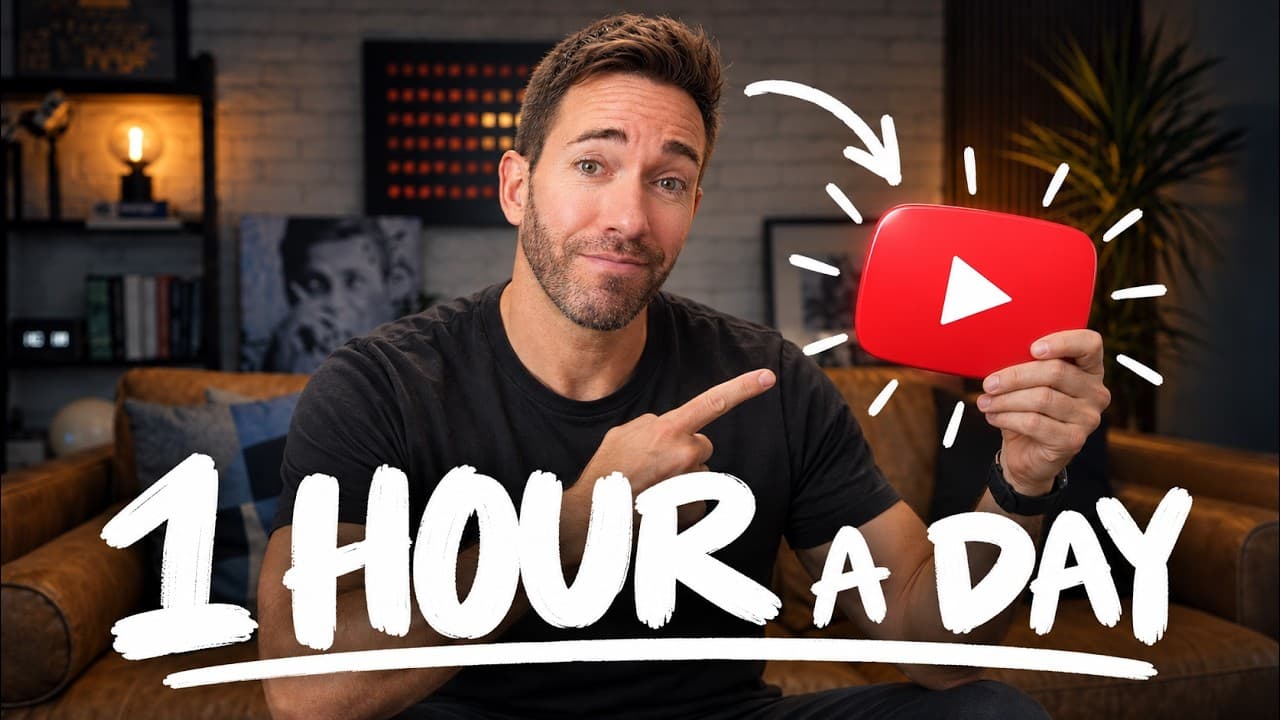
Create one YouTube video each week by assigning one focused hour to each weekday and prioritizing the decisions that most affect performance. Start with search-backed topics, titles, and thumbnail concepts, research uncovered or contrarian angles, then speak your ideas into an AI writing tool instead of typing from scratch. This workflow can reduce production time while helping the content reach relevant potential clients.
Transcript
The videos I've spent the least time on this year are the ones that have actually done the best. And that's not an accident. I have figured out a completely new workflow for making these, [music] and it's taken something that used to eat up my entire week down to about an hour a day. But the part that really surprised me is the videos I make this w... Read More
Key Insights
- Topic selection is presented as determining about 80% of whether a video succeeds, because an unwanted idea cannot be rescued by an excellent script or thumbnail. Monday therefore begins with evidence-based topic research rather than relying only on the creator's instincts.
- A one-hour-per-day schedule is designed to produce one finished weekly video by Friday. Giving each weekday a single production responsibility narrows attention to the few decisions that most strongly influence reach, authority, and the ability to attract suitable customers.
- Search is described as the primary discovery path for a new channel. Early search viewers help YouTube understand the intended audience, which can later enable the platform to recommend the creator's work to more people as the channel develops.
- VidIQ works as the data source in the proposed research system, tracking channel performance, competing channels, and searches made on YouTube. Claude then interprets that information to suggest topics connected to the audience's existing problems and demonstrated search behavior.
- Thumbnail development belongs at the beginning of production, not the end. Creating five to ten concepts immediately reveals whether the topic can be packaged into something clickable, allowing the creator to pivot before spending the rest of the week researching and scripting it.
- Originality can improve a video's opportunity to rank against existing coverage. Tuesday's research process examines what other creators already say, what they overlook, and which contrarian positions exist, while leaving the expert responsible for accepting only ideas that match their genuine beliefs.
- Gemini Notebook can turn collected sources into a customized audio overview that resembles a podcast. Listening during an existing activity, such as a workout, helps the creator absorb the topic, identify gaps in current coverage, and prepare a differentiated viewpoint without adding a separate research session.
- Speaking is the proposed shortcut for Wednesday's script development. The creator recommends using Claude's voice mode to brainstorm the intended angle and relevant knowledge naturally, allowing AI to help transform spoken expertise into a script without requiring an all-day typing session.
Install to Summarize YouTube Videos and Get Transcripts
Explore YouTube Video Summarizer or Get YouTube Transcript Extractor
Questions & Answers
Q: How can experts make one YouTube video each week faster?
Experts can divide production into one focused hour each weekday, with every day assigned a specific job and the finished video ready by Friday. The process begins with topic, title, and thumbnail decisions, continues with research for an original angle, and then moves into spoken script development. This concentrates limited time on the decisions presented as having the greatest effect on performance and customer relevance.
Q: How should a new YouTube channel choose video topics?
A new channel should begin with problems its intended customers are already searching for on YouTube. The creator recommends telling Claude who the business helps and which problems it solves, then using VidIQ data to find related searches and topics. This approach gives early viewers a clear reason to discover the channel and helps YouTube learn which audience the content serves.
Q: Why is topic selection so important for a YouTube video?
Topic selection is described as responsible for about 80% of whether a video takes off. If viewers do not want the underlying idea, even a strong script and an effective thumbnail may not save it. Choosing the topic first also ensures that research and production effort are invested in a question people are already asking rather than an idea supported only by instinct.
Q: How do VidIQ and Claude work together for YouTube research?
VidIQ gathers information about searches, channel activity, competing creators, and content performance, while Claude interprets that information and turns it into recommendations. The creator compares VidIQ to a data-entry assistant and Claude to a chief financial officer who makes decisions from the collected figures. Connecting them allows most of the planning work to happen inside Claude instead of repeatedly opening VidIQ.
Q: When should creators design their YouTube thumbnails?
Creators should develop thumbnail concepts during Monday's first planning hour, alongside the topic and title. The workflow calls for generating roughly five to ten concepts from a rough idea and examining successful thumbnails related to the chosen subject. Doing this early tests whether the idea can become an appealing package and permits a quick pivot before research and scripting consume more time.
Q: How can creators find a fresh angle on a popular topic?
Creators can use Gemini Notebook to collect relevant articles, discussions, and YouTube videos, then request an audio overview focused on three areas: what everyone already says, what nobody appears to say, and which contrarian positions exist. The resulting gaps can reveal a distinctive angle. The expert must still decide whether that angle reflects a view they genuinely hold rather than adopting disagreement for attention.
Q: Why can search-focused videos help a new YouTube channel grow?
Search-focused videos place a new creator in front of people who are actively looking for help with a relevant problem. Those first searchers and viewers provide signals about whom the channel serves, which the creator says helps YouTube find additional viewers later. One student example involved a trustee-versus-beneficiary topic that reached about a thousand views, roughly seven times the channel's normal result.
Q: How can voice mode speed up writing a YouTube script?
Instead of typing a complete script from a blank page, the creator recommends opening Claude's voice mode and speaking through everything intended for the video in a natural brainstorming style. The spoken material can include the creator's angle, expertise, and ideas gathered during research. This method is intended to get knowledge out of the expert's head and into script form in less than an hour.
Summary & Key Takeaways
-
The workflow compresses weekly YouTube production into one focused hour each weekday. Its purpose is to help experts publish consistently, attract people already seeking solutions, and become recognized authorities in their fields. The creator reports that videos made with this streamlined approach have outperformed projects that consumed an entire week.
-
Monday is dedicated to selecting a search-backed topic, developing the title, and creating several thumbnail concepts. VidIQ supplies information about searches, channels, and successful content, while Claude interprets that information. Testing the packaging before production makes it possible to abandon an unclickable idea without wasting the remaining weekly work.
-
Tuesday focuses on discovering a distinctive angle through research in Gemini Notebook, previously called NotebookLM. Its audio overview can summarize relevant articles, discussions, and YouTube videos while highlighting common arguments, neglected points, and contrarian positions. Wednesday begins script creation by verbally brainstorming into Claude instead of slowly typing the first draft.
Read in Other Languages (beta)
Share This Summary 📚
Summarize YouTube Videos and Get Video Transcripts with 1-Click
Try YouTube Summary with ChatGPT & Claude or YouTube Transcript Generator
Explore More Summaries from Wes McDowell 📚
Summarize YouTube Videos and Get Video Transcripts with 1-Click
Try YouTube Summary with ChatGPT & Claude or YouTube Transcript Generator