How to Fix a Business Website That Won't Convert
TL;DR
Make your website easier to scan, immediately explain what you offer, and guide visitors toward one clear next step. Use conversational copy, reveal the people behind the business, present concise testimonials with photos, and explain packages or pricing ranges so potential clients can assess the offer without searching competitors for answers.
Transcript
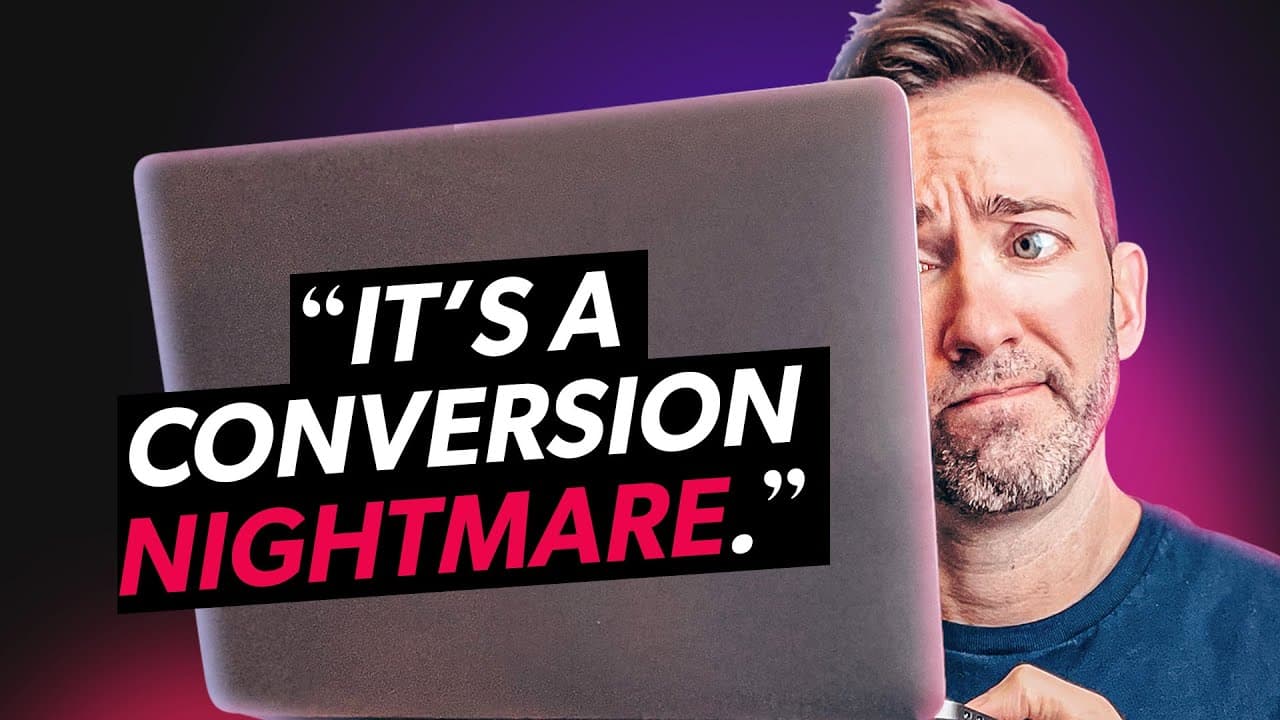
picture this you've poured your heart and soul into creating the perfect website for your small business but instead of skyrocketing sales it's actually sabotaging your own success now since this is such an important topic I knew I needed backup so I asked my friend and fellow website Coach Josh Hall to help me out here so that we can expose the se... Read More
Key Insights
- Visitors scan business websites rather than reading them like books, so homepages and sales pages need concise copy. Pain points, benefits, and the offer should appear quickly, while detailed material can be moved into blog posts designed for longer reading.
- A website's purpose must be clear within three to five seconds. Vague corporate language, complicated phrases, and generic welcome messages make visitors work to understand the business, increasing the chance that they leave before exploring the rest of the page.
- An effective hero section combines a concise value-focused headline, a relevant visual, and a strong call to action. The visual should represent the customer's positive state after receiving help, while the call to action should specify the next step.
- A founder's note makes a small business feel more trustworthy by showing who is behind the brand. It can briefly explain why someone should sign up, what customers can expect after joining, and what principles or commitments define the business.
- Conversational website copy builds a human connection more effectively than stiff, technical, or overly professional language. Simple explanations make the message easier to understand and can signal that the business has enough command of its expertise to communicate it clearly.
- Testimonials work best when they are designed for scanning. A memorable sentence from a longer customer statement can become the headline, while the remaining text provides context. Including the customer's picture can also make the social proof more noticeable and credible.
- Pricing information helps prospects decide whether to continue rather than search competitors for answers. Businesses offering customized services do not need to publish one fixed amount, but they can still show packages, clarify deliverables, and provide typical price ranges.
- Clear packages reduce uncertainty about how a service works. Each offer should explain its process and included deliverables, especially for broad services such as digital marketing, where potential customers may otherwise struggle to understand what they would receive.
Install to Summarize YouTube Videos and Get Transcripts
Explore YouTube Video Summarizer or Get YouTube Transcript Extractor
Questions & Answers
Q: How can I make my business website convert more visitors?
Make the homepage easy to scan and place the most important information near the top. State the customer's problem, the benefit you provide, and the exact offer in concise language. Add a clear call to action, humanize the brand with a founder's note, show concise testimonials, and explain packages, deliverables, and pricing information so visitors can make an informed decision.
Q: What should a business website hero section include?
A hero section should include a clear headline that communicates the business's unique value, a strong visual that resonates with the intended audience, and a specific call to action. The suggested image should show the positive state customers experience after receiving help. The call to action can direct visitors to schedule a free consultation, explore products, or take another relevant next step.
Q: How quickly should a website explain what the business does?
A business website should make clear what the company does and how it helps within three to five seconds. This explanation belongs near the top of the page in the hero section. If visitors encounter vague language, complicated phrases, or a generic welcome message, they may leave instead of scrolling further to determine what the company actually offers.
Q: How do I shorten homepage copy without losing important details?
Review the homepage with the goal of cutting its length roughly in half while preserving the pain points, benefits, offer, and other essential information. The transcript suggests asking ChatGPT to condense the pasted copy, remove fluff, and retain important points. After receiving the result, manually revise the wording as needed so the final copy still sounds like the business and its owner.
Q: Why should a small business add a founder's note?
A founder's note reveals the real person behind a brand and helps address concerns about whether the company is genuine and whom the customer will deal with. It can appear on a homepage or sales page, including near a pricing table. A useful approach is to answer, in about a minute, why someone should sign up and what they should expect after joining.
Q: How should testimonials be displayed on a website?
Testimonials should be formatted for quick scanning instead of appearing only as large blocks of text. Pull a memorable sentence from a longer testimonial and use it as a headline, then place the supporting statement below it. When possible, include a picture of the customer because visitors may overlook text-only testimonials, while a visible person helps the proof attract attention.
Q: Should a service business publish prices on its website?
A service business should address pricing even when every project receives a customized quote. It can publish typical ranges for different tiers instead of listing one fixed amount. The site should also explain available packages, included deliverables, and the process. Without this information, prospects may continue searching competitors' websites until they find clearer answers to their pricing questions.
Q: Why does conversational website copy improve trust?
Conversational copy makes a website feel like a helpful discussion rather than a legal document, technical manual, or stiff sales presentation. Visitors can understand and relate to simple, friendly language more easily, which supports a human connection with the brand. Explaining expertise in clear terms can also convey a stronger grasp of the subject than language filled with jargon or complicated phrases.
Summary & Key Takeaways
-
Business websites lose potential customers when their pages resemble small books. Homepages and sales pages should present pain points, benefits, and offers briefly because visitors scan rather than read every word. Important information must appear early, while detailed explanations are better suited to blog posts or other long-form content.
-
The hero section should tell visitors what the business does and how it helps within three to five seconds. It needs a concise value-focused headline, an image showing the positive outcome customers experience, and a strong call to action such as scheduling a consultation or viewing available products.
-
Trust and conversion improve when a website feels human and transparent. A founder's note can identify who runs the business, conversational language can make expertise understandable, and concise testimonials can provide social proof. Clear packages, deliverables, processes, prices, or price ranges also help visitors evaluate an offer confidently.
Read in Other Languages (beta)
Share This Summary 📚
Summarize YouTube Videos and Get Video Transcripts with 1-Click
Try YouTube Summary with ChatGPT & Claude or YouTube Transcript Generator
Explore More Summaries from Wes McDowell 📚

Summarize YouTube Videos and Get Video Transcripts with 1-Click
Try YouTube Summary with ChatGPT & Claude or YouTube Transcript Generator