How to Grow a Small YouTube Channel Originally
TL;DR
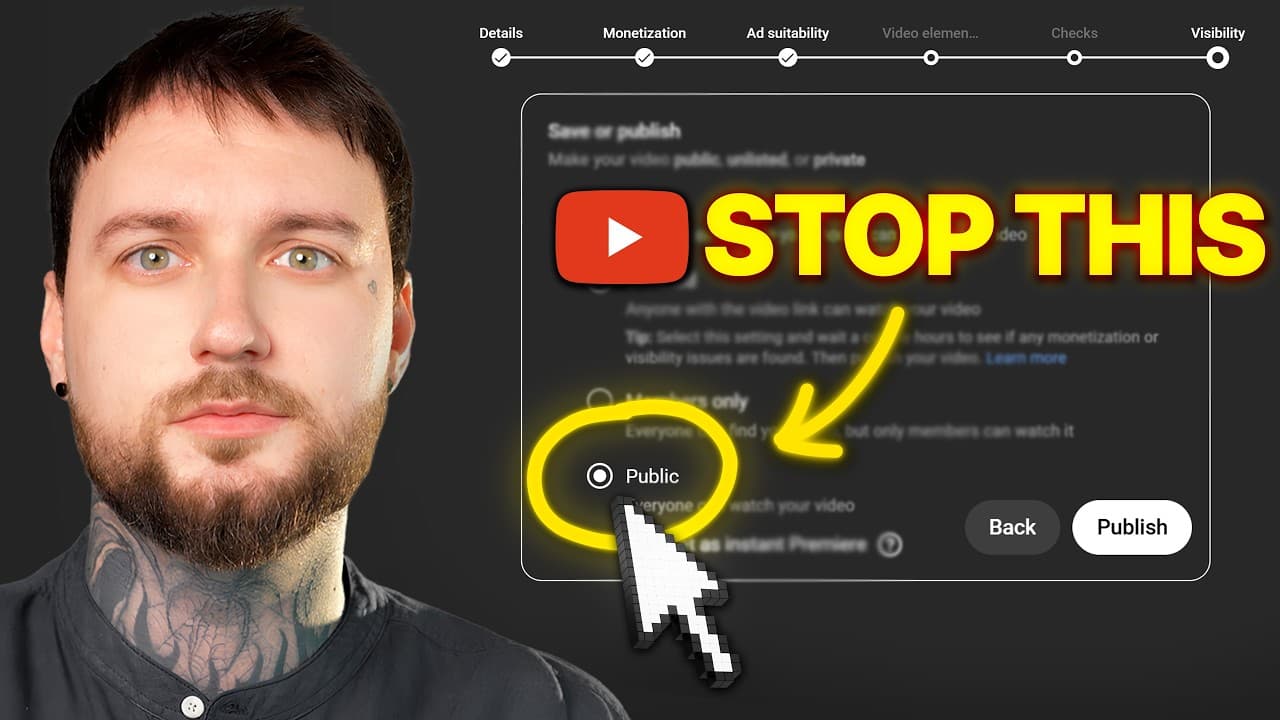
Stop publishing videos that closely copy successful creators or repeat your own previous hits. Keep proven fundamentals such as clear thumbnails, effective titles, hooks, and good audio, but distinguish every idea through a fresh angle, deeper question, personal opinion, humor, visual style, or way of explaining. Memorable content gives viewers a reason to return, while higher output only creates more opportunities to be ignored when every upload feels interchangeable.
Transcript
Alrighty. If you have less than 500 subscribers, one of the biggest reasons you're not growing probably has nothing to do with your editing, with your thumbnails, with your titles, or even with your niche. It's because of your approach to making content. And I've learned this the hard way because I've been doing the same mistakes you are probably d... Read More
Key Insights
- Copying viral videos is less effective because many creators now study the same successful channels, formats, and trends. When viewers encounter numerous versions of the same idea, another similar upload becomes difficult to distinguish, even if its editing, title, and thumbnail are competent.
- A fresh angle can transform inspiration into original value. A creator may retain the broad subject of a successful video while challenging its conclusion, asking a different question, adding new information, or presenting a distinct opinion instead of recreating the original script and argument.
- Repeating your own successful video too closely can make the follow-up feel unnecessary. Using the same topic, structure, and title concept may appear to replicate success, but a stronger approach is to deepen the subject or create a better new version of the underlying idea.
- Higher publishing frequency cannot compensate for interchangeable content. Consistency matters, but producing more videos with the same appearance, sound, and formula merely increases the number of opportunities for viewers to ignore the channel rather than making the creator memorable.
- Originality is expressed through angle, opinion, voice, and combinations of ideas. It does not require being strange for attention. Personal jokes, memes, music, visual choices, and explanations can make an upload feel as though it could only have come from one particular creator.
- Faceless channels can communicate strong personality without showing the creator on camera. The transcript cites Fireship as an example whose thumbnails, jokes, cultural references, distinctive explanations, and personal take reveal a recognizable identity even though the creator does not show his face.
- Creative paralysis can result from consuming too much YouTube growth advice. Constant exposure to systems involving thumbnails, titles, click-through rate, retention, and other rules can fill a creator's mind with noise, making personal ideas harder to recognize or trust.
- Personalization should sit on top of sound content fundamentals. Creators should still respect useful conventions such as clear thumbnails, appropriately sized titles, strong hooks, and good audio, while treating every creative choice as an opportunity to add their own style and personality.
Install to Summarize YouTube Videos and Get Transcripts
Explore YouTube Video Summarizer or Get YouTube Transcript Extractor
Questions & Answers
Q: Why should small YouTube channels stop copying viral videos?
Small channels should stop closely copying viral videos because many creators are already studying the same successful channels, formats, and trends. Viewers consequently see numerous versions of nearly identical ideas. Even a well-edited copy can be easy to ignore when it contributes nothing new. Inspiration remains useful, but the resulting video should offer a different angle, question, opinion, or piece of information.
Q: How can creators use viral videos without copying them?
Creators can use a viral video as evidence that viewers care about a broad topic, then build a different argument around that subject. The transcript suggests reversing or challenging the original angle, such as responding to an argument about why apples are bad with a video about why apples are good. The essential step is contributing new information rather than reproducing the original script.
Q: Why can repeating a successful video hurt a channel?
Repeating a successful upload can hurt when the follow-up uses nearly the same topic, structure, and title concept. Although the creator may believe they are reproducing success, viewers may consider the second version unnecessary. A better follow-up keeps the useful foundation but asks a different question, explores the subject more deeply, or develops a stronger new version of the idea.
Q: Does posting more often help a small YouTube channel grow?
Posting more often helps only when the individual videos remain useful, distinctive, and worth watching. If every upload looks, sounds, and unfolds in the same way, increased frequency simply creates more chances for viewers to ignore the channel. The goal should therefore be memorability rather than mechanical output, with consistency supporting quality and differentiation instead of replacing them.
Q: How can a YouTube creator make content more original?
A creator can make content more original by changing the angle, expressing a real opinion, combining ideas differently, and adding personal choices throughout the production. Jokes, memes, music, visuals, narration, and explanation style can all communicate identity. The topic itself does not need to be completely new, but the treatment should provide something viewers could not receive from an interchangeable creator.
Q: Can a faceless YouTube channel still show personality?
A faceless channel can show personality through its thumbnails, humor, references, opinions, visual language, and method of explaining ideas. The transcript points to Fireship as an example of a channel where the creator does not show his face, yet viewers can still recognize his jokes, interests, and distinctive take. Personality comes from creative decisions, not merely on-camera appearance.
Q: Why do creators struggle to trust their own video ideas?
Creators may struggle to trust their ideas because they consume too much advice about growing on YouTube and social media. Their minds become crowded with systems, rules, thumbnail guidance, title guidance, click-through rate, and retention concerns. According to the transcript, stepping back can reduce this noise, create room for personal ideas, and make it easier to pursue an idea that initially feels different.
Q: Which YouTube rules should creators keep while being original?
Creators should continue respecting practical fundamentals such as effective hooks, clear thumbnails, appropriately sized titles, and good audio. Originality should be layered onto those foundations through personal opinions, humor, music, visuals, and presentation. The transcript compares this approach to personalizing a car while still following traffic rules: individuality changes the experience without discarding the structure that keeps it functional.
Summary & Key Takeaways
-
The former strategy of finding viral videos and recreating them became less effective as more creators adopted it. Small channels now struggle to stand out when their topics, scripts, structures, titles, and presentation resemble dozens of existing uploads. The recommended response is to retain a proven topic while contributing a genuinely different angle.
-
Repeating a successful upload too closely can make the next video feel unnecessary, even when both videos come from the same creator. Instead of reproducing the same topic, structure, and title concept, creators should ask a different question, explore the subject more deeply, or develop a better new version of the original idea.
-
Originality can coexist with practical YouTube conventions. Creators can maintain clear thumbnails, concise titles, effective hooks, and good audio while personalizing their opinions, jokes, memes, music, visuals, and explanations. Faceless channels can express personality too, because a distinctive creative perspective does not require appearing on camera.
Read in Other Languages (beta)
Share This Summary 📚
Summarize YouTube Videos and Get Video Transcripts with 1-Click
Try YouTube Summary with ChatGPT & Claude or YouTube Transcript Generator
Explore More Summaries from Danny Why 📚

Summarize YouTube Videos and Get Video Transcripts with 1-Click
Try YouTube Summary with ChatGPT & Claude or YouTube Transcript Generator