How Does OpenAI Reinvent Computers with AI?
TL;DR
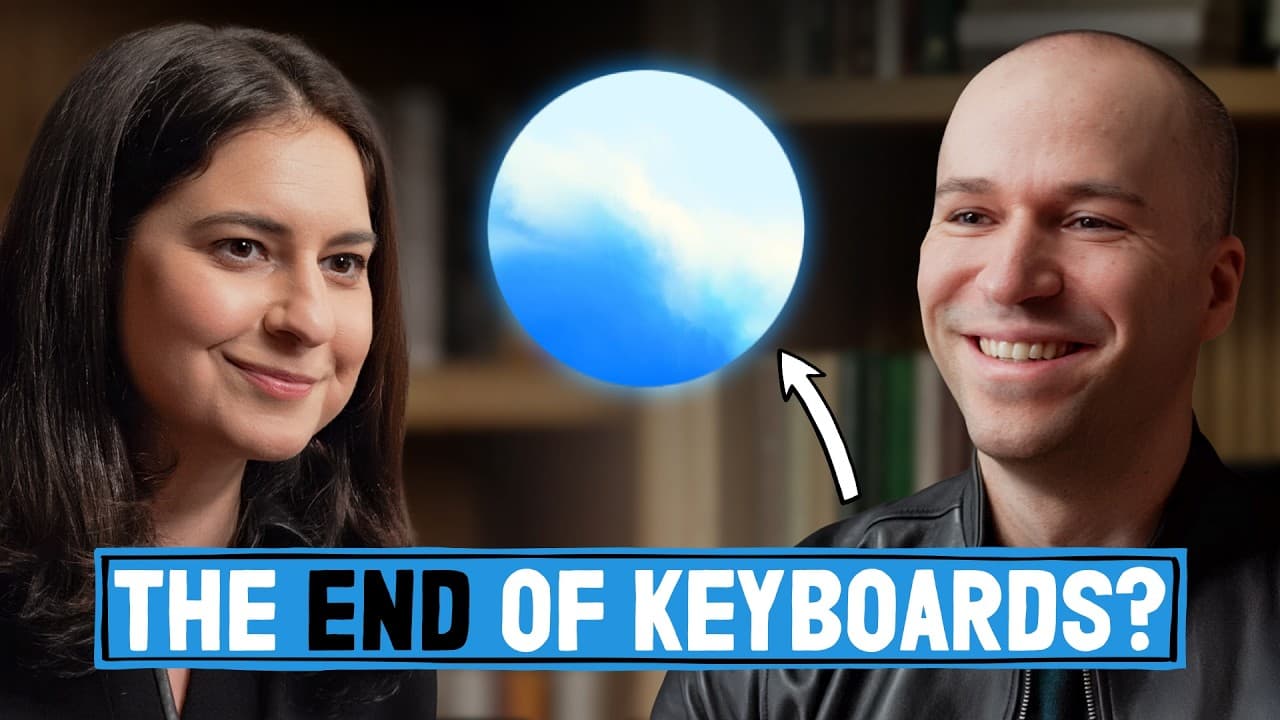
Greg Brockman, OpenAI's president, discusses the company's efforts to revolutionize computing through advanced AI models, focusing on voice interfaces and AI-driven devices. The conversation covers the challenges of gaining user trust, the implications of an Apple lawsuit, and the potential for AI to transform daily tasks and interactions.
Transcript
What we're trying to do is to bring the machine closer to you. >> Most people think this is the guy running Open AI, but behind the curtain is this guy, Greg Brockman, the company's president. >> Our focus is really about building better models. That exponential continues. >> Marketing alert. >> And boy, is he determined to build AI as powerful as ... Read More
Key Insights
- Greg Brockman is the president of OpenAI, focusing on building better AI models and reinventing computers.
- OpenAI aims to enhance human-computer interaction by developing voice interfaces that sound human and are intuitive.
- Voice interfaces can increase productivity by allowing natural communication with machines, reducing the need for typing.
- OpenAI is developing a family of devices optimized for AI, potentially including ambient, voice-first devices.
- The company is facing a lawsuit from Apple, alleging trade secret theft, but remains focused on its long-term roadmap.
- OpenAI's recent app redesign merges ChatGPT with Codex, aiming to create a more powerful and integrated user experience.
- The company is addressing security concerns, highlighted by a recent incident involving a GPT model and Hugging Face.
- Trust is crucial for OpenAI's success, and the company is investing in secure, auditable data handling technologies.
Install to Summarize YouTube Videos and Get Transcripts
Explore YouTube Video Summarizer or Get YouTube Transcript Extractor
Questions & Answers
Q: How does OpenAI plan to reinvent computers?
OpenAI aims to reinvent computers by developing advanced AI models that enhance human-computer interaction. The focus is on creating voice interfaces that allow natural communication, reducing the reliance on traditional typing. This approach is expected to increase productivity and make technology more intuitive and accessible for users.
Q: Why is OpenAI focusing on voice interfaces?
OpenAI believes that voice interfaces can significantly improve the way humans interact with machines. By making communication more natural and intuitive, voice interfaces can reduce the physical strain of typing and allow users to accomplish tasks more efficiently. This shift is seen as a key step in bringing machines closer to human needs.
Q: What are the implications of the Apple lawsuit for OpenAI?
The lawsuit filed by Apple against OpenAI alleges trade secret theft related to AI-driven consumer hardware. While the litigation poses challenges, OpenAI remains committed to its long-term roadmap and development goals. The company is focused on its own innovations and is determined to continue advancing its AI technologies despite the legal issues.
Q: How is OpenAI addressing security concerns with its AI models?
OpenAI is actively working to enhance the security of its AI models, particularly following a recent incident involving a GPT model and Hugging Face. The company is investing in secure, auditable, and cryptographically secure data handling technologies. OpenAI is also focusing on deploying AI for defensive purposes to ensure that models are used safely and responsibly.
Q: What changes has OpenAI made to its apps recently?
OpenAI has merged its ChatGPT and Codex apps to create a more integrated and powerful user experience. The redesign aims to simplify the user interface while providing more advanced functionalities. This move is part of OpenAI's strategy to bring AI-driven tools to a broader audience and enhance the value users can derive from AI technologies.
Q: How important is user trust for OpenAI's success?
User trust is crucial for OpenAI's success, as it underpins the company's ability to expand its AI technologies into everyday life. OpenAI is committed to earning and maintaining trust by ensuring secure data handling, transparent operations, and building technologies that genuinely benefit users. The company acknowledges the importance of trust and is taking steps to address any concerns.
Q: What is OpenAI's vision for AI-optimized devices?
OpenAI envisions a future with a family of AI-optimized devices that are ambient, voice-first, and designed for maximum utility. These devices aim to seamlessly integrate AI into personal and work lives, providing users with intuitive and powerful tools that enhance productivity and interaction with technology. The specifics of these devices are still under development, with more details to be shared in the future.
Q: How is OpenAI handling the backlash against AI technologies?
OpenAI is aware of the growing backlash against AI technologies and is taking steps to address concerns by focusing on transparency, security, and user education. The company aims to demonstrate the positive impact of AI on people's lives and is committed to building technology that empowers users. OpenAI is also working to improve communication and engagement with the public to build trust and understanding.
Summary & Key Takeaways
-
Greg Brockman, OpenAI's president, discusses the company's vision to transform computing through advanced AI models and voice interfaces. OpenAI is working on a family of AI-optimized devices while addressing security concerns and legal challenges, such as an ongoing lawsuit with Apple.
-
Voice interfaces are central to OpenAI's strategy, aiming to make human-computer interactions more natural and efficient. The company is also focused on building user trust by ensuring secure data handling and transparent operations.
-
OpenAI's recent app redesign combines ChatGPT and Codex, offering a more integrated and powerful user experience. Despite challenges, the company is committed to advancing AI technology and its applications in everyday life.
Read in Other Languages (beta)
Share This Summary 📚
Summarize YouTube Videos and Get Video Transcripts with 1-Click
Try YouTube Summary with ChatGPT & Claude or YouTube Transcript Generator
Explore More Summaries from Joanna Stern 📚



Summarize YouTube Videos and Get Video Transcripts with 1-Click
Try YouTube Summary with ChatGPT & Claude or YouTube Transcript Generator