How Can Private Voice AI Replace the Keyboard?
TL;DR
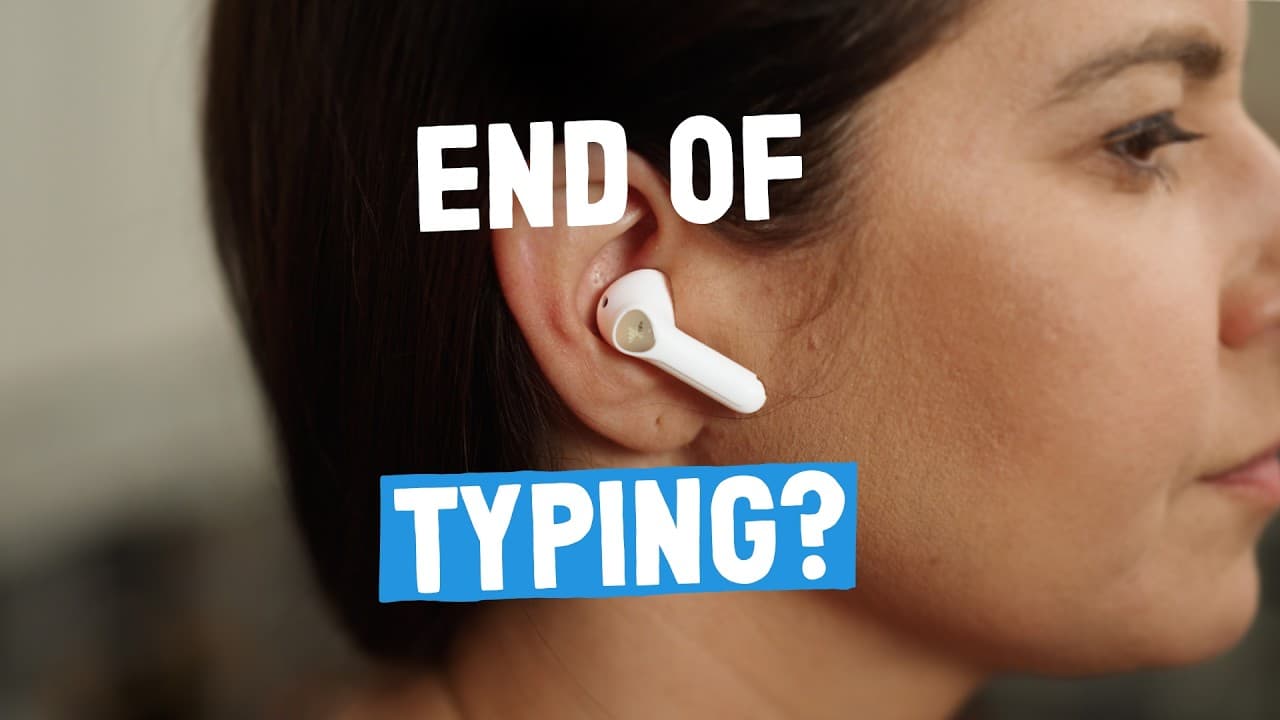
Whisper-sensitive earbuds and sound-dampening masks let people control AI or dictate text without broadcasting their words to everyone nearby. Subtle Computing’s $249 Voice Buds use machine learning to isolate quiet speech, but their cloud-based transcription also shows that privacy from bystanders does not necessarily mean privacy from the technology company processing the conversation.
Transcript
These might look like normal earbuds, but they can hear and transcribe a whisper. Hello, my name is Joy Lester and I love you. [music] That is what I said. Voice is becoming the way people interact with AI on their phones and computers. Stage GBT, can you help me with a memo? >> Memo in progress. >> The problem, no one else wants to hear it. So, na... Read More
Key Insights
- Voice is becoming an important interface for AI because improved speech recognition allows people to dictate messages, draft emails, capture ideas, and hold conversational exchanges with assistants instead of relying entirely on a mouse and keyboard.
- Subtle Computing’s Voice Buds can detect and transcribe speech delivered too quietly for a nearby person to understand. The demonstrated earbuds cost $249 and were expected to ship in the fall, according to the company information presented.
- The Voice Buds rely on machine learning rather than a secret or unusually powerful microphone. Their microphones capture surrounding sound, and software separates and enhances the whispered voice before converting the speech into text.
- Voice-to-text processing sends acoustic features to Subtle Computing’s servers, where a machine learning model isolates the whispered voice and performs transcription. Phone calls are handled differently because their machine learning processing occurs locally without sending the audio features to those servers.
- Whisper recognition is effective but imperfect because speech delivered too quietly can still be transcribed incorrectly. The testing showed strong performance in loud surroundings, yet it also produced errors when the wearer lowered her voice beyond the system’s reliable range.
- Sound-dampening masks provide another private voice interface by preventing nearby people from overhearing speech while eliminating background noise. The Steno SR Pro 2 comes from Talk Technologies, whose CEO reported increased sales connected to people using voice with AI.
- Private voice technology has historical precedents because the original steno mask was invented in the 1940s for court reporters. An even earlier device, the 1920s Hushafhone, was intended to make public telephone conversations more private.
- Privacy from nearby listeners is different from privacy from a technology provider. Whisper-sensitive devices and masks can conceal spoken words from people in the room, but server-based AI transcription may still require users to trust the company receiving and processing their speech.
Install to Summarize YouTube Videos and Get Transcripts
Explore YouTube Video Summarizer or Get YouTube Transcript Extractor
Questions & Answers
Q: How do whisper-sensitive earbuds transcribe quiet speech?
Whisper-sensitive earbuds capture the wearer’s voice together with surrounding sound through ordinary microphones. For voice-to-text use, the Voice Buds send acoustic features to Subtle Computing’s servers. A machine learning model then isolates and enhances the whispered voice before transcribing it. The demonstrated results remained effective in a loud environment, although speech whispered too quietly sometimes produced incorrect words.
Q: Do Subtle Voice Buds require special microphones?
Subtle Computing says its Voice Buds do not use special microphones. The company attributes their performance to modern machine learning applied to low-cost sensors rather than to a secret, unusually powerful microphone design. The earbuds collect the available sound, and software performs the difficult work of isolating and enhancing quiet speech so that it can be understood and transcribed.
Q: How private are Voice Buds when processing speech?
Voice Buds offer privacy from nearby people because the wearer can speak quietly enough that others may not understand the words. However, voice-to-text processing sends acoustic features to Subtle Computing’s servers for isolation, enhancement, and transcription. Phone calls use local machine learning instead. The distinction means physical privacy from bystanders does not automatically provide data privacy from the company processing dictated speech.
Q: What can people do with private voice AI devices?
Private voice AI devices can support dictating text messages, composing emails, recording ideas, and brainstorming with an AI assistant. A person could speak quietly while walking or when working around other people, then continue a conversational exchange with the assistant. These uses address a central obstacle to voice computing: most people do not want everyone nearby to hear their commands, drafts, or private thoughts.
Q: Why might voice replace some keyboard interactions?
Voice may replace some keyboard interactions because improved voice-to-text systems let users express ideas and commands conversationally. OpenAI’s president said the vast majority of computer interaction could shift in that direction, while Subtle Computing’s CEO described an ambition for an interface that makes users more productive and present. The proposed shift includes dictation, messaging, email writing, idea capture, and AI brainstorming.
Q: What is a steno mask and how does it support AI use?
A steno mask is a sound-dampening device that captures the wearer’s speech while preventing nearby people from overhearing it and eliminating background noise. The Steno SR Pro 2 is made by Talk Technologies. Its CEO said the company had seen increased sales among AI users because people who interact with technology by voice may require privacy in offices or other shared environments.
Q: Are private voice masks a new invention?
Private voice masks are not a new invention. The original steno mask was invented in the 1940s for court reporters, according to the account given by the Talk Technologies CEO. The broader idea is older still: a device called the Hushafhone was used in the 1920s to help people conduct more private telephone conversations in public places.
Q: What are the main drawbacks of replacing typing with voice?
Replacing typing with voice raises concerns about accuracy, literacy, social comfort, and privacy. Extremely quiet speech can still create transcription errors. Typing remains important for reading and writing skills, while speaking around others can be distracting or revealing. Devices can hide speech from nearby listeners, but cloud-based processing may still send the user’s words to a technology company that must be trusted.
Summary & Key Takeaways
-
Subtle Computing’s Voice Buds demonstrate how quiet speech can become a practical input method for computers. Their ordinary, low-cost microphones capture surrounding audio, while machine learning isolates, enhances, and transcribes the wearer’s whisper. The earbuds performed impressively in noisy conditions, although extremely quiet speech still produced transcription errors during testing.
-
Improved voice-to-text systems could shift many interactions away from keyboards and toward spoken commands. Potential uses include composing messages, drafting emails, recording ideas during walks, and brainstorming with AI assistants. Technology companies are exploring this direction because voice promises greater productivity and a computing experience that keeps users more present.
-
Private voice interfaces solve the social problem of speaking around other people, but they introduce other concerns. Sound-dampening masks conceal speech from nearby listeners, while cloud transcription can still send words to a company’s servers. Typing also remains valuable for literacy, reading, writing, accuracy, and situations where a closed door provides simpler privacy.
Read in Other Languages (beta)
Share This Summary 📚
Summarize YouTube Videos and Get Video Transcripts with 1-Click
Try YouTube Summary with ChatGPT & Claude or YouTube Transcript Generator
Explore More Summaries from Joanna Stern 📚


Summarize YouTube Videos and Get Video Transcripts with 1-Click
Try YouTube Summary with ChatGPT & Claude or YouTube Transcript Generator