How did Meta recruit Alex Wang and build MuseSpark
TL;DR
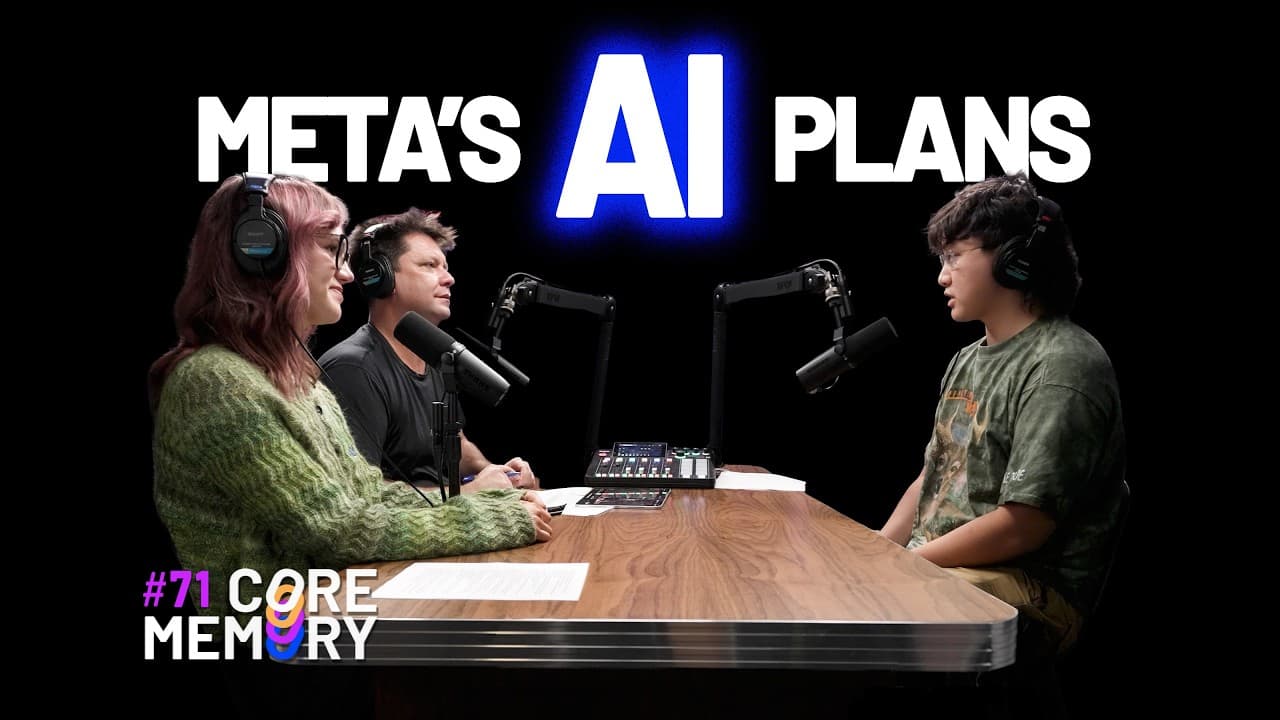
Alex Wang explains Meta’s structure and why they pursued him, revealing how MuseSpark and the frontier model stack were rebuilt in nine months. He discusses compute per researcher, talent density, and big bets, plus the open questions about open source and geopolitics.
Transcript
All right, Kylie, we've got another big guest this week. >> Huge >> Alex Wang, the chief of Meta's artificial intelligence efforts. It was how many months ago? >> About 10 months ago. >> About 10 months ago, he was the founder, co-founder and CEO of Scala. I met a sort of quasi acquired >> the company half acquired the company and fully acquired Al... Read More
Key Insights
- Wang oversees Meta Super Intelligence Labs, which includes TBD, PAR, and fair, coordinating research, product, and scientific exploration under his leadership.
- TBD hosts leading researchers and infrastructure engineers and reports to Wang, forming the core of Meta’s frontier model work.
- PAR, led by Nat Friedman, is responsible for product and applied research, focusing on deployment of models to the world.
- Daniel Gross helps lead Meta Compute, handling long term infrastructure and GPU/data center planning for large AI bets.
- Wang describes his relationship with Nat Friedman, Daniel Gross, and Shengjia Zhao, emphasizing collaboration across leadership to advance AI tech.
- The conversation covers the motivation to join Meta, including the belief that those who build AI models gain greater rights to leverage them for product development.
- Wang stresses the importance of compute per researcher and talent density as key inputs for advancing frontier AI models.
- The discussion touches on Meta’s broader strategy towards openness, with MuseSpark as an appetizer rather than the main course and concerns about open sourcing versus closed releases.
Install to Summarize YouTube Videos and Get Transcripts
Explore YouTube Video Summarizer or Get YouTube Transcript Extractor
Questions & Answers
Q: What is Meta Super Intelligence Labs and who leads it?
Meta Super Intelligence Labs is the umbrella under which Meta organizes its frontier AI efforts, including units like TBD for large model research, PAR for product and applied research, and fair for exploratory work. Alex Wang oversees the entire initiative, coordinating research directions, infrastructure, and scientific agenda across these teams, with specific leadership from Nat Friedman and Daniel Gross in sub-units.
Q: Who are the key colleagues working with Alex Wang at Meta?
Key colleagues include Nat Friedman, who heads PAR and helps lead the product and applied research side, Daniel Gross who co-leads Meta Compute and concentrates on long term infrastructure, and Shengjia Zhao who serves as chief scientist overseeing the scientific agenda. Wang notes past relationships with Nat and Daniel and highlights collaboration with Shengjia Zhao on scientific direction.
Q: What motivated Alex Wang to move to Meta and join its AI effort?
Wang explains that the rapid progress of AI and the increasing importance of compute for model development influenced his decision. He believed building AI models gives researchers greater influence over product and deployment, and Meta’s scale, compute resources, and ambition offered a unique opportunity to pursue bold frontier research and deployable AI products at scale.
Q: What does Wang say about MuseSpark and its role in Meta’s AI strategy?
MuseSpark is described as an appetizer rather than the main course, indicating it is an initial frontier model that demonstrates capabilities while Meta works on more advanced systems. The emphasis is on token efficiency and deploying a stack that can support larger future models, under careful consideration of openness and strategic deployment.
Q: How long did it take to rebuild Meta’s frontier model stack, according to the interview?
According to the interview, Meta rebuilt its frontier model stack from scratch in nine months, reflecting intense effort, collaboration across teams, and a rapid development cycle to assemble the necessary infrastructure, research workflows, and model architectures that could support ambitious AI goals.
Q: What does Wang say about open source versus closed releases?
Wang mentions that Meta’s release strategy for MuseSpark involved a closed approach, raising questions about where Meta lands on open sourcing. The discussion touches on balancing openness with strategic considerations around safety, governance, and geopolitics, indicating a nuanced stance rather than a blanket policy.
Q: How does Wang describe the role of compute and talent in advancing frontier AI?
Wang emphasizes compute per researcher and talent density as critical inputs for progress in frontier AI. He argues that having substantial compute resources enables bigger bets, faster experimentation, and deployment of advanced models, while dense talent pools accelerate research and product integration.
Q: What personal and organizational changes does Wang discuss about joining Meta?
Wang discusses leaving Scale and the personal transition, including public reactions and the shift to a role at a company with tens of thousands of employees. He reflects on the broader strategic ambitions at Meta and how the move aligns with pursuing long term AI goals, governance, and responsible model development.
Q: What future topics does Wang anticipate covering in Meta’s AI roadmap?
Wang signals continued exploration of frontier AI topics including computing infrastructure, brain-model alignment, and global deployment strategies. He touches on governance, safety, and model welfare, with anticipation of further model releases, advances in research infrastructure, and ongoing discussions about geopolitics and collaboration across the AI ecosystem.
Summary & Key Takeaways
-
Alex Wang outlines the Meta Super Intelligence Labs setup, including TBD, PAR, and fair, and how they coordinate research, product, and infrastructure under his oversight.
-
He describes the recruitment dynamics, the role of Nat Friedman and Daniel Gross, and the emphasis on long term compute and bold bets to advance frontier models.
-
Wang also shares personal reflections on leaving Scale, the transfer of leadership responsibilities, and Meta’s direction in AI strategy and deployment for broader access.
Read in Other Languages (beta)
Share This Summary 📚
Summarize YouTube Videos and Get Video Transcripts with 1-Click
Try YouTube Summary with ChatGPT & Claude or YouTube Transcript Generator
Explore More Summaries from Core Memory Podcast 📚
Summarize YouTube Videos and Get Video Transcripts with 1-Click
Try YouTube Summary with ChatGPT & Claude or YouTube Transcript Generator