What Can Depth Cameras Do for Computer Vision?
TL;DR
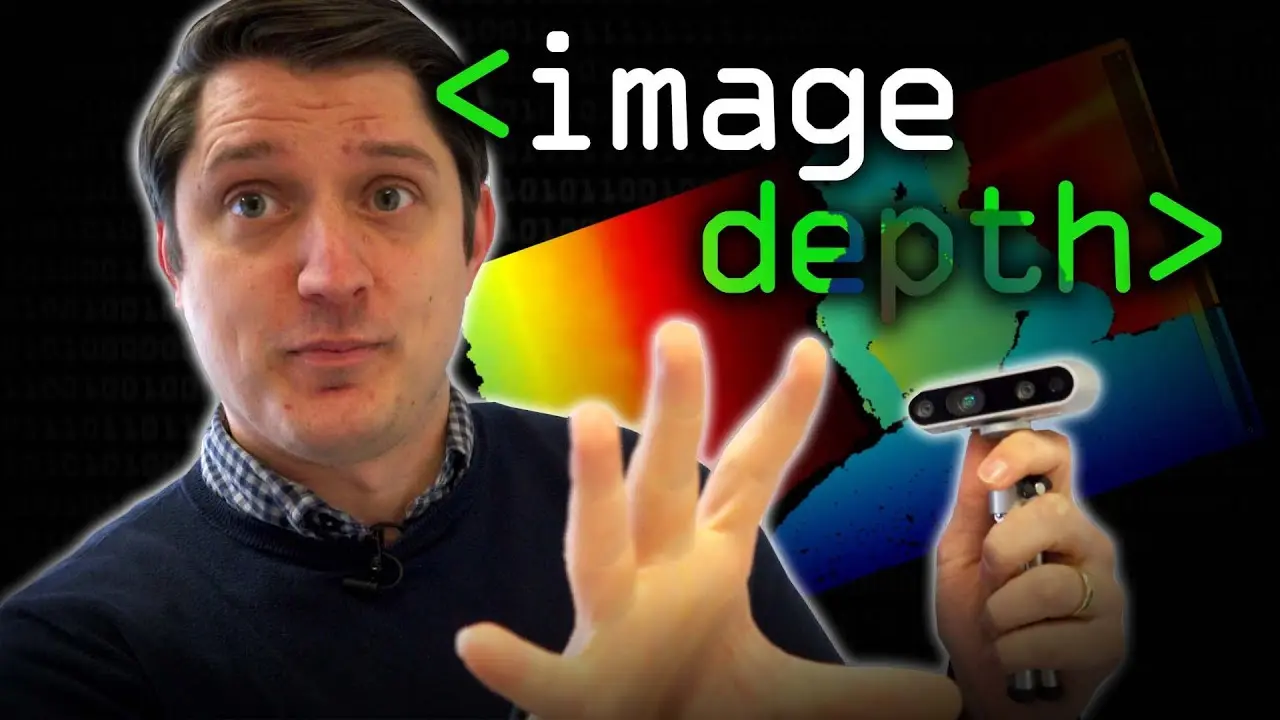
Depth cameras, like the Intel RealSense, enhance computer vision by providing depth information alongside RGB, facilitating better object detection and deep learning performance. They utilise stereo matching techniques and optional infrared patterns to generate accurate depth maps, making them accessible and beneficial for various applications in image processing.
Transcript
so what yeah what we got here then what's this playing around with this quite fun uh i borrowed this from our robot lab this is an intel realsense which is a kind of all-in-one depth sensor right so i thought we'd just talk about what it is and why might we want depth in the vision literature which is sort of where i am we would usually term this r... Read More
Key Insights
- 👻 Depth sensors like the Intel RealSense provide depth information alongside RGB, allowing for better object separation and improved deep learning performance.
- 🫥 The RealSense depth sensor uses stereo matching and infrared dot patterns to determine depth, resulting in accurate depth maps.
- 🍵 Depth sensors eliminate the need for extensive processing on the computer side, as the device handles stereo matching and depth calculations.
- 🏑 Depth sensors can be beneficial in various fields, such as object saliency detection and image segmentation.
- 💁 Depth information can be integrated into deep learning models by adding a depth channel to enhance performance.
- 👤 The RealSense depth sensor is a cost-effective and user-friendly device that offers depth sensing capabilities to consumers.
- 💁 While depth sensors have their limitations in certain environments, they still provide valuable depth information for many applications.
Install to Summarize YouTube Videos and Get Transcripts
Explore YouTube Video Summarizer or Get YouTube Transcript Extractor
Questions & Answers
Q: What is the advantage of using depth sensors in computer vision applications?
Depth sensors allow for easier object separation and improved performance in deep learning models, as the network can prioritize the closest objects and avoid the need for explicit boundary detection.
Q: How does the Intel RealSense depth sensor work?
The RealSense depth sensor uses stereo matching between two cameras and infrared dot patterns to determine depth. The infrared patterns provide additional texture for better feature matching, enhancing the accuracy of the depth maps.
Q: Are depth sensors capable of working in various environments?
Depth sensors can work well in environments with sufficient texture and infrared patterns. However, they may struggle in areas with poor texture or outside where infrared patterns are invisible, leading to reduced depth accuracy.
Q: Can depth information be integrated into deep learning models?
Yes, depth information can be integrated into deep learning models by adding a depth channel to the input layer. This allows the network to leverage depth information for improved performance, especially in tasks like object saliency.
Summary & Key Takeaways
-
Depth sensors, such as the Intel RealSense, provide depth information alongside RGB, allowing for better object separation and improved performance in deep learning.
-
Depth is different from true 3D as it only provides information on the distance of objects from the camera, but it still offers advantages in various applications.
-
Depth sensors use stereo matching and infrared dot patterns to determine depth, with the ability to produce accurate depth maps with optional infrared emitter.
Read in Other Languages (beta)
Share This Summary 📚
Summarize YouTube Videos and Get Video Transcripts with 1-Click
Try YouTube Summary with ChatGPT & Claude or YouTube Transcript Generator
Explore More Summaries from Computerphile 📚





Summarize YouTube Videos and Get Video Transcripts with 1-Click
Try YouTube Summary with ChatGPT & Claude or YouTube Transcript Generator