How to extract Cinnamaldehyde from Cinnamon
TL;DR
Extract cinnamaldehyde from crushed cinnamon sticks by steam-distilling them with water, collecting the cloudy oil-containing distillate, extracting it repeatedly with DCM, drying the combined DCM layer, and distilling off the solvent. Starting with 25.5 grams of cinnamon sticks, the process produced about 0.5 grams of nearly pure yellow oil. Read on for the exact quantities, stopping indicator, washing sequence, and solvent-recovery steps.
Transcript
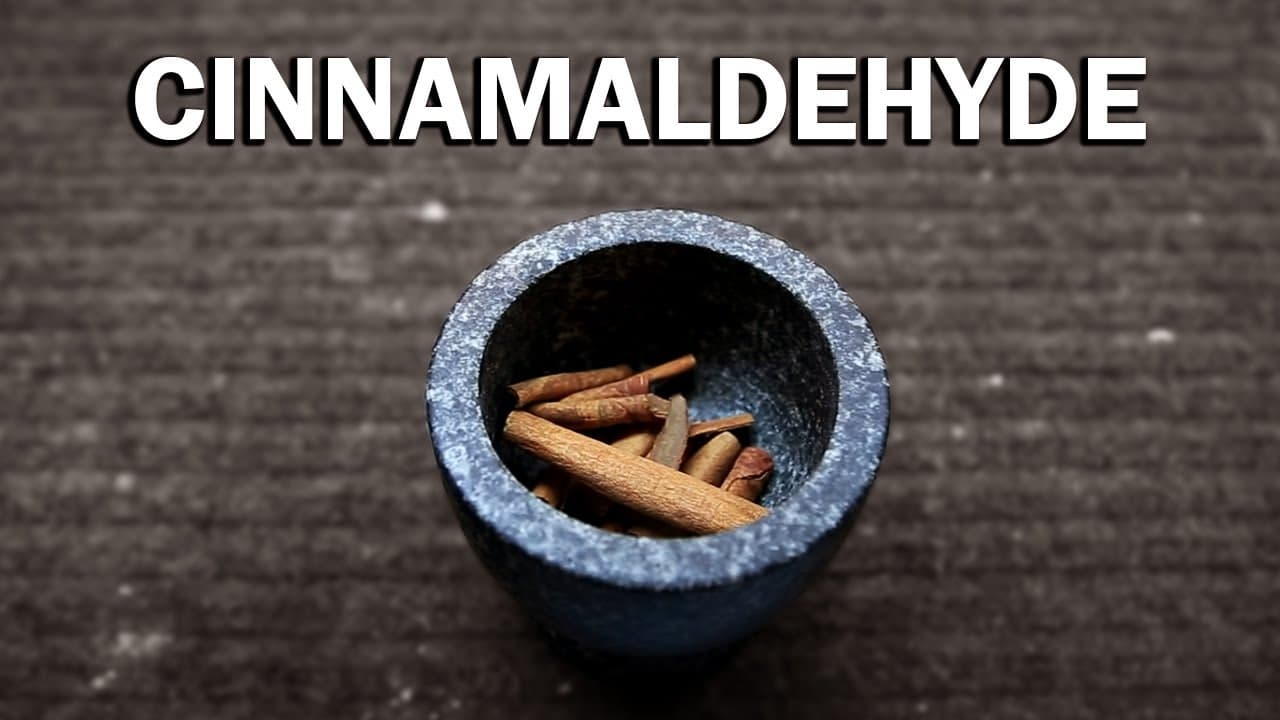
cinnamaldehyde is the chemical that gives cinnamon its characteristic flavor and odor not only this cinnamaldehyde have is obvious use as a flavoring but it can also be used as an antimicrobial or as a fungicide that curse naturally in the bark of cinnamon trees and this is where we're going to be extracting it from to do this we'll be carrying out... Read More
Key Insights
- 🌲 Cinnamaldehyde is found naturally in cinnamon trees and gives cinnamon its characteristic flavor and odor.
- 😤 Steam distillation is an effective method for extracting cinnamaldehyde from cinnamon sticks.
- 🛢️ The cloudiness of the distillate indicates the concentration of cinnamaldehyde oil.
- 🛢️ DCM is used to extract the cinnamaldehyde oil from the distillate through a washing process.
Install to Summarize YouTube Videos and Get Transcripts
Explore YouTube Video Summarizer or Get YouTube Transcript Extractor
Questions & Answers
Q: How do you extract cinnamaldehyde from cinnamon?
Crush cinnamon sticks into moderately sized pieces, add them to a round-bottom flask with distilled water, and perform steam distillation. Extract the collected cloudy distillate with repeated DCM washes, dry the combined DCM layer, filter it, and distill away the DCM to leave cinnamaldehyde as a yellow oil.
Q: How much cinnamon and water are used for the steam distillation?
The experiment used 25.5 grams of crushed cinnamon sticks and 200 milliliters of distilled water in a three-necked round-bottom flask. Another 100 milliliters of water was placed in an addition funnel, although the transcript notes that this extra water was not necessary.
Q: Why should cinnamon sticks be crushed without turning them into powder?
Keeping the cinnamon pieces moderately sized minimizes foaming during distillation. If powdered cinnamon is used, a surfactant may be needed to stop foam from reaching the still head.
Q: Why does the cinnamaldehyde distillate look cloudy?
The distillate contains many small droplets of insoluble cinnamaldehyde oil suspended in water. Water and cinnamaldehyde mix as vapors, but the cinnamaldehyde separates when they condense, producing the cloudy appearance.
Q: How do you know when to stop the steam distillation?
Use the distillate’s cloudiness as an indicator of the amount of cinnamaldehyde oil present. A clearer distillate means less oil is present; in the experiment, the second 100-milliliter batch was clear and therefore had a low cinnamaldehyde concentration.
Q: How is cinnamaldehyde separated from the aqueous distillate with DCM?
Transfer the distillate to a separatory funnel and extract it with 60 milliliters of DCM, then drain the bottom DCM layer into a flask. Repeat this process four more times with 60 milliliters of DCM each time; the clear upper aqueous layer after the final wash indicates that most of the cinnamaldehyde has been removed.
Q: How are the combined DCM extracts dried and purified?
Wash the combined DCM extracts with saturated sodium chloride solution, then drain them into a flask containing calcium chloride. Vacuum-filter off the calcium chloride and distill the solution to recover the DCM, leaving the yellow cinnamaldehyde oil.
Q: How much cinnamaldehyde did the extraction produce?
The procedure produced about 0.5 grams of nearly pure cinnamaldehyde from 25.5 grams of cinnamon sticks. An H NMR of the final product indicated that it was decently pure.
Summary & Key Takeaways
-
Cinnamaldehyde, found in the bark of cinnamon trees, can be extracted through steam distillation.
-
Crushed cinnamon sticks are added to a round bottom flask with distilled water and heated on a hot plate to start the distillation.
-
The distillate collected contains an insoluble suspension of cinnamaldehyde oil, which appears cloudy, indicating its concentration.
Read in Other Languages (beta)
Share This Summary 📚
Summarize YouTube Videos and Get Video Transcripts with 1-Click
Try YouTube Summary with ChatGPT & Claude or YouTube Transcript Generator
Explore More Summaries from NileRed 📚

Summarize YouTube Videos and Get Video Transcripts with 1-Click
Try YouTube Summary with ChatGPT & Claude or YouTube Transcript Generator