How to Build a Profitable Productized Service
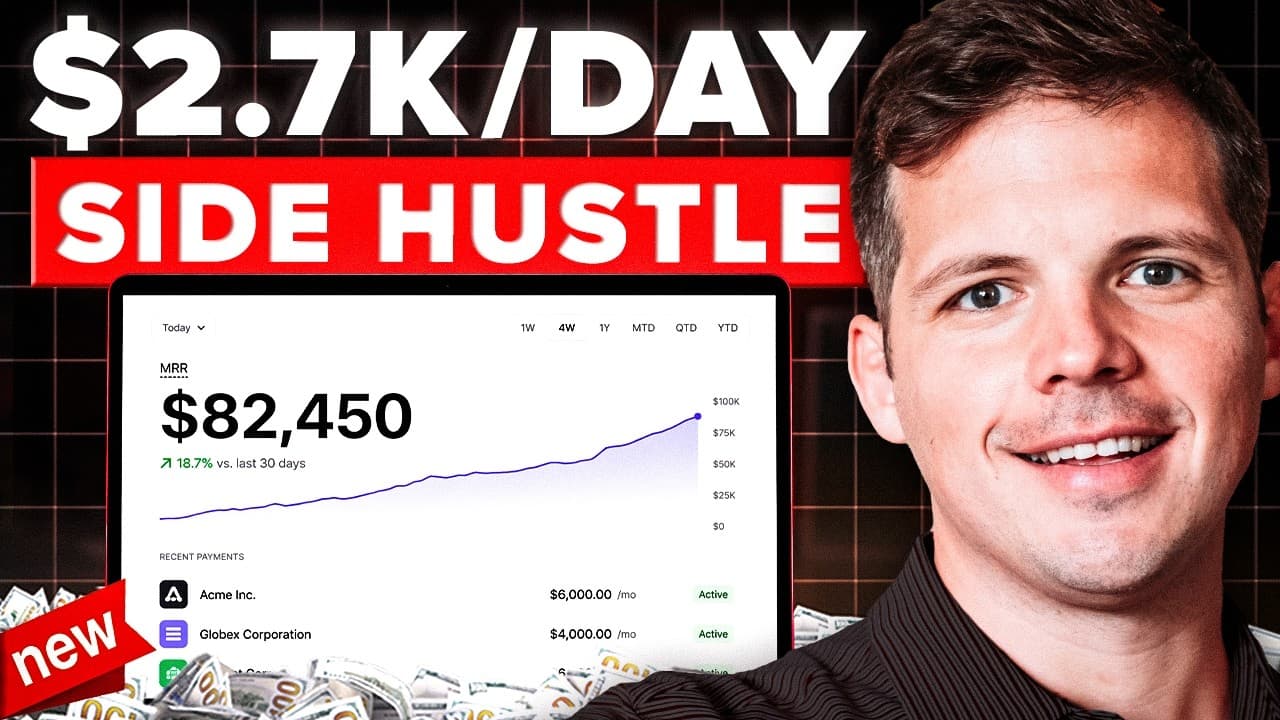
TL;DR
A productized service turns a digital skill into a standardized offer that clients can purchase directly, reducing sales friction and shortening time to value. Brett Williams used this model to build DesignJoy alone, combining subscription pricing, limited client capacity, selective intake, faster systems, and repeated price increases to generate high profit with very little overhead.
Transcript
do about a million dollars a year just myself. These are loweffort, lowcost, lowrisk startups. You can just spin up a website tomorrow and then you're set, right? Which is a huge opportunity right now because AI is so dang good that you could take something like that and scale it to the moon and back. Everyone needs it. Usually, you get i... Read More
Key Insights
- A productized service is a standardized professional service sold directly from a website with predefined terms and pricing. Customers can purchase it without requesting a custom quote, attending several calls, or negotiating a proposal, which reduces friction between discovering the offer and receiving useful work.
- Time to value is a central advantage of the model because clients can move from payment to delivery quickly. Williams argues that many companies value speed highly, making a streamlined purchase process and fast fulfillment especially useful for digital services such as design, copywriting, marketing, and social media support.
- DesignJoy is a subscription design agency operated entirely by Brett Williams without employees or contractors. He keeps a limited number of clients on retainers and completes software, product, and branding design himself, creating a business with very little cost beyond the time he invests in delivering the work.
- A large existing audience is not required to launch a productized service. Williams was anonymous when he launched, relied on friends and family for Product Hunt upvotes, and shared his story on forums. He says DesignJoy reached about a million dollars a year before he started posting on Twitter.
- Product Hunt can provide immediate discovery by ranking newly submitted products through daily upvotes. DesignJoy reached number four and received about 36,000 unique website visits, showing how a clear offer can gain meaningful exposure even when its creator has no established public following.
- Pricing can change how customers perceive a service, not merely regulate demand. Williams repeatedly raised his monthly rate when capacity became difficult to manage, but demand sometimes increased because higher prices placed the service in a different market category and changed its perceived positioning.
- Unlimited service requires a strict workflow constraint to remain manageable. DesignJoy originally offered unlimited design for $449 a month, but handled requests one at a time. That structure gave clients ongoing access while preventing every request from becoming simultaneous work for the solo operator.
- Sustainable operations depend on systems, skill, pricing, and client selection. Williams initially accepted heavy demand and eventually worked himself into the hospital. Faster processes, greater experience, higher prices, and more selective intake later helped him create an easier schedule of about 30 hours a week.
Install to Summarize YouTube Videos and Get Transcripts
Explore YouTube Video Summarizer or Get YouTube Transcript Extractor
Questions & Answers
Q: What is a productized service business?
A productized service business sells a professional skill as a standardized, ready-to-buy offer. The customer visits a website, sees the defined service and price, pays, and begins requesting work. This removes much of the usual process involving inquiry forms, custom estimates, proposals, pricing discussions, and several meetings. The model is intended to shorten time to value for the customer.
Q: How can you start a productized service without an audience?
A productized service can be launched by creating a clear website, presenting a simple offer, and using a discovery platform or relevant forums to attract initial attention. Williams had no audience when he launched DesignJoy. He asked friends and family to support the Product Hunt submission and shared his story on forums, which helped the service reach prospective customers without an established following.
Q: How did DesignJoy launch so quickly?
Williams developed the idea on a Friday, built the business website in Webflow on Saturday, and submitted it to Product Hunt on Sunday. The offer was simple enough to launch without building a team or negotiating individual contracts. Customers could understand the subscription design service and purchase it directly, allowing the business to begin generating recurring revenue shortly after its public release.
Q: Why are productized services easier to buy than traditional agency services?
Productized services replace a lengthy custom sales process with a predefined offer. A buyer does not need to fill out an inquiry form, wait for a quote, join several calls, or negotiate proposals and estimates. The buyer can pay through the website and begin consuming the service, which reduces uncertainty and shortens the period between purchase and useful delivery.
Q: Which skills can be sold as productized services?
The model can apply to digital skills beyond design. The transcript specifically identifies marketing, copywriting, and social media management as possible productized services, while DesignJoy covers software, product, and branding design. The essential requirement is that the provider can define a repeatable offer, sell it from a website, and deliver it through a consistent process with a short time to value.
Q: How does subscription pricing work for unlimited design?
DesignJoy charges clients a recurring monthly fee for continued access to design work, while processing requests one at a time. The word unlimited describes the ongoing ability to submit work rather than simultaneous completion of every request. Williams began at $449 a month and raised prices repeatedly as demand and capacity changed, eventually testing rates as high as $8,000 before dialing the price back.
Q: Why can raising prices increase demand for a service?
Higher prices can move a service into a different market category and alter how prospective clients perceive it. Williams raised prices whenever demand became overwhelming and expected the increases to discourage buyers. Instead, demand sometimes grew because the more expensive offer appealed to another type of customer. His experience suggests pricing communicates positioning and perceived value in addition to controlling capacity.
Q: How can a solo productized service avoid burnout?
A solo operator can reduce burnout by limiting active clients, processing requests sequentially, improving delivery systems, becoming faster through experience, raising prices, and selecting customers more carefully. Williams learned these lessons after excessive demand caused serious health consequences. He later created an easier working life by combining better systems and selective intake, bringing his schedule to about 30 hours a week.
Summary & Key Takeaways
-
A productized service packages a skill as a standardized offer that customers can buy directly from a website. Instead of requiring custom quotes, proposals, and several meetings, the model establishes the service and price in advance. This lowers time to value and can apply to design, marketing, copywriting, or social media work.
-
Brett Williams created DesignJoy as a safety net while employed by a transportation company facing disruption. He built the initial website in Webflow, launched on Product Hunt, and attracted customers without an established audience. Friends, family, and forum posts helped create the visibility that started the subscription design business.
-
Demand eventually created serious workload problems, despite the business having very little overhead. Williams responded by increasing prices, improving his systems, becoming faster at design, and selecting clients more carefully. These changes allowed him to reduce his schedule to about 30 hours a week while maintaining substantial monthly profit.
Read in Other Languages (beta)
Share This Summary 📚
Summarize YouTube Videos and Get Video Transcripts with 1-Click
Try YouTube Summary with ChatGPT & Claude or YouTube Transcript Generator
Explore More Summaries from Chris Koerner on The Koerner Office Podcast 📚






Summarize YouTube Videos and Get Video Transcripts with 1-Click
Try YouTube Summary with ChatGPT & Claude or YouTube Transcript Generator