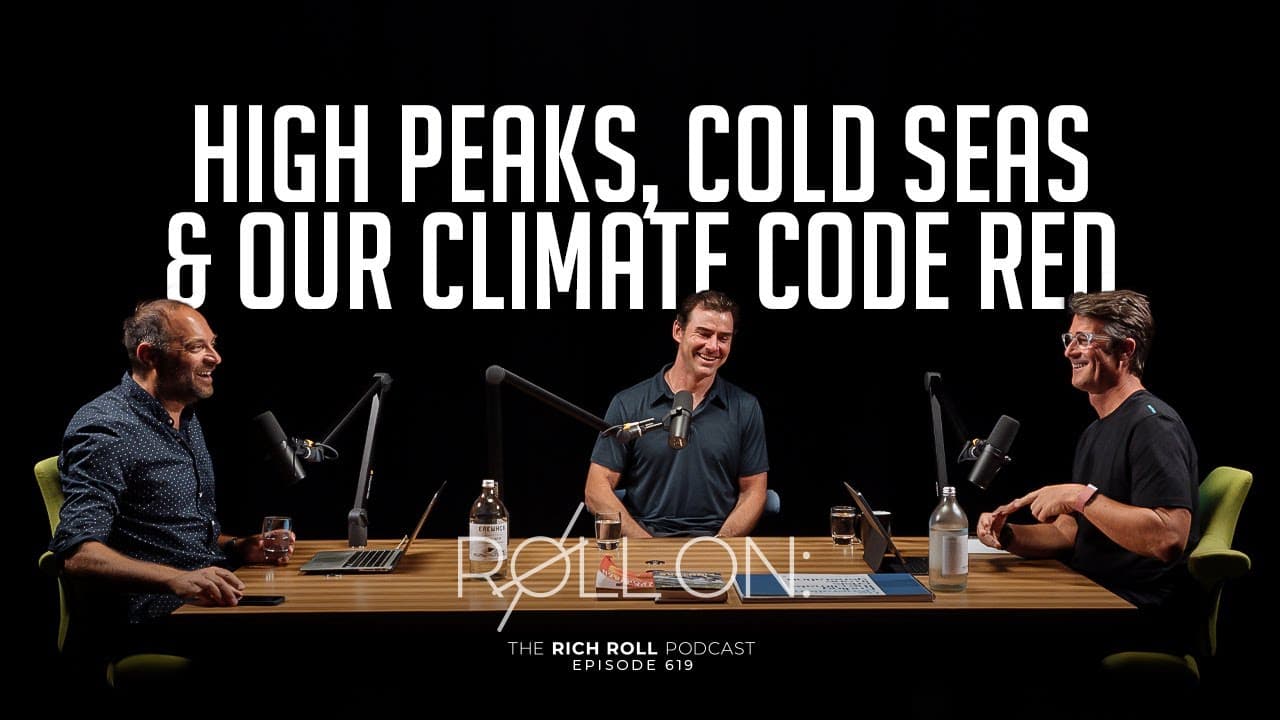
How Can Regeneration Address a Climate Code Red? | Roll On: High Peaks, Cold Seas | Rich Roll Podcast
TL;DR
Regeneration and reforestation can address the climate crisis by restoring ecosystems, and the episode presents them as constructive responses to melting ice caps, raging wildfires, and ocean acidification. Rich Roll and Adam Skolnick also connect environmental observation with drone footage of 30 to 50 sharks north of Los Angeles, endurance training, and mountain adventure. Read on for the episode’s specific climate, shark, travel, and fitness insights.
Transcript
Wow, there's a whole videography thing about BTS. (upbeat music) What's good my beautiful hype beasts of all things health and wellbeing. I hope this transmission of goodness finds you well and thriving. My name is Rich Roll, once again, in deep communion with my literary minded eco warrior, swimrun, brobarian, Adam Skolnick. Snorkel mask-wearing f... Read More
Key Insights
- The climate crisis is described as a present emergency, with melting ice caps, raging wildfires, and ocean acidification offered as visible evidence. The discussion emphasizes that these conditions require action rather than treatment as a distant or purely theoretical concern.
- Regeneration and reforestation are presented as practical areas of climate response. The episode description places these approaches at the center of the environmental discussion, connecting ecological recovery with the need to act during what the title characterizes as a climate code red.
- White sharks may be present near swimmers without being noticed. Adam recounts swimmers approaching a shark that detected or felt them coming and quickly left, reinforcing his observation that people can share coastal waters with sharks while remaining unaware of them.
- Drone footage is a useful tool for observing marine life from above. The Malibu Artist reportedly documented sharks swimming beneath surfers and identified an aggregation site north of Los Angeles that scientists and marine biologists had not previously recognized.
- The reported shark aggregation included 30 to 50 animals of different sizes and ages. Adam says most were under 10 feet long, remained in the area during the day and night, and were later visited by researchers who attached tags to dorsal fins.
- Maintaining fitness while raising an infant requires deliberate effort. Adam discusses balancing swimrun training with the first year of his son Zuma's life, joking about resisting a decline in fitness while describing the child as walking, vocalizing, and beginning to say words.
- Air travel disruption can turn a short journey into a multiday trip. After missing a Phoenix connection to Montrose, Rich waited three hours for checked luggage, rented a pickup truck, stayed overnight in Flagstaff, and drove with his children to Telluride the following day.
- Telluride combines dramatic mountain scenery with demanding outdoor recreation. Rich describes waterfalls, surrounding mountains, free gondola transportation, memorable running routes, and a Via ferrata where participants move across a rock face while clipped into cables.
Install to Summarize YouTube Videos and Get Transcripts
Explore YouTube Video Summarizer or Get YouTube Transcript Extractor
Questions & Answers
Q: How can regeneration and reforestation address the climate crisis?
Regeneration and reforestation are presented as constructive responses to the climate crisis because they focus on ecological recovery and renewed forest growth. The episode places these approaches alongside a call to act on melting ice caps, raging wildfires, and ocean acidification, but the supplied material does not explain detailed implementation steps.
Q: What signs of the climate crisis do Rich Roll and Adam Skolnick identify?
They identify melting ice caps, raging wildfires, and ocean acidification as visible signs that the climate crisis is already present. The discussion characterizes the situation as a climate code red requiring action rather than a distant or theoretical problem.
Q: Why might swimmers and surfers fail to notice nearby white sharks?
Adam describes swimmers heading toward a shark without realizing it was there; the shark detected or felt them approaching and quickly left. He also mentions drone footage showing sharks swimming directly beneath surfers who appeared completely unaware.
Q: How did drone footage help researchers observe white sharks?
Drone footage provided an overhead view of sharks that swimmers, surfers, and researchers could not otherwise see. According to Adam, the Malibu Artist used it to document sharks beneath surfers and identify an aggregation site north of Los Angeles that scientists and marine biologists had not known about.
Q: What was notable about the shark aggregation site north of Los Angeles?
The site reportedly contained 30 to 50 sharks of different sizes and ages, with most under 10 feet long. They remained there during the day and night for an unclear reason, and researchers later visited by liveaboard vessel to attach tags to their dorsal fins.
Q: How does Adam Skolnick combine parenthood with endurance training?
Adam continues swimrun and open-water training during the first year of his son Zuma’s life. He jokes about resisting a decline in fitness while acknowledging the difficulty of balancing training with infant care.
Q: Why did Rich Roll’s trip to Telluride take two days?
Rich and his children missed their connection in Phoenix after their flight from Los Angeles departed late, and another flight to Montrose was unavailable until the next day. They waited three hours for their checked bags, rented a pickup truck, stayed overnight in Flagstaff, and drove to Telluride the following day.
Q: What is the Via ferrata experience in Telluride?
The Via ferrata is described as a route across a rock face where participants clip into fixed cables and move laterally. Guided tours provide equipment and supervision, but Rich worries that his fear of heights could leave him feeling trapped on the exposed route.
Summary & Key Takeaways
-
Rich Roll and Adam Skolnick frame the climate crisis as an immediate problem marked by melting ice caps, raging wildfires, and ocean acidification. Their proposed areas of response include regeneration and reforestation. The broader conversation combines environmental concern with personal stories, humor, endurance pursuits, and observations from encounters with natural environments.
-
Adam describes swimming near white sharks off the Southern California coast and learning how frequently sharks may pass unnoticed beneath swimmers and surfers. Drone footage revealed shark activity, including an aggregation site north of Los Angeles that reportedly contained sharks of different sizes and ages and attracted attention from researchers.
-
Rich recounts a difficult journey to Telluride after a missed connecting flight in Phoenix. He and his children waited three hours for checked bags, rented a pickup truck, stayed overnight in Flagstaff, and drove through the Four Corners region. In Telluride, he ran, attended a wedding, and considered the risks of the Via ferrata.
Read in Other Languages (beta)
Share This Summary 📚
Summarize YouTube Videos and Get Video Transcripts with 1-Click
Try YouTube Summary with ChatGPT & Claude or YouTube Transcript Generator
Explore More Summaries from Rich Roll 📚



Summarize YouTube Videos and Get Video Transcripts with 1-Click
Try YouTube Summary with ChatGPT & Claude or YouTube Transcript Generator