How to Communicate Effectively Using Aristotle's Principles
TL;DR
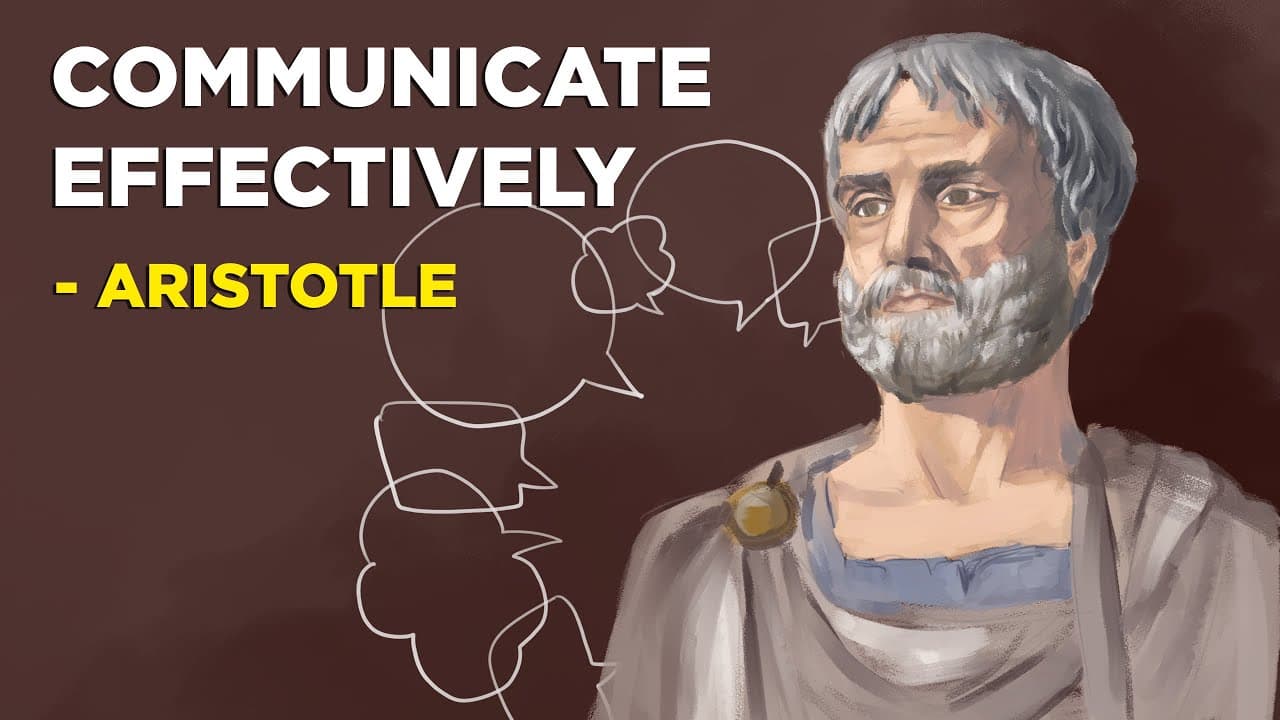
To communicate effectively, integrate Aristotle's three key principles: logos (logical arguments), ethos (credibility), and pathos (emotional appeals). Use clear language, establish trust, and be relatable to your audience. Practicing these techniques will enhance your communication skills and increase your influence.
Transcript
Aristotle is widely hailed as a pioneering intellect who flourished from 384 to 322 BCE. He was first a student of Plato, then, when Plato retired, he left the Academia which Plato founded, and he became the tutor of Alexander The Great, and the two other future kings: Ptolemy and Cassander. His remarkable contributions span a multitude of discipli... Read More
Key Insights
- 🩺 Aristotle's principles of logos, ethos, and pathos are foundational in effective communication.
- 🉐 Establishing credibility is essential for gaining trust and reliability in communication.
- 🆘 Emotional appeals help connect with the audience and make the message relevant.
- ❓ Using clear and concise language is vital to ensure the audience understands the message.
- 🤩 Practice is key to improving communication skills and reflecting on past experiences.
- 😯 Effective communication involves understanding the speaker, the speech, the audience, and the intended effect.
- 🥺 Balancing logical arguments, credibility, and emotional appeals leads to successful communication.
Install to Summarize YouTube Videos and Get Transcripts
Explore YouTube Video Summarizer or Get YouTube Transcript Extractor
Questions & Answers
Q: What are Aristotle's three crucial components of effective communication?
Aristotle's three crucial components are logos (logic), ethos (credibility), and pathos (emotion), essential for successful communication.
Q: Why is establishing credibility important in communication?
Establishing credibility ensures trust from the audience, as being logical and trustworthy are key for effective communication according to Aristotle's ethos principle.
Q: How does understanding the audience relate to Aristotle's pathos?
Understanding the audience's emotions and values is crucial for connecting through emotional appeals, aligning with Aristotle's pathos principle of communication.
Q: Why is it important to use clear and concise language in communication?
Using clear and concise language ensures that your message is easily understood by the audience, preventing confusion and disinterest in communication as per Aristotle's teachings.
Summary & Key Takeaways
-
Aristotle's contributions span various disciplines.
-
Aristotle's insights into communication emphasize logos, ethos, and pathos.
-
Five practical ways to communicate effectively draw inspiration from Aristotle's timeless philosophy.
Read in Other Languages (beta)
Share This Summary 📚
Summarize YouTube Videos and Get Video Transcripts with 1-Click
Try YouTube Summary with ChatGPT & Claude or YouTube Transcript Generator
Explore More Summaries from Philosophies for Life 📚





Summarize YouTube Videos and Get Video Transcripts with 1-Click
Try YouTube Summary with ChatGPT & Claude or YouTube Transcript Generator