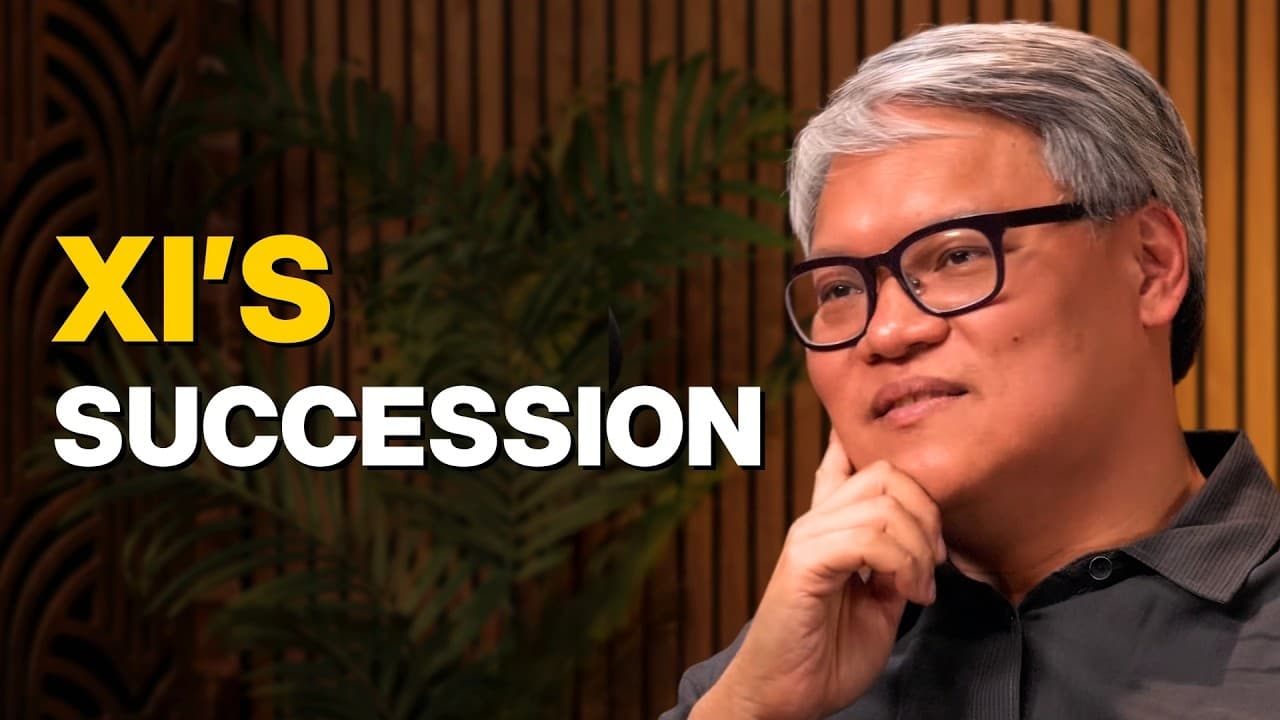
Xi Jinping’s Approach to AGI, China’s Debt Crisis, and Politburo Politics, Victor Shih
TL;DR
Victor Shih argues that China’s apparent decentralization masks growing central control: local and provincial governments make about 85% of government spending, but Beijing has increasingly controlled their revenue since the 1994 tax centralization. He connects local debt pressures, technocratic leadership, and Xi Jinping’s dominance to the Party’s overriding drive to preserve power. Read on for the mechanisms behind that system.
Transcript
Today I'm talking with Victor Shih, who is the director of the 21st Century China Center at UC San Diego. China is obviously one of the most important economic and geopolitical issues of our time, doubly so if you believe what I believe about AI. I was especially keen to talk to you because you have deep expertise not only in Chinese elite politics... Read More
Key Insights
- Chinese government spending is about 85% local and provincial and 15% national, while in the United States state and local spending is 50% and federal spending is 50%, a split that makes China look fiscally decentralized on paper despite its authoritarian structure.
- The 1994 tax centralization was driven by fear of Soviet-style disintegration. The central government decided it needed to control fiscal income, seized the value-added tax as the most lucrative revenue source, and over subsequent decades took collection of nearly all other tax categories.
- Central reimbursements to provinces are conditional in practice. Provinces are nominally told they can spend as they wish, but the real arrangement is that money arrives only if the locality does what the center wants, so fiscal autonomy has been falling since 1994.
- Land sales substituted for tax autonomy between 2000 and 2020. Localities could not control tax revenue but could control land revenue while the real estate market was strong, until the central government killed the land market in 2022 and left them dependent on Beijing.
- Political acumen, not technical credentials, determines who rises in the Chinese Communist Party. Some officials combine engineering expertise with that acumen, but it cannot be predicted in advance, and Peking and Tsinghua graduates are overrepresented in the Politburo without dominating it.
- Suboptimal Chinese policy comes from the Party's instinct to preserve its own power rather than from missing expertise. Channels exist to feed lower-level expertise upward, but the leadership will accept deaths and slower growth rather than lose control over banks or independent scientists.
- Chinese education tracks students into STEM or into social science and humanities, so an official with a doctorate in nuclear engineering may never have studied supply and demand. Government ideology is the one universally required subject, and that requirement has been ratcheted up recently.
- Xi Jinping's dominance has stripped Politburo members of the domain autonomy they once had. If Xi expresses a policy preference, officials must follow it, because visible foot-dragging or a slightly different agenda leads to purging, and such cases have already occurred.
Install to Summarize YouTube Videos and Get Transcripts
Explore YouTube Video Summarizer or Get YouTube Transcript Extractor
Questions & Answers
Q: Is China more decentralized than the United States?
China appears more decentralized by spending shares: about 85% of government spending is local and provincial, compared with 50% for state and local governments in the United States. However, Beijing centrally collects major taxes and attaches conditions to provincial reimbursements, so local spending does not equal local fiscal autonomy.
Q: What was China’s 1994 tax centralization, and why did it happen?
In 1994, the central government moved to control fiscal income because it feared Soviet-style disintegration. Beijing took control of the value-added tax, the most lucrative revenue source, and subsequently centralized the collection of nearly every other tax category.
Q: Why did fiscal decentralization support China’s growth before 1994?
From the mid-1970s to the mid-1990s, local governments generated and spent substantial revenue. That gave them incentives to attract foreign direct investment and local investment and to offer tax breaks, contributing to a strong period of mainly private-sector-driven growth.
Q: How did Chinese local governments finance themselves after losing control of tax revenue?
Between 2000 and 2020, local governments gained financial room through land sales while the real estate market performed well. After the central government killed the land market in 2022, localities became highly dependent on Beijing for their finances.
Q: Are Chinese Politburo members genuine technocrats?
Some have substantial technical training: Ma Xingrui graduated from Tsinghua University, while Zhang Guoqing studied in a top science program and worked for years in the military industry. Victor Shih cautions that scientific expertise does not necessarily translate into an ability to govern.
Q: What determines promotion within the Chinese Communist Party?
Political acumen is the decisive requirement for officials rising through the Party, regardless of their technical expertise. Princelings may develop that acumen early because their high-ranking parents can teach them about elite politics, even when they lack degrees from China’s best universities.
Q: Why can technically trained Chinese leaders still make poor economic policy?
China’s education system separates STEM students from social science and humanities, so someone with advanced engineering training may never study concepts such as supply and demand. More importantly, Shih argues that poor policy often reflects the Party’s determination to preserve control rather than a lack of available expertise.
Q: How has Xi Jinping changed decision-making within the Politburo?
Xi Jinping’s dominance has reduced the domain autonomy that Politburo members previously possessed. When Xi states a policy preference, officials must follow it because visible foot-dragging or pursuing a different agenda can lead to purging.
Summary & Key Takeaways
-
China was genuinely decentralized from the mid-1970s to the mid-1990s, with local governments raising and spending large sums, which pushed them to attract foreign direct investment and local investment and grant tax breaks. Most economists credit that fiscal decentralization for a strong period of private sector driven growth in China.
-
The 1994 tax centralization moved the value-added tax, and later almost every other tax category, to central collection, with partial reimbursement to provinces attached to conditions. Localities regained some room through land sales from 2000 until 2020, but the central government killed the land market in 2022, leaving them highly dependent on Beijing.
-
Politburo members include real technocrats trained in top Chinese programs, such as Ma Xingrui of Tsinghua University and Zhang Guoqing from the military industry, but technical training does not guarantee governing skill. Political acumen is the real filter for promotion, and princelings acquire it from parents rather than from elite degrees.
Read in Other Languages (beta)
Share This Summary 📚
Summarize YouTube Videos and Get Video Transcripts with 1-Click
Try YouTube Summary with ChatGPT & Claude or YouTube Transcript Generator
Explore More Summaries from Dwarkesh Patel 📚




Summarize YouTube Videos and Get Video Transcripts with 1-Click
Try YouTube Summary with ChatGPT & Claude or YouTube Transcript Generator