How to Convert Aspirin to Tylenol: A Step-by-Step Guide
TL;DR
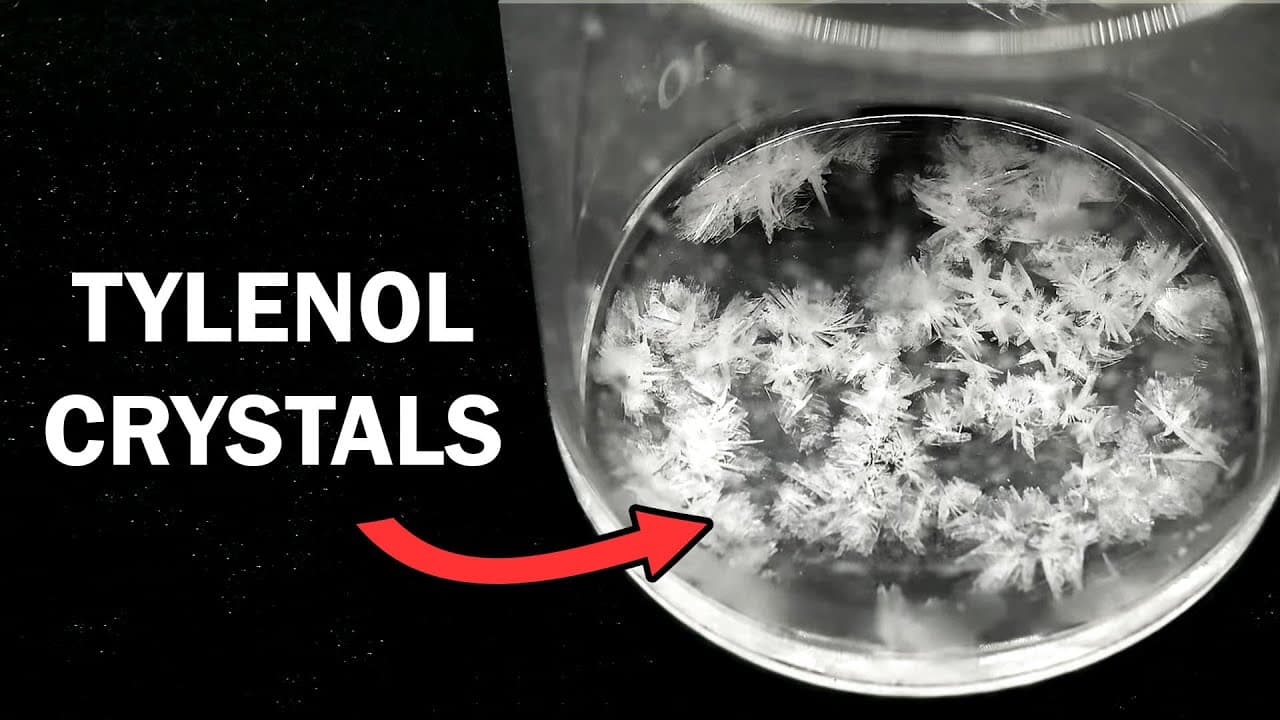
To convert aspirin to Tylenol, first extract aspirin and then hydrolyze it to salicylic acid. Next, decarboxylate the salicylic acid to phenol, nitrify it to p-nitrophenol, and reduce that to p-aminophenol. Finally, acetylate the p-aminophenol to synthesize Tylenol, but expect low overall yields due to the complexity of the process.
Transcript
a little over a year ago I made a series of videos where a converted aspirin to tylenol for those of you outside of North America tylenol is probably known as a cinnamon ofin or paracetamol the brand aspirin seems to be pretty universal around the world but it might also be known as a si I think the idea of converting one pain relieving drug to ano... Read More
Key Insights
- 👻 Both aspirin and Tylenol are based on the same core molecule called phenol, allowing for their conversion.
- ❓ The process involves multiple steps, including extraction, degradation, synthesis, and purification.
- 🎮 Each step requires specific chemicals, equipment, and careful temperature control.
- 😘 The overall efficiency of the conversion process is low, highlighting the challenges of multi-step organic synthesis.
- ❓ Synthetic pathways like this are commonly used in the pharmaceutical industry to produce drugs.
- 🎨 The content provides a glimpse into the complexity and intricacy involved in designing and executing chemical reactions at the molecular level.
- 🌱 The author plans to undertake a similar project to synthesize caffeine in the future.
Install to Summarize YouTube Videos and Get Transcripts
Explore YouTube Video Summarizer or Get YouTube Transcript Extractor
Questions & Answers
Q: What is the reason behind converting aspirin to Tylenol?
The conversion is based on the similarity in structure between aspirin and Tylenol, with both drugs having a core molecule called phenol. By degrading aspirin to phenol and then synthesizing Tylenol from it, the conversion is possible.
Q: How is aspirin extracted from pills?
The pills are powderized using a coffee grinder, and the powder is mixed with acetone. The aspirin dissolves in the acetone, and the mixture is then filtered to remove the solid impurities.
Q: What reactions are involved in converting aspirin to Tylenol?
The conversion involves ester hydrolysis, decarboxylation, nitration, reduction, and acetylation reactions. Each step is carefully executed to achieve the desired conversion.
Q: What is the overall efficiency of the conversion process?
The overall efficiency of the process is low, with a final efficiency of only 0.26%. This is due to various factors such as loss of product during filtration and low yields in certain steps.
Summary & Key Takeaways
-
The content describes the conversion of aspirin to Tylenol by degrading one to phenol and then synthesizing the other.
-
The extraction of aspirin from pills is done by powderizing them and dissolving them in acetone, followed by distillation to isolate the aspirin.
-
The aspirin is then converted to salicylic acid through ester hydrolysis and phenol through a decarboxylation reaction.
-
The phenol is nitrated to form p-nitrophenol, which is further reduced to p-aminophenol, and finally acetylated to produce Tylenol.
Read in Other Languages (beta)
Share This Summary 📚
Summarize YouTube Videos and Get Video Transcripts with 1-Click
Try YouTube Summary with ChatGPT & Claude or YouTube Transcript Generator
Explore More Summaries from NileRed 📚



Summarize YouTube Videos and Get Video Transcripts with 1-Click
Try YouTube Summary with ChatGPT & Claude or YouTube Transcript Generator