How Do Tariffs and AI Economics Shape Markets?
TL;DR
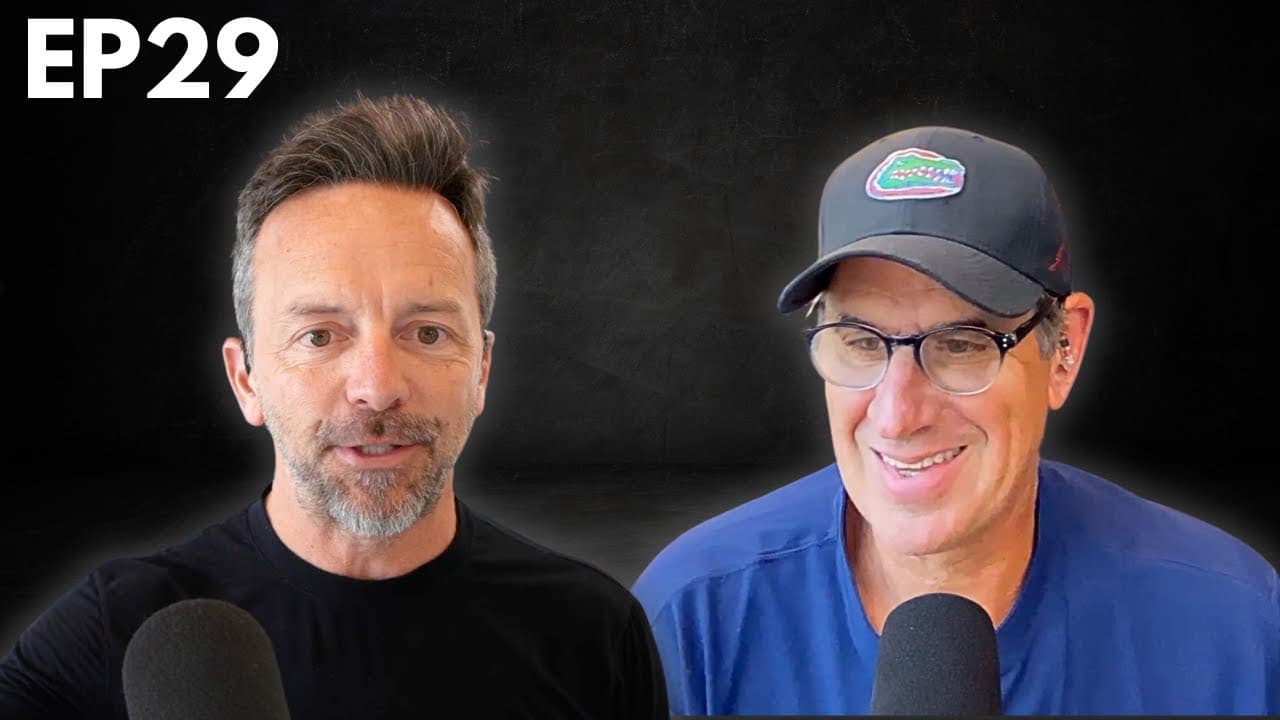
The announced tariff framework was broader and larger than markets initially expected, prompting a sharp reversal in index futures as country-specific rates emerged. Bill Gurley and Brad Gerstner connect that uncertainty with trade policy, American and Chinese open source competition, OpenAI financing, CoreWeave’s IPO, AI demand and unit economics, and a possible TikTok transaction.
Transcript
A riddle for you before we move on. Yes. What do Salesforce, Netflix, Square, Amazon, PaloAlto Networks, Facebook, Snap, Proof Point, Netswuite, and Coreweave have in common? No idea. They all broke issue. Oh, wow. [Applause] And we're back. Bill, great to see you. Good to be seen. I mean, you have to you have to be pretty stoked coming off those w... Read More
Key Insights
- The tariff policy is presented as a doctrinal economic position, not merely a temporary negotiating tactic. Gerstner says the administration philosophically favors changing trade relationships to create what it considers a fairer and more level playing field.
- The announced tariff package landed near the larger end of prior expectations. Gerstner contrasts the outcome with estimates ranging toward $600 billion or more, then calculates a headline total of about $750 billion before accounting for product exemptions.
- The market reaction changed sharply as policy details emerged. Futures initially jumped about 2.5% following a report of a universal 10% tariff, then experienced an approximately 600-basis-point reversal as higher country-specific reciprocal rates appeared during the presentation.
- Reciprocal tariff calculations include more than explicit foreign tariff rates. The administration also counts non-tariff trade barriers, including alleged currency manipulation and judicial actions that restrict American products, which makes the resulting effective rates subject to considerable interpretation.
- The tariff framework contains several distinct components. These include 25% auto tariffs focused largely on Mexico, Canada, and Germany, country-specific reciprocal tariffs, a minimum 10% tariff for all countries, and a separate, larger negotiation involving China.
- China’s announced tariff rate is 54%, consisting of a new 34% rate added to an existing 20%. Gerstner expects the figure to become part of a broader negotiation that also involves issues such as the Panama Canal and TikTok.
- Semiconductors and pharmaceuticals are exempt from the announced reciprocal tariffs. The semiconductor exemption is especially notable because Taiwan was assigned a 32% country rate, yet one of its relevant product categories would not be covered under that rate.
- The episode’s technology discussion spans open source competition, OpenAI financing, CoreWeave’s IPO, consumer AI demand, AI unit economics, and TikTok deal rumors. These subjects are treated as interconnected questions about capital investment, market expectations, and international competition.
Install to Summarize YouTube Videos and Get Transcripts
Explore YouTube Video Summarizer or Get YouTube Transcript Extractor
Questions & Answers
Q: Why did markets react negatively to the Liberation Day tariffs?
Markets reacted negatively because the detailed tariff rates were substantially higher than the initial headline suggested. Futures first rose about 2.5% after a report indicated a 10% tariff across the board. As the presentation revealed larger country-specific reciprocal rates, the S&P and Nasdaq futures reversed, producing an approximately 600-basis-point swing from the initial rise to the later decline.
Q: How were the reciprocal tariff rates calculated?
The administration’s reciprocal tariff calculation included both explicit tariffs and what it called non-tariff trade barriers. Gerstner identifies alleged currency manipulation and judicial actions that restrict American products as examples. He acknowledges that such barriers exist, but argues that including them creates substantial flexibility, because assumptions about their value can significantly change the effective tariff assigned to each country.
Q: What tariffs were announced on Liberation Day?
The announced framework included several categories. Auto tariffs were set at 25% and were described as affecting Mexico, Canada, and Germany in particular. Country-specific reciprocal tariffs were scheduled to take effect on April 9, while every country faced a minimum tariff of 10%. China received a stated 54% rate, combining a new 34% tariff with an existing 20% tariff.
Q: How large was the estimated tariff package?
Gerstner calculated that tariff collections could rise from $77 billion in the prior year to approximately $750 billion based on the headline rates. That estimate exceeded the $600 billion figure associated with the more hawkish expectations discussed before the announcement. After considering exemptions for pharmaceuticals, semiconductors, and other products, he expected the effective total to land around $600 billion.
Q: Which products were exempt from the reciprocal tariffs?
The stated exemptions included pharmaceuticals and semiconductors. The semiconductor exclusion was especially important because Taiwan was assigned a 32% reciprocal tariff at the country level, while semiconductors were excluded from that rate. Gerstner says the value of all exemptions was still being calculated, but expected them to reduce the headline estimate of roughly $750 billion toward about $600 billion.
Q: Are the announced tariffs intended as final rates?
The announced country rates are portrayed as starting points for negotiation rather than necessarily permanent outcomes. Gerstner calls Trump the negotiator in chief and expects ad hoc talks before the reciprocal tariffs take effect on April 9. He specifically doubts that China’s rate will ultimately remain at 54%, because the broader negotiation also encompasses matters such as TikTok and the Panama Canal.
Q: Why does the discussion connect tariffs with domestic investment?
The administration links higher trade barriers with commitments to invest inside the United States. Trump cited $6 trillion in new investment commitments and mentioned Nvidia, Apple, TSMC, SoftBank, and OpenAI during his remarks. The hosts place these claims within a wider agenda that also emphasizes lower taxes, less regulation, more mergers and acquisitions, and an AI investment cycle.
Q: What technology and investment topics does the episode cover?
The episode covers competition between American and Chinese open source technology, OpenAI’s fundraising, CoreWeave’s IPO, consumer demand for artificial intelligence, AI unit economics, and rumors surrounding a TikTok deal. The description also identifies mergers and acquisitions, the Wiz and Google situation, and Nvidia GTC as discussion areas, all considered through technology, markets, investing, and capitalism.
Summary & Key Takeaways
-
Trump’s Liberation Day announcement included a minimum 10% tariff on all countries, 25% auto tariffs, and higher country-specific reciprocal rates. Gerstner estimated that headline tariff collections could rise from $77 billion in the prior year to roughly $750 billion before exemptions, placing the policy near the larger end of expectations.
-
Markets initially rose after a report suggested a 10% across-the-board tariff, then reversed as the administration displayed higher reciprocal rates. China’s stated rate reached 54%, combining a new 34% rate with an existing 20%, while exemptions for pharmaceuticals and semiconductors could materially reduce the estimated tariff total.
-
The broader discussion connects trade uncertainty with competition between American and Chinese open source technology, OpenAI’s fundraising, CoreWeave’s IPO and AI demand, AI unit economics, and rumors of a TikTok deal. The hosts examine these developments through the combined lenses of technology, investing, markets, and capitalism.
Read in Other Languages (beta)
Share This Summary 📚
Summarize YouTube Videos and Get Video Transcripts with 1-Click
Try YouTube Summary with ChatGPT & Claude or YouTube Transcript Generator
Explore More Summaries from Bg2 Pod 📚
Summarize YouTube Videos and Get Video Transcripts with 1-Click
Try YouTube Summary with ChatGPT & Claude or YouTube Transcript Generator