How to start a YouTube channel while still employed
TL;DR
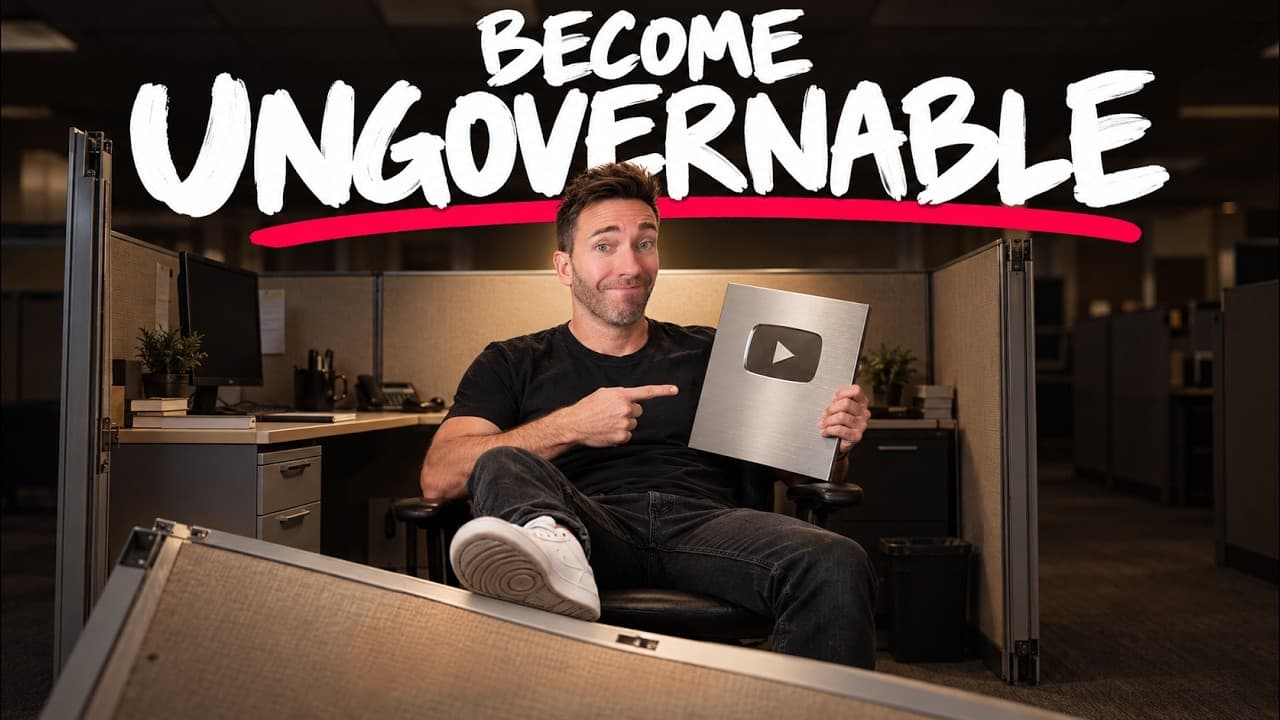
You can begin a YouTube channel about your expertise without quitting your job. Start small, document your working life, and teach what you already know. Build a focused audience and use free offers to convert viewers to paying customers, creating a new income stream while keeping your current job.
Transcript
If you have a career, the kind where you're an expert at something, you should start a YouTube channel about that exact thing before 2027. What you know is worth [music] way more than what your current job pays you for it. And it always will be because when you use your expertise for somebody else, there's a hard lid on what you can earn. But a cha... Read More
Key Insights
- A YouTube channel can complement a current career rather than replace it.
- The key to value on YouTube is answering real questions from your field, not flashy production.
- Two doors exist for teaching: the public audience or the profession, and both can lead to success.
- Narrow, purposefully built audiences can be highly profitable with fewer viewers.
- You do not need to quit your job to start; a steady side effort can grow over time.
- Credibility from real work experience strengthens teaching on YouTube more than fluff.
- Production quality is less important than clear, helpful content that solves viewer problems.
- A simple monetization path uses a free lead magnet to collect emails and offer paid products or services.
Install to Summarize YouTube Videos and Get Transcripts
Explore YouTube Video Summarizer or Get YouTube Transcript Extractor
Questions & Answers
Q: How can I start a YouTube channel without leaving my job?
Starting a channel while employed means documenting your working life and answering questions you already get at work. Use simple equipment and a regular posting habit to build credibility. The focus should be on solving real problems for a specific audience, not on chasing fame or viral views. This approach reduces risk and creates a sustainable path to income.
Q: Who can benefit from teaching on YouTube according to the video?
The video highlights professionals who teach either the public audience or people in their own field. Examples include a designer who documents her work and a Microsoft product manager who explains common software tools. The core idea is that you can teach based on your current expertise while continuing your day job.
Q: What makes a small YouTube audience useful for earning money?
A smaller, highly targeted audience is valuable because each member is more likely to pay for specialized knowledge. The video explains that narrower audiences reduce the need for huge view counts and allow higher per-person value, making the channel a direct revenue source rather than relying on broad advertising income.
Q: What is the suggested content strategy for someone with a busy career?
Write down the top questions you get at work and turn those into video topics. This leverages existing knowledge and keeps effort low while you build a library of practical answers. The strategy emphasizes consistency and relevance over high production budgets.
Q: What roles do free offers play in monetization?
The strategy uses a free offer to capture emails, which then enables you to present paid offers. This simple funnel is scalable and does not require large audiences. Free resources like guides or mini-courses are easy to create and provide a reliable route to recurring income.
Q: Are long videos necessary for success on YouTube in this model?
No, the model stresses that production quality is not the deciding factor. What matters is clearly answering questions and helping viewers solve problems. An iPhone video filmed in a simple setting can still be effective if the content is practical and valuable.
Q: Can you showcase real-life case studies in this approach?
Yes, the video presents real cases, including professionals who built significant channels while working full time. These examples demonstrate that one can grow an audience and generate income by teaching their area of expertise without quitting a job, using consistent, practical content.
Q: What mindset shift is encouraged for viewers considering this path?
The video invites viewers to see their existing expertise as a marketable asset with high value. It encourages building credibility by teaching what you do for a living, embracing a gradual, low-risk approach, and focusing on delivering tangible results to a defined audience rather than chasing traditional employment limits.
Summary & Key Takeaways
-
You can launch a YouTube channel alongside your current career, using your existing expertise to educate others and build credibility. Production quality is not the key; clear answers and practical help matter more, even with simple equipment. A structured plan helps you grow without pressure or quitting your job.
-
A practical approach is to document real work life and answer the questions you are asked daily. This content becomes content for your channel and builds trust with a specific audience who values your professional insight. A narrow focus enables meaningful monetization beyond ads.
-
The monetization path starts with free offers that lead to paid offers, scalable through simple products and services. The strategy emphasizes audience quality over size and leverages a predictable process to turn viewers into clients, even when you are employed full time.
Read in Other Languages (beta)
Share This Summary 📚
Summarize YouTube Videos and Get Video Transcripts with 1-Click
Try YouTube Summary with ChatGPT & Claude or YouTube Transcript Generator
Explore More Summaries from Wes McDowell 📚
Summarize YouTube Videos and Get Video Transcripts with 1-Click
Try YouTube Summary with ChatGPT & Claude or YouTube Transcript Generator