How Does Plasma Cleaning Work for Surfaces?
TL;DR
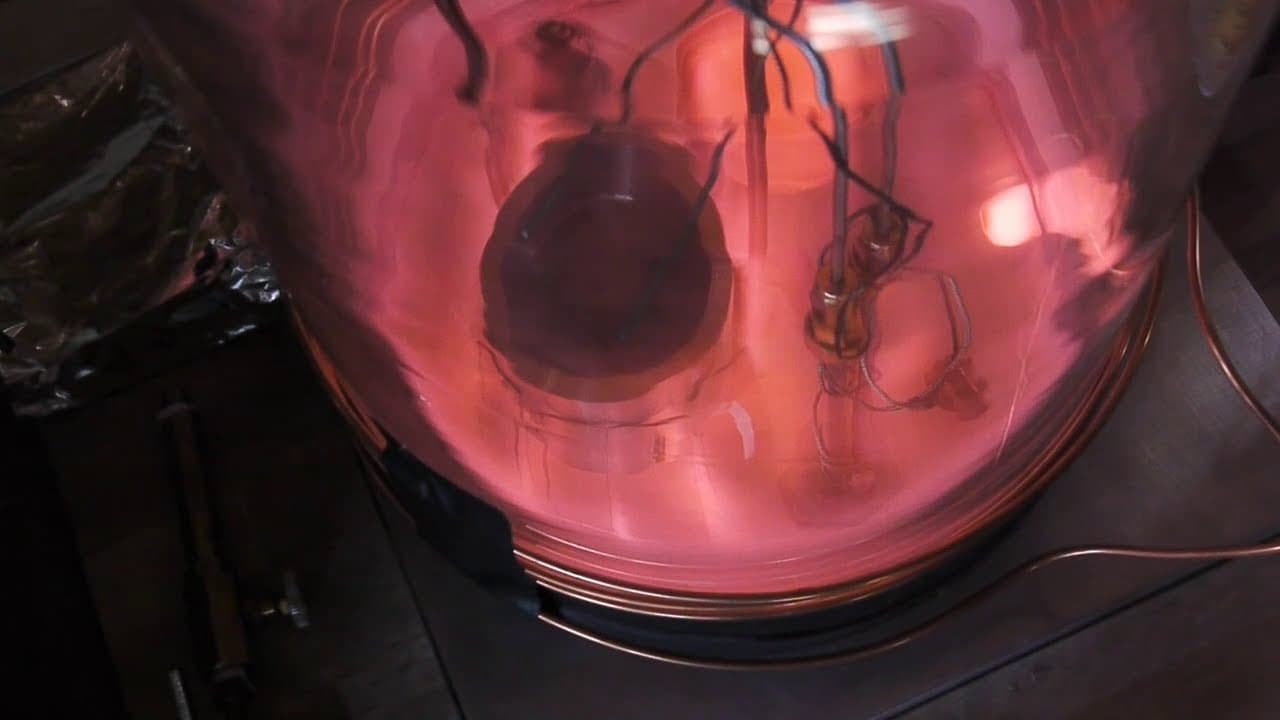
Plasma cleaning uses electrical energy to create plasma that effectively removes contaminants from surfaces. By utilizing gases like oxygen, this method converts organic substances into gases, making them easy to evacuate in a vacuum chamber. It is particularly effective for achieving atomic-level cleanliness, making it widely used in the semiconductor industry.
Transcript
hey guys I wanted to show you an interesting method to clean things with electricity so I've got four very clean microscope slides here but this is what they looked like before the cleaning process the top slide has a thin layer of photo resist on it the next slide down has a thin layer of oil that I applied just by smearing it on the next slide do... Read More
Key Insights
- 💦 The water break test can be used to assess the cleanliness of a surface by observing the spread of water droplets.
- 🫢 The plasma created using electricity and different gases can effectively clean surfaces by breaking bonds, oxidizing, and physically removing contaminants.
- 🫢 The cleaning process can be particularly useful for organic compounds, as they can be converted into gases and easily removed.
Install to Summarize YouTube Videos and Get Transcripts
Explore YouTube Video Summarizer or Get YouTube Transcript Extractor
Questions & Answers
Q: How does the water break test determine the cleanliness of a surface?
The water break test checks the hydrophilicity of a surface. A hydrophilic surface will allow water to spread out, while contaminated surfaces will cause the water to bead up.
Q: How is a plasma created using electricity?
The content uses an RF transmitter to create a rapidly changing magnetic field, which induces currents in the plasma through induction. This creates a transformer-like effect, with the plasma acting as the secondary winding.
Q: What are the different particles present in the plasma?
The plasma contains various particles such as ions, photons of ultraviolet and visible spectra, free radicals, energetic atoms, and ozone. These particles contribute to the cleaning process by breaking hydrocarbon bonds, oxidizing substances, and physically blasting dirt off the surface.
Q: Why is this cleaning process effective for organic compounds?
Organic compounds containing carbon can be combined with the reactive oxygen species in the plasma, resulting in the formation of carbon dioxide or carbon monoxide. These gases can be easily pumped away, effectively removing the organic contaminants.
Summary & Key Takeaways
-
The content demonstrates a method of cleaning microscope slides using electricity, showing the before and after results.
-
The water break test is discussed as a method to determine the cleanliness of a surface.
-
By creating a plasma with an RF transmitter and using different gases like oxygen, contaminants on the surface can be transformed into gases and easily removed.
Read in Other Languages (beta)
Share This Summary 📚
Summarize YouTube Videos and Get Video Transcripts with 1-Click
Try YouTube Summary with ChatGPT & Claude or YouTube Transcript Generator
Explore More Summaries from Applied Science 📚

Summarize YouTube Videos and Get Video Transcripts with 1-Click
Try YouTube Summary with ChatGPT & Claude or YouTube Transcript Generator