How AI is reshaping the Pentagon's warfare
TL;DR
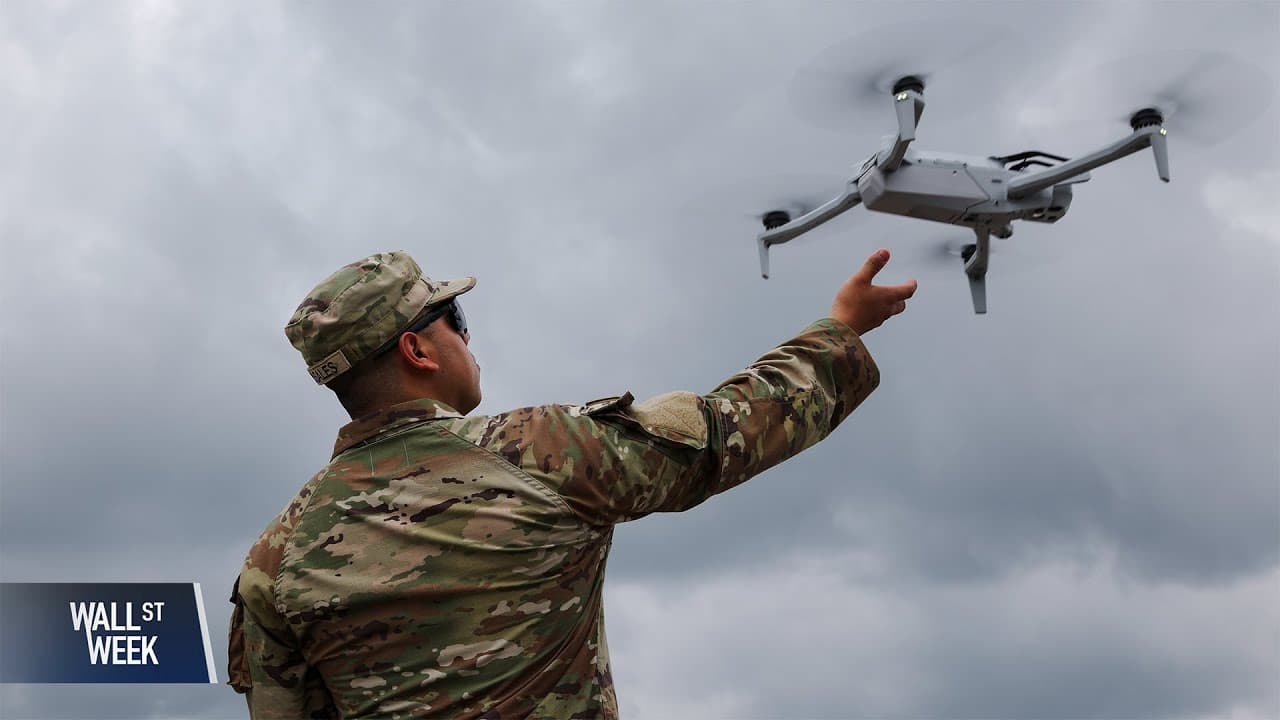
AI accelerates decision making, testing, and deployment in the Pentagon while raising questions about human judgment. The military aims to move faster, cut bureaucracy, and integrate autonomy with soldiers and industry, but cultural resistance and governance remain challenges as AI enables mass deployment and rapid adaptation on and off the battlefield.
Transcript
Westin: This is the third story in our series on where artificial intelligence is already making a difference. Last week, it was teachers using AI in the classroom. This week is the effect it's having on the huge bureaucracy that is the U.S. military, where it's not so much what is already deployed as it is changing the entire theory of warfare and... Read More
Key Insights
- AI changes warfare by marrying large numbers of vehicles and robots with intelligent systems that can see, think, and act on the battlefield.
- The U.S. Army is reducing bureaucratic steps and moving to direct reporting to the Chief of Staff to speed testing and learning.
- Culture change is the biggest challenge, with incentives on Capitol Hill and among industry players keeping traditional processes intact.
- Drones and autonomous systems can operate at scale with AI, enabling rapid reaction to threats that are beyond human cognitive speed.
- Ukraine and lessons from recent conflicts demonstrate the value of rapid updates to systems and the need for software refresh cycles that are two weeks or shorter.
- Autonomous systems in defense are likely to operate in drone-on-drone or swarm contexts, increasing the tempo of warfare.
- Shield AI and other startups are positioned to push AI-enabled capabilities into the hands of warfighters quickly, despite procurement friction.
- A human-centered approach remains essential; AI is a tool to bring speed and precision, not to eliminate human judgment.
- More videos from this channel:
- More from this channel: Bloomberg Television
Install to Summarize YouTube Videos and Get Transcripts
Explore YouTube Video Summarizer or Get YouTube Transcript Extractor
Questions & Answers
Q: How will AI change the way the Pentagon tests and acquires new tech?
AI is driving a move to accelerate testing and learning by collapsing traditional 16 step acquisition processes into faster workflows. The goal is to move decisions quickly, reduce the doom loop of endless approvals, and hold teams directly accountable for rapid experimentation and fielding where appropriate, while maintaining safety and oversight.
Q: What is the role of AI in mass deployment of weapons and autonomous systems?
AI enables the deployment of effective mass on the battlefield by allowing numerous drones, robots, and vehicles to see, think, and act in concert rather than relying on a single operator. This shifts capability from a few manually controlled assets to a large, capable, autonomous force that can respond quickly to changing conditions.
Q: Why is culture change considered the biggest challenge in adopting AI in defense?
Culture change is the biggest challenge because incentives and established processes in government, Congress, and industry reward old ways of doing business. Aligning incentives to favor rapid experimentation, data sharing, and risk-taking without compromising safety is essential to realize AI’s potential.
Q: What lessons from Ukraine influence AI adoption in the Pentagon?
Ukraine is viewed as a laboratory for modern warfare, highlighting how drone and AI-enabled systems can alter how wars are fought. The emphasis is on updating systems quickly, learning from ongoing operations, and replicating those lessons across allies to deter and respond to evolving threats more efficiently.
Q: What role do autonomous vehicles play in future warfare according to the interview?
Autonomous and semi-autonomous vehicles can extend the reach and speed of operations beyond human limits. The discussion includes ground and undersea vehicles, with automation reducing the risk to human operators while increasing the volume and variety of assets that can be deployed in complex environments.
Q: How is industry collaboration described in moving AI forward for defense?
Industry collaboration is essential to push AI at the speed of demand, with startups and established defense manufacturers needed to scale manufacturing and innovation. The aim is to bridge the gap between rapid commercial development and government procurement to bring capabilities into the hands of warfighters faster.
Q: What limits does the Pentagon see for AI replacing human judgment in war?
The officials emphasize that warfare remains a human act of judgment, even as AI adds speed and precision. While AI can enhance decision-making, the final responsibility and accountability for strategic choices are still human, requiring careful oversight, ethics, and governance to prevent unintended consequences.
Q: What does the future of war look like with AI and drones according to the speakers?
The future likely includes AI driven drone on drone warfare and autonomous systems that can operate at scale with rapid decision cycles. While AI may handle data interpretation and tactical decisions, humans will still provide strategic oversight, ensuring that the tempo of operations remains aligned with broader military goals and ethical standards.
Summary & Key Takeaways
-
AI enables faster testing and acquisition by collapsing decision-making steps and holding teams accountable for rapid experimentation.
-
The Pentagon sees AI and autonomy as forces to boost mass deployment and battlefield thinking, not replace human judgment.
-
Industry collaboration is crucial to scale AI across drones, autonomous vehicles, and defense systems while addressing culture and incentives.
Read in Other Languages (beta)
Share This Summary 📚
Summarize YouTube Videos and Get Video Transcripts with 1-Click
Try YouTube Summary with ChatGPT & Claude or YouTube Transcript Generator
Explore More Summaries from Bloomberg Television 📚






Summarize YouTube Videos and Get Video Transcripts with 1-Click
Try YouTube Summary with ChatGPT & Claude or YouTube Transcript Generator