How did American imperialism shape US debates 1898-1945?
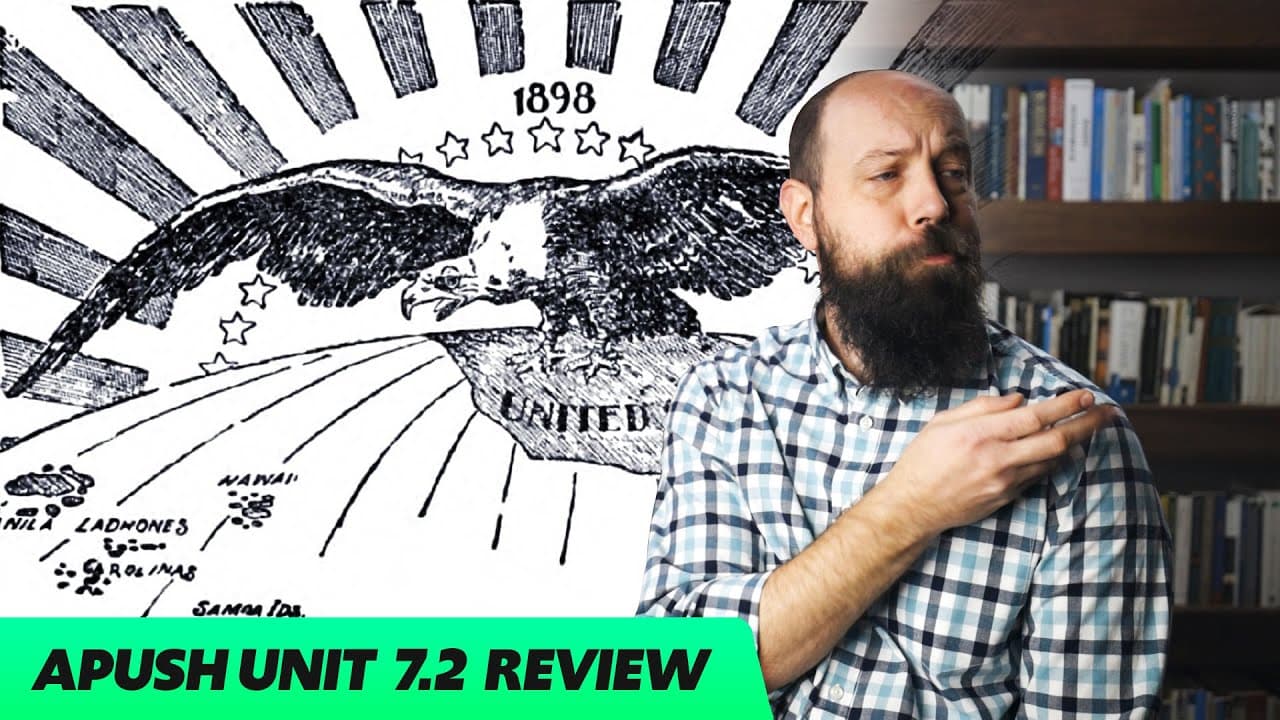
TL;DR
Imperialism is the expansion of one country’s political, economic, and military influence over another. The video contrasts imperialists who seek raw materials, markets, and naval power with anti imperialists who defend self determination and constitutional limits. It discusses Seward, Mahan, and the race to justify expansion.
Transcript
hey there and welcome back to heimler's history and further welcome to unit seven of the ap us history curriculum which covers the time period 1898 to 1945. this period kicks off with the american foray into imperial expansion so if you're ready to get them brain cows milked imperial style then let's get to it now as we consider american ... Read More
Key Insights
- Imperialism is defined as expanding political, economic, and military influence over other countries.
- Alaska is an example used to illustrate early American imperial expansion and its contested value.
- Imperialists argued for access to raw materials and new markets for American goods.
- Mahan’s sea power theory linked naval strength to global influence and economic reach.
- Anti imperialists centered on self determination and the constitutional implications of rule over other peoples.
- The question of whether the Constitution should follow the flag was central to the imperialism debate.
- Racial themes and religious justifications were used to support or critique expansion.
- The era featured a broader debate about how America should act on the world stage and what kind of empire, if any, it should pursue.
Install to Summarize YouTube Videos and Get Transcripts
Explore YouTube Video Summarizer or Get YouTube Transcript Extractor
Questions & Answers
Q: What is imperialism as discussed in the video, and why did it matter for the United States?
Imperialism is the expansion of one country’s political, economic, and military influence over other countries, creating an empire in practice. The video argues that this concept mattered for the United States because expansion could secure raw materials and new markets for American goods, while also enhancing military reach and national prestige on the world stage. The debate weighed benefits against risks of entanglement and loss of self determination.
Q: Who was Seward and why is his Alaska purchase described as a folly and then valuable?
William Seward served as Secretary of State during Lincoln and Johnson and proposed purchasing Alaska for 7.2 million dollars. It was branded Seward’s Folly because Alaska seemed like a polar icebox with little value. The video notes that the discovery of gold in 1898 changed this view, making Alaska strategically and economically valuable and fueling imperial expansion.
Q: What role did Alfred Thayer Mahan’s theories play in imperial expansion, according to the video?
Mahan argued that naval power is essential to securing foreign markets and global influence. Following his ideas, Congress funded a large steel fleet and nations pursued naval bases around the world. The video explains that this naval buildup supported imperial ambitions by enabling landings, coal resupply, and protection of trade routes, linking military strength to economic access.
Q: What were the main arguments of anti imperialists in the video?
Anti imperialists argued for self determination, the right of nations to decide their own governance, and warned that expansion could undermine this principle. They cited Washington’s warnings about foreign entanglements and emphasized that conquest could entangle the United States in wars and economic disputes. They also questioned whether the Constitution would follow the flag and grant rights to new populations.
Q: How does self determination influence the imperialism debate in the video?
Self determination is presented as the core principle that nations should decide their own rulers and laws. The video uses it to critique imperialism, suggesting that acquiring territories would strip other peoples of vital rights and contradict democratic ideals. This argument challenges imperialists who claim civilization or duty justify control over other lands.
Q: What is the significance of the phrase does the Constitution follow the flag in the video?
The phrase questions whether newly acquired territories should grant American citizenship and rights. Anti imperialists use it to argue that expansion forces the United States to extend constitutional rights, while imperialists see a potential post expansion order where rights may be limited. The debate spotlights the tension between expansion and democratic equality.
Q: How does the video relate the 19th century frontier mindset to imperial expansion?
The video links westward expansion and the closing of the frontier to a broader urge to acquire territory globally. It suggests that the American habit of expansion, driven by economic motives and national confidence, carried into overseas ambitions, shaping debates about how far the United States should extend its influence and who would benefit.
Q: What historical period and events does the video frame as starting the imperial expansion debate?
The video frames the debate as starting with Alaska’s purchase and extends through the late 19th and early 20th centuries, leading up to discussions of the Spanish American War. It presents this period as the initiation of American imperial expansion and a clash between those supporting expansion and those opposing it on moral and constitutional grounds.
Summary & Key Takeaways
-
The video introduces imperialism as expansion of influence and explains why Americans debated its legitimacy. It highlights Alaska, gold, and the push for markets and navy power. It presents the key arguments of imperialists and anti imperialists and their competing visions for America’s role abroad.
-
The presentation covers self determination, isolationism, and the question of whether the Constitution follows the flag. It cites Washington’s warnings and the moral concerns about race and citizenship in new territories.
-
The overall takeaway is that imperialist and anti imperialist arguments shaped US foreign policy thinking during 1898 to 1945, influencing policy choices and national identity in relation to global power.
Read in Other Languages (beta)
Share This Summary 📚
Summarize YouTube Videos and Get Video Transcripts with 1-Click
Try YouTube Summary with ChatGPT & Claude or YouTube Transcript Generator
Explore More Summaries from Heimler's History 📚


Summarize YouTube Videos and Get Video Transcripts with 1-Click
Try YouTube Summary with ChatGPT & Claude or YouTube Transcript Generator