How a Single Hack Nearly Crippled the Internet
TL;DR
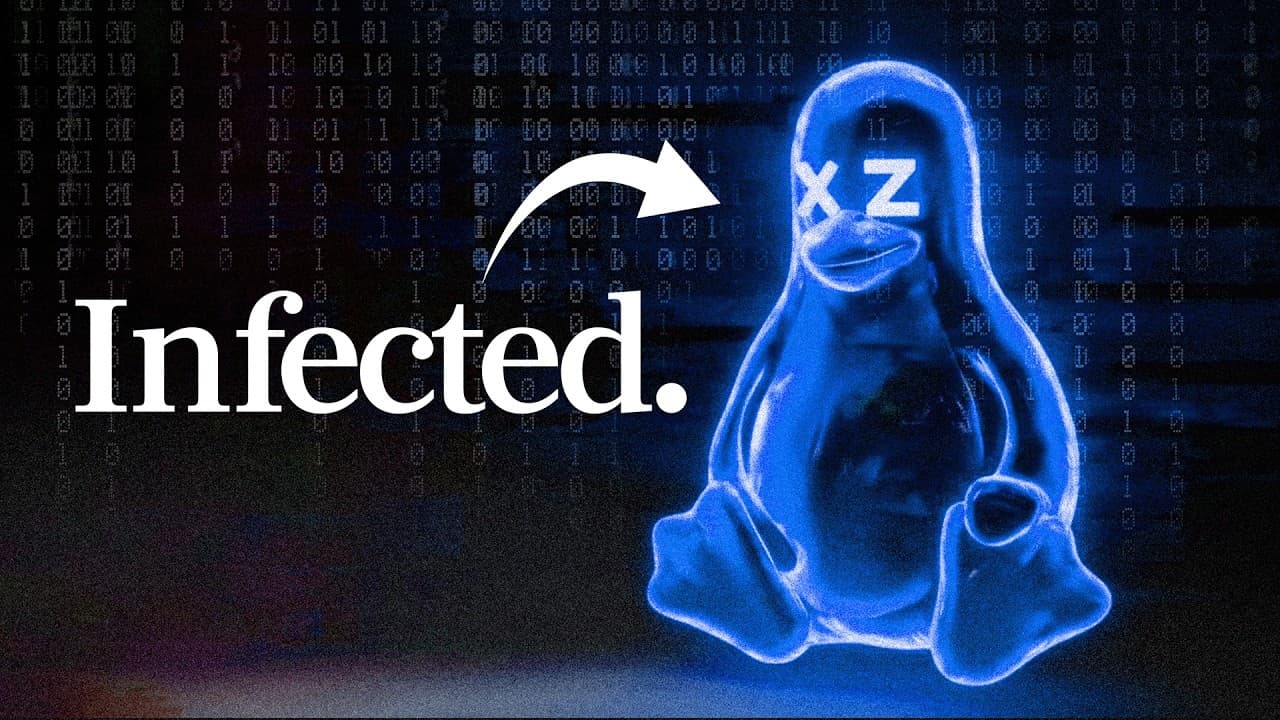
In 2021, a hacker nearly compromised millions of systems by exploiting a vulnerability in a widely used compression tool, XZ. This backdoor could have granted access to critical infrastructure worldwide. The open-source community eventually discovered the flaw, preventing a potential disaster. This incident underscores the importance of vigilance and collaboration in maintaining software security.
Transcript
(suspenseful music) - [Derek] In 2021, a hacker - What would you do with a key that gets you into any - Yeah, it's live on the server. - Look, I'm not pleased. I would like you to change it back. - [Narrator] At the time, - Well, I can tell you how many systems would have been compromised, which would have been millions. Actually, I'm still surpris... Read More
Key Insights
- A hacker exploited a vulnerability in the XZ compression tool, which is widely used in Linux systems.
- The backdoor created could have compromised millions of computers, affecting critical infrastructure globally.
- Open-source software relies on community oversight for security, known as Linus's Law: 'With enough eyeballs, all bugs are shallow.'
- The hack was discovered due to a performance anomaly, leading to the identification of the backdoor.
- The open-source community plays a crucial role in identifying and mitigating security threats.
- The incident highlights the challenges of maintaining security in open-source projects, especially when contributors are unpaid.
- The potential for state-sponsored cyber attacks is a growing concern in the cybersecurity landscape.
- Despite the risks, open-source software offers transparency that can help identify and address vulnerabilities.
Install to Summarize YouTube Videos and Get Transcripts
Explore YouTube Video Summarizer or Get YouTube Transcript Extractor
Questions & Answers
Q: How was the XZ vulnerability discovered?
The XZ vulnerability was discovered by a programmer named Andres Freund, who noticed a performance anomaly while testing the unstable version of the software. His investigation led to the identification of a backdoor that could have been used to compromise millions of systems. This highlights the importance of meticulous testing and community involvement in open-source projects to identify potential security threats.
Q: What could have happened if the XZ backdoor was not discovered?
If the XZ backdoor had not been discovered, it could have granted the hacker access to millions of computers, including critical infrastructure such as banks, hospitals, and government systems. This could have led to a wide range of malicious activities, from espionage and data theft to potentially crippling entire countries' digital infrastructure.
Q: What is Linus's Law in the context of open-source software?
Linus's Law, named after Linus Torvalds, the creator of Linux, states that 'with enough eyeballs, all bugs are shallow.' This means that the more people who can view and test a set of code, the more likely any flaws will be caught and fixed quickly. It emphasizes the importance of community involvement in the security and maintenance of open-source software.
Q: Why is open-source software considered both a strength and a vulnerability?
Open-source software is considered a strength because it allows for transparency and community collaboration, which can lead to rapid identification and resolution of security vulnerabilities. However, it can also be a vulnerability because malicious actors can study the code to find and exploit weaknesses. This dual nature requires a balance of openness and security vigilance.
Q: What role does the open-source community play in software security?
The open-source community plays a crucial role in software security by providing diverse perspectives and expertise to identify and fix vulnerabilities. Community members contribute to code reviews, testing, and reporting security issues, which helps maintain the integrity and reliability of open-source projects. This collaborative effort is essential for the ongoing security of widely-used software.
Q: How do state-sponsored cyber attacks pose a threat to open-source projects?
State-sponsored cyber attacks pose a significant threat to open-source projects by potentially introducing malicious code that can compromise critical systems. These attacks are often sophisticated and well-funded, making them difficult to detect. The open-source nature of the projects allows attackers to study the code and find vulnerabilities, underscoring the need for robust security measures and community vigilance.
Q: What lessons can be learned from the XZ hack incident?
The XZ hack incident teaches the importance of continuous monitoring and vigilance in maintaining software security, especially in open-source projects. It highlights the need for community collaboration to identify and address vulnerabilities quickly. The incident also underscores the growing threat of cyber attacks and the necessity of developing robust security practices to protect against potential exploits.
Q: Why is community involvement critical in open-source software development?
Community involvement is critical in open-source software development because it brings together diverse expertise and perspectives to enhance the quality and security of the software. Community members contribute to code reviews, testing, and reporting issues, which helps identify and fix vulnerabilities quickly. This collaborative approach ensures the software remains reliable, secure, and continuously improved.
Summary & Key Takeaways
-
In 2021, a hacker nearly exploited a vulnerability in the XZ compression tool, a critical component in Linux systems, which could have compromised millions of computers globally. This backdoor posed a significant threat to critical infrastructure, highlighting the importance of vigilant oversight in open-source software security.
-
The open-source community eventually discovered the flaw due to a performance anomaly, preventing a potential disaster. This incident underscores the collaborative nature of open-source projects and the need for continuous monitoring and maintenance to ensure software security.
-
The hack serves as a reminder of the growing threat of cyber attacks, including those potentially state-sponsored, and the importance of community vigilance and collaboration in maintaining the integrity of widely-used software.
Read in Other Languages (beta)
Share This Summary 📚
Summarize YouTube Videos and Get Video Transcripts with 1-Click
Try YouTube Summary with ChatGPT & Claude or YouTube Transcript Generator
Explore More Summaries from Veritasium 📚






Summarize YouTube Videos and Get Video Transcripts with 1-Click
Try YouTube Summary with ChatGPT & Claude or YouTube Transcript Generator