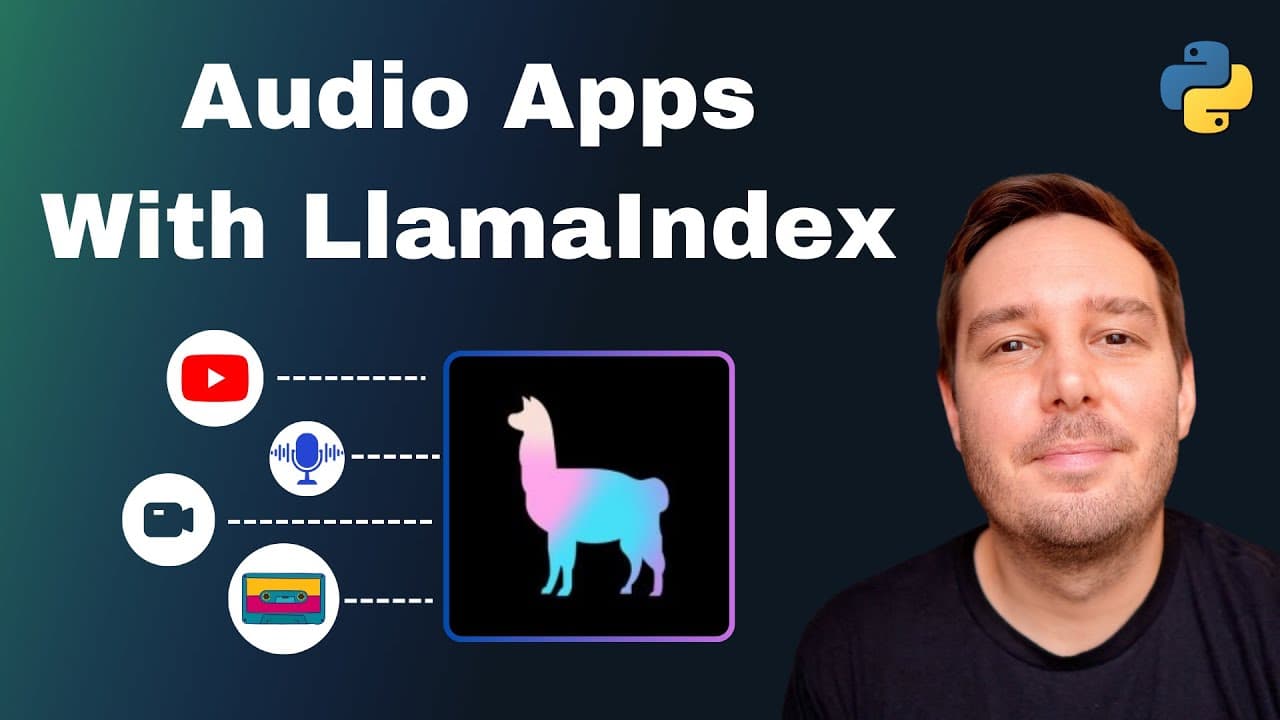
How to Load Audio Data into LlamaIndex with Python
TL;DR
To load audio data into LlamaIndex using Python, install the LlamaIndex and Assembly AI packages, create an audio transcript reader, and use it to transcribe your audio file. Combine it with a vector store index to enable querying. This tutorial provides step-by-step instructions for setting everything up and making efficient queries on your audio data.
Transcript
hi everyone I'm Patrick from assembly Ai and in today's tutorial I show you how to load audio data into llama index and then combine it with a vector store index and a large language model so we can ask questions about our data so this will be the final script that we are going to build and here we load an MP3 file about sports injuries and then in... Read More
Key Insights
- 🧑🏭 Lama Index acts as a bridge between custom data sources and large language models for seamless integration and querying.
- 🏪 Assembly AI audio transcript loader simplifies the process of transcribing and storing audio data in Lama Index documents.
- 😫 Setting up a vector store index enables efficient retrieval and querying of audio data using a language model.
- ❓ Integration with language models like OpenAI enhances the capability of querying audio data for relevant responses.
- 🤩 Environment variables like API keys play a crucial role in setting up and running the audio data loading process.
- ❓ Simplifying metadata for querying ensures better performance and efficiency in processing audio data in Lama Index.
- 🦮 The tutorial provides a comprehensive guide on loading audio data step by step into Lama Index for analysis and querying.
Install to Summarize YouTube Videos and Get Transcripts
Explore YouTube Video Summarizer or Get YouTube Transcript Extractor
Questions & Answers
Q: What is Lama Index and its role in connecting data sources to large language models?
Lama Index is a data framework that connects custom data sources to large language models, allowing for easy combination and storage. It facilitates integrating diverse data sources with language models like OpenAI or Hugging Face effortlessly.
Q: How does the Assembly AI audio transcript loader help in loading audio data into Lama Index?
The Assembly AI audio transcript loader allows for loading, transcribing, and storing audio data in Lama Index documents. It simplifies the process of converting audio files into textual data for further analysis and querying.
Q: What steps are involved in setting up data readers and loading audio files into Lama Index?
The process involves importing the Assembly AI audio transcript reader, specifying the audio file path, creating a reader instance, and loading the data into Lama Index documents. It ensures a streamlined way to transcribe audio data for storage and retrieval.
Q: How can one combine audio data with a vector store index and query it with a language model?
By setting up a vector store index with loaded documents and using a query engine, one can efficiently query the data with questions. This setup allows for asking questions about the audio content and obtaining relevant responses.
Summary & Key Takeaways
-
Tutorial on loading audio data into Lama Index step by step.
-
Explains Lama Index as a data framework for connecting data sources to language models.
-
Demonstrates combining audio data with a vector store index and querying with a language model.
Read in Other Languages (beta)
Share This Summary 📚
Summarize YouTube Videos and Get Video Transcripts with 1-Click
Try YouTube Summary with ChatGPT & Claude or YouTube Transcript Generator
Explore More Summaries from AssemblyAI 📚




Summarize YouTube Videos and Get Video Transcripts with 1-Click
Try YouTube Summary with ChatGPT & Claude or YouTube Transcript Generator