How to Maximize Performance of Large Language Models
TL;DR
To maximize the performance of large language models (LLMs), start with prompt engineering by providing clear instructions and breaking down tasks. Follow up with retrieval-augmented generation (RAG) to incorporate relevant content, and consider fine-tuning the model for enhanced efficiency and customization. Understanding the specific challenges you're facing is key to selecting the right optimization technique.
Transcript
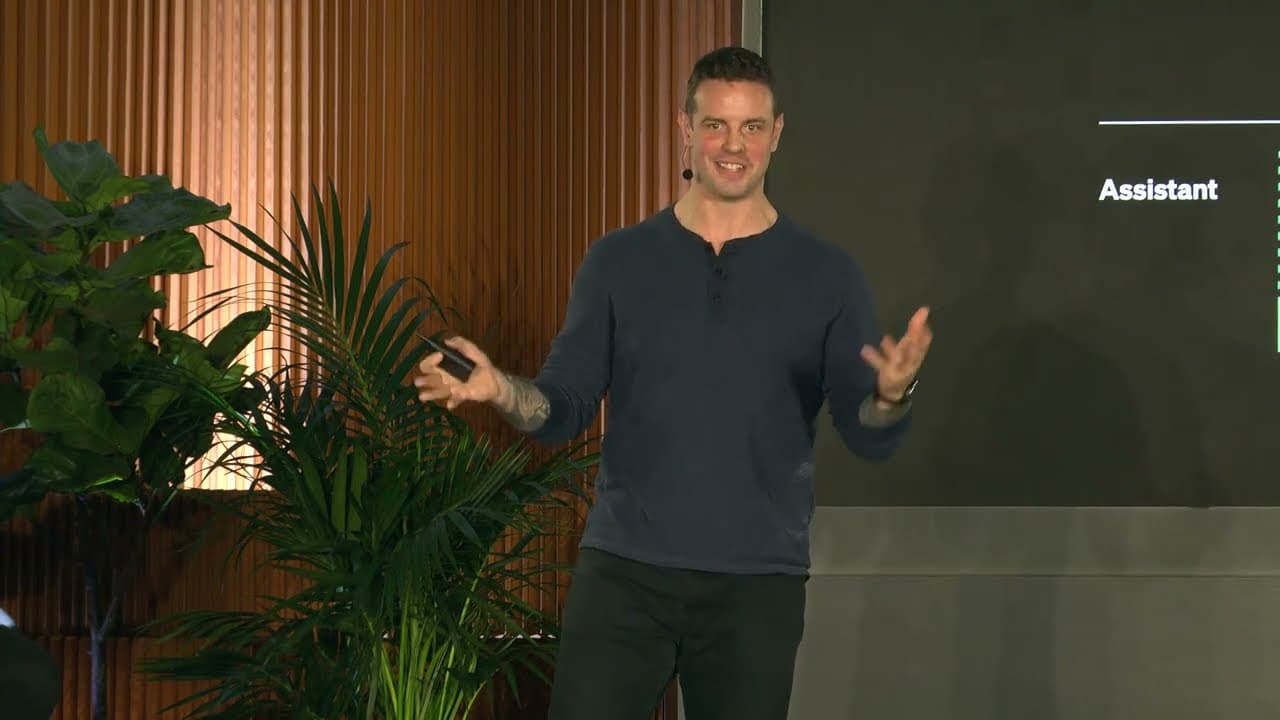
[music] [applause] -Hello, everyone. I hope you all enjoyed the keynote. I know I did. I hope you all are enjoying your time here at OpenAI's first developer conference. In this breakout session, we're going to be talking about all the different techniques that you can use to maximize LLM performance when solving the problems that you care about mo... Read More
Key Insights
- 🤔 Prompt engineering is a good starting point for optimizing LLMs, providing clear instructions, breaking down tasks, and allowing time for the model to think.
- 👨🔬 Retrieval-augmented generation (RAG) can improve LLM performance by incorporating relevant domain-specific content and refining responses through search.
- 👻 Fine-tuning LLMs allows for achieving performance levels that would be impossible without fine-tuning and enables customization of output structure and style.
- ⚾ It is crucial to understand the specific problem and choose the appropriate technique based on the requirements and limitations.
- ❓ Combining prompt engineering, RAG, and fine-tuning can result in significant performance improvements for LLMs.
Install to Summarize YouTube Videos and Get Transcripts
Explore YouTube Video Summarizer or Get YouTube Transcript Extractor
Questions & Answers
Q: What is prompt engineering and how can it improve LLM performance?
Prompt engineering involves crafting clear instructions, breaking down complex tasks into subtasks, and giving LLMs time to think. By providing precise instructions and breaking down tasks, you can enhance the model's understanding and improve its performance.
Q: How does retrieval-augmented generation (RAG) improve LLM performance?
RAG allows models to access domain-specific content to solve problems. By integrating relevant knowledge bases and conducting retrieval searches, LLMs can generate more accurate and contextually relevant responses.
Q: When should fine-tuning be used to optimize LLM performance?
Fine-tuning is beneficial for emphasizing existing knowledge in the base model and customizing output structure or style. It is ideal for modifying the performance of LLMs on specific tasks. However, it is not recommended for introducing new knowledge.
Q: What are the benefits of fine-tuning LLMs?
Fine-tuning allows for improved performance by providing more examples to the model during training compared to prompt engineering. It also enables more efficient interactions with the model, as fine-tuned models often require less complex prompting techniques.
Key Insights:
- Prompt engineering is a good starting point for optimizing LLMs, providing clear instructions, breaking down tasks, and allowing time for the model to think.
- Retrieval-augmented generation (RAG) can improve LLM performance by incorporating relevant domain-specific content and refining responses through search.
- Fine-tuning LLMs allows for achieving performance levels that would be impossible without fine-tuning and enables customization of output structure and style.
- It is crucial to understand the specific problem and choose the appropriate technique based on the requirements and limitations.
- Combining prompt engineering, RAG, and fine-tuning can result in significant performance improvements for LLMs.
- Iteration, evaluation, and baseline establishment are important steps in the fine-tuning and optimization process.
Summary & Key Takeaways
-
The session discussed various techniques to maximize LLM performance, including prompt engineering, RAG, and fine-tuning.
-
The team shared insights from working with developers to solve problems using LLMs and fine-tuning.
-
They emphasized the importance of understanding the specific problem and choosing the appropriate technique for optimization.
Read in Other Languages (beta)
Share This Summary 📚
Summarize YouTube Videos and Get Video Transcripts with 1-Click
Try YouTube Summary with ChatGPT & Claude or YouTube Transcript Generator
Explore More Summaries from OpenAI 📚



Summarize YouTube Videos and Get Video Transcripts with 1-Click
Try YouTube Summary with ChatGPT & Claude or YouTube Transcript Generator