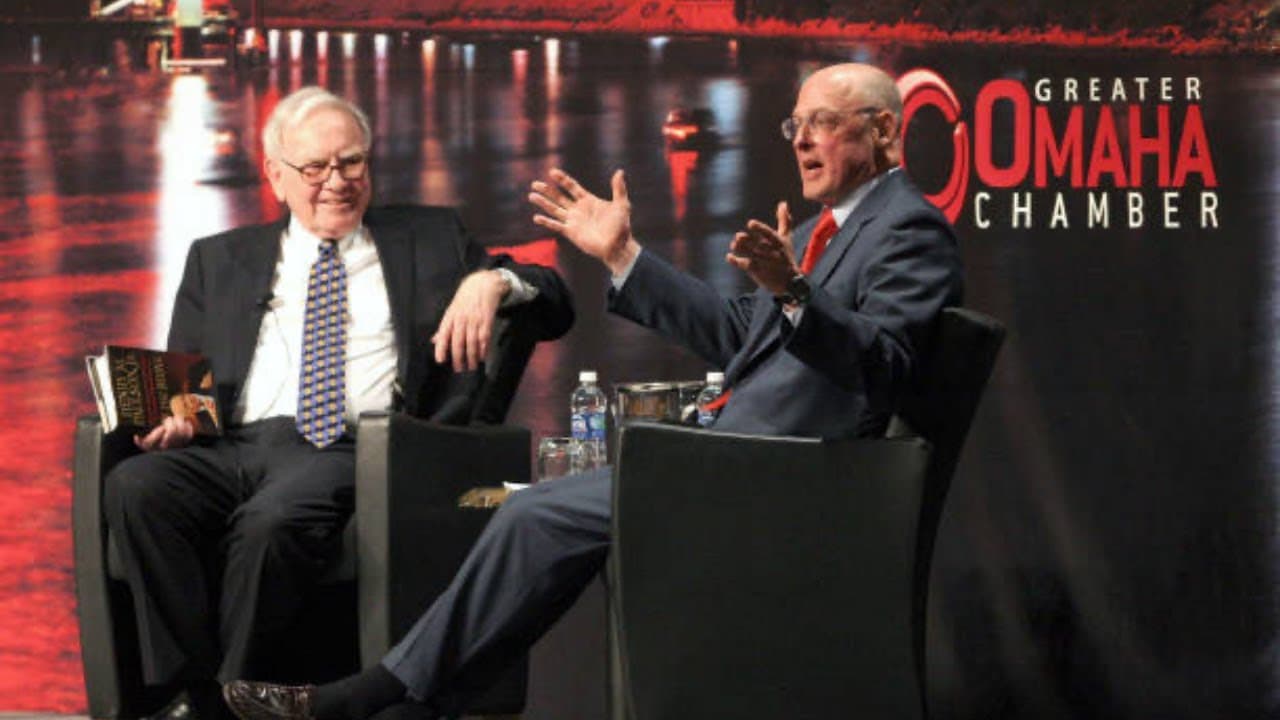
Warren Buffett | Henry Paulson | On The Brink | February 9, 2010
TL;DR
Henry Paulson responded to the financial crisis by helping restore confidence and acting to stabilize Fannie Mae and Freddie Mac, which guaranteed 40% or so of American residential mortgages. Warren Buffett says Paulson, Ben Bernanke, Tim Geithner, and Sheila Bair confronted frozen commercial paper, failing banks, threatened payrolls, and frightened savers. Read on to understand why Buffett believes their emergency actions helped contain the panic.
Transcript
of all I want to thank you for coming that uh you honor us at uh I should declare right off the bat that I'm a friend of Hanks I've been so for some years I admired him when he before he took the job I admire him a lot more after the job he's done as Secretary of the Treasury uh the name of this book is on the brink and that's exactly where we were... Read More
Key Insights
- The financial system entered a state comparable to cardiac arrest when confidence disappeared, commercial paper froze, banks failed or needed emergency combinations, and large companies questioned whether they could meet payroll. Buffett presents the crisis as a broad panic, not merely a collection of isolated institutional problems.
- Money market funds became a central source of fear because millions of people wondered whether they could retrieve savings they regarded as secure. Buffett argues that anxiety among ordinary fund holders showed how rapidly a financial crisis could spread from specialized markets into public confidence and everyday financial behavior.
- Fannie Mae and Freddie Mac were vital to the mortgage market because they guaranteed a large share of residential mortgages and issued securities held around the world. Their weakness threatened domestic housing finance, foreign investors, foreign governments, and confidence in obligations widely viewed as implicitly supported by the United States.
- Congressional oversight failed to prevent dangerous leverage at Fannie Mae and Freddie Mac. Buffett emphasizes that Congress chartered and regulated the institutions, permitted exceptionally high leverage and mortgage guarantees relative to capital, and received a clean assessment from its watchdog shortly before both institutions were effectively broke.
- Conservatorship stabilized Fannie Mae and Freddie Mac by effectively supporting their debt as an obligation of the United States. Paulson describes the intervention as a race against time, completed before banking losses, including anticipated losses at Lehman Brothers, could frighten markets and intensify pressure on mortgage-related securities.
- A proposed coordinated sale of Fannie Mae and Freddie Mac securities by Russian and Chinese officials never occurred, but the possibility concerned Paulson. He believed even a sudden sale could alarm markets, test American resolve, and complicate the urgent effort to stabilize the mortgage institutions.
- Crisis management required acting amid threats that might never materialize. Paulson worried not only about failing institutions but also about abrupt foreign selling, a sudden dollar decline, and market reactions to upcoming losses. His account shows that officials had to prepare for severe possibilities without knowing which dangers would become real.
- Public evaluation of crisis decisions can overlook the conditions officials faced at the time. Buffett argues that later criticism often isolates individual choices while ignoring the frozen financial system, widespread panic, failing banks, vulnerable mortgage institutions, and immediate risk that major employers might be unable to fund payroll.
Install to Summarize YouTube Videos and Get Transcripts
Explore YouTube Video Summarizer or Get YouTube Transcript Extractor
Questions & Answers
Q: How did Henry Paulson respond to the financial crisis?
Paulson focused on restoring confidence and preventing troubled institutions from deepening the panic. A central part of his response was securing congressional authority, examining Fannie Mae and Freddie Mac, and placing them into conservatorship while coordinating with other senior officials.
Q: Why were Fannie Mae and Freddie Mac critical during the financial crisis?
They guaranteed 40% or so of all residential mortgages in the United States and also owned a large mortgage portfolio. Their debt was held widely around the world, including by foreign governments, so a default threatened both the mortgage market and confidence in the United States.
Q: What signs showed that the financial system had frozen?
Money market investors feared they might not recover savings they considered safe, while commercial paper froze entirely. Major companies worried about meeting payroll, Washington Mutual failed over a weekend, and Wachovia needed an emergency combination to survive.
Q: Why were Fannie Mae and Freddie Mac placed into conservatorship?
Paulson and other officials acted because the institutions were effectively broke and vital to the mortgage market. Conservatorship supported their debt before additional banking losses could further frighten investors and intensify the crisis.
Q: What role did Congress play in overseeing Fannie Mae and Freddie Mac?
Congress chartered and regulated both institutions while allowing them to operate with a 40 to1 leverage ratio and guarantee mortgages far beyond their capital. Buffett also noted that the congressional watchdog had given them a clean bill of health shortly before their weakness became undeniable.
Q: Why did Warren Buffett describe the financial system as being in cardiac arrest?
Buffett saw a broad collapse of confidence rather than a routine market decline. Credit stopped functioning, banks failed or required emergency combinations, savers feared for their money, and major companies questioned whether they could fund payroll.
Q: Why did Warren Buffett defend Paulson and the other crisis officials?
Buffett believed Paulson, Ben Bernanke, Tim Geithner, and Sheila Bair were exceptionally capable people facing an extraordinary panic. He argued that criticism of individual decisions should account for the frozen financial system, failing institutions, frightened savers, and severe time pressure they confronted.
Q: Why did Henry Paulson initially resist becoming Treasury secretary?
Paulson had previously declined the opportunity and told his mother he did not intend to go to Washington. He later reversed himself because he felt it was wrong to say no to his country, despite knowing that his mother strongly opposed George Bush and the war.
Summary
This conversation is a discussion between Warren Buffett and Hank Paulson about the financial crisis in September and October of 2008. They discuss the challenges and actions taken during that time, including the role of key individuals and institutions in stabilizing the economy. They also touch on topics such as the relationship between the US and China, misconceptions about the Chinese economic system, and the future of the US economy.
Questions & Answers
Q: What were the main challenges faced during the financial crisis in September and October of 2008?
During this time, the economy and financial system went into a state of crisis. The main challenges included a freeze in the financial system, panic among investors, threats to the stability of major financial institutions, and concerns about meeting payroll obligations.
Q: How did Hank Paulson and the other key individuals handle the crisis?
Hank Paulson, along with Ben Bernanke, Tim Geithner, and Sheila Bair, played crucial roles in managing the crisis. They made important decisions and took actions to stabilize the financial system, such as putting Fannie Mae and Freddie Mac into conservatorship and assisting other struggling institutions. Their efforts helped prevent a complete collapse of the economy.
Q: How did the crisis affect major financial institutions and the housing market?
The crisis had a significant impact on major financial institutions, particularly Lehman Brothers and Merrill Lynch. Both institutions faced severe financial troubles, with Lehman ultimately declaring bankruptcy and Merrill Lynch being acquired by Bank of America. The crisis also highlighted the vulnerabilities in the housing market, with concerns about mortgage guarantees and the impact on the overall economy.
Q: What were the implications of the crisis on the US-China relationship?
The crisis had implications for the US-China relationship, as China held a significant amount of US debt and had concerns about the stability of the US financial system. Hank Paulson had ongoing discussions and negotiations with Chinese officials to address these concerns and emphasize the importance of a stable global economy.
Q: How did the crisis impact the perception and understanding of risk in the financial system?
The crisis exposed the excessive leverage and risky practices in the financial system. It demonstrated the need for better regulation, oversight, and risk management to prevent future crises. It also highlighted the interconnectedness of the global financial system and the importance of coordination and cooperation among nations.
Q: How did the government's response to the crisis affect public opinion?
The government's response, including the implementation of various programs and interventions, faced criticism and opposition. Many American people opposed the bailouts and felt that they were primarily benefiting Wall Street rather than the general public. This created challenges in communicating the purpose and necessity of the government's actions.
Q: How did international agencies and governments contribute to the stability of the financial system during the crisis?
International agencies and governments played a crucial role in stabilizing the financial system during the crisis. The cooperation and coordination among countries were essential in addressing the global nature of the crisis. Efforts were made to stabilize major financial institutions, prevent further panic and collapse, and restore confidence in the markets.
Q: How did government officials and politicians handle the crisis and its aftermath?
Government officials and politicians faced challenges in dealing with the crisis, particularly due to the upcoming election and political considerations. However, there were efforts to overcome partisan differences and take the necessary actions to prevent a complete economic collapse. The crisis highlighted the importance of bipartisan cooperation and the need to address systemic issues in the financial system.
Q: How did public perception and understanding of the crisis evolve over time?
Public perception and understanding of the crisis evolved over time. Initially, there was confusion, panic, and a lack of awareness about the severity of the situation. As more information became available and the consequences of the crisis became evident, public perception shifted to a recognition of the significant impact on the economy, jobs, and everyday life.
Q: What were the long-term implications and lessons learned from the financial crisis?
The financial crisis had long-term implications for the economy, government regulation, risk management, and public trust in the financial system. It highlighted the need for reforms, such as improved oversight, better risk management practices, and a focus on long-term stability rather than short-term gains. The crisis also emphasized the importance of addressing systemic issues to prevent future crises.
Takeaways
The financial crisis of 2008 had a far-reaching impact on the economy, financial system, and public perception. The crisis revealed vulnerabilities in the financial system, the importance of government intervention in times of crisis, and the need for international cooperation. Lessons learned include the importance of effective regulation, risk management practices, and long-term economic stability. The crisis also highlighted the interconnectedness of the global economy and the need for coordination among nations.
Summary & Key Takeaways
-
Warren Buffett describes a financial system that had effectively frozen, with money market investors fearing for their savings, commercial paper unavailable, major companies worried about meeting payroll, and large banks failing or requiring emergency combinations. He credits Paulson and other senior officials with preventing the panic from becoming even more destructive.
-
Paulson recounts the urgent effort to stabilize Fannie Mae and Freddie Mac, institutions that guaranteed a large share of residential mortgages and had securities held widely in the United States and abroad. After obtaining authority from Congress, officials examined their finances and placed them into conservatorship, effectively supporting their debt before additional losses emerged.
-
The conversation also presents Paulson’s personal path into public service and the pressures surrounding crisis leadership. He initially resisted becoming Treasury secretary, partly because his mother strongly opposed the administration. During the crisis, he faced threats that never materialized, including coordinated foreign selling of mortgage-related securities and a sudden decline in the dollar.
Read in Other Languages (beta)
Share This Summary 📚
Summarize YouTube Videos and Get Video Transcripts with 1-Click
Try YouTube Summary with ChatGPT & Claude or YouTube Transcript Generator
Explore More Summaries from Investor Archive 📚


Summarize YouTube Videos and Get Video Transcripts with 1-Click
Try YouTube Summary with ChatGPT & Claude or YouTube Transcript Generator