How Labs Will Control Global Workforce by 2028
TL;DR
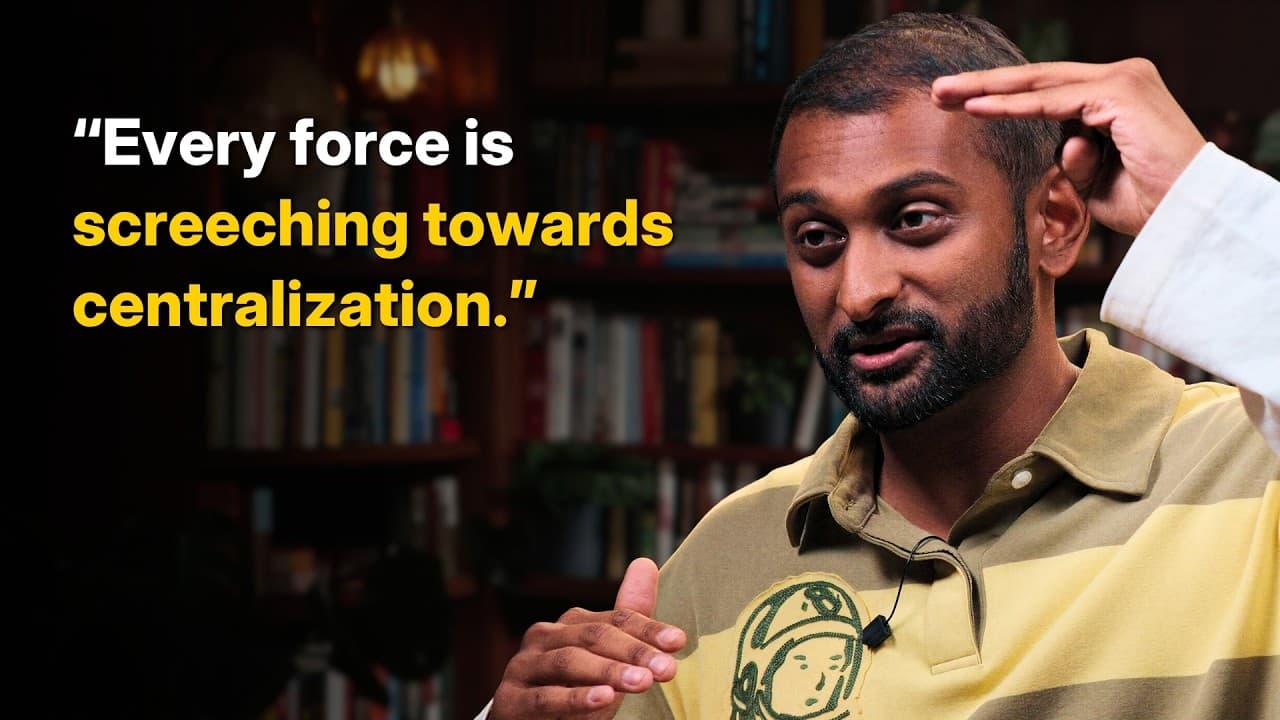
OpenAI and Anthropic are on track to dominate the global compute market, with their compute capacity growing exponentially. This centralization could lead to these labs controlling the majority of the world's workforce in terms of AI labor. The rapid growth in AI infrastructure investment may also trigger a sovereign debt crisis as interest rates rise and non-AI sectors face economic challenges.
Transcript
Okay, I’m back with Dylan Patel, founder of SemiAnalysis. Our version of a family Thanksgiving dinner is a regular yearly podcast. But we're not actually related. Don’t tell the people this. It will destroy the myth. Basically where the world economy is headed is more and more becoming a function of where lab economics are headed, where t... Read More
Key Insights
- OpenAI and Anthropic are rapidly increasing their compute capacity, with projections of controlling a majority of the world's compute by 2028.
- The labs are shifting focus from inference to training as they prepare for recursive self-improvement (RSI) in AI models.
- AI infrastructure investment is expected to exceed $10 trillion by the end of the decade, potentially leading to a sovereign debt crisis.
- Interest rates are likely to rise as AI labs and hyperscalers borrow heavily, impacting non-AI sectors and developing countries.
- The centralization of compute in a few labs could lead to significant economic and political power concentrated in these entities.
- The rapid scaling of AI capabilities could result in a labor force dominated by AI, surpassing the human workforce in size and efficiency.
- Regulatory challenges and supply chain constraints may slow AI progress, but the economic incentives for growth remain strong.
- The potential for AI to outpace human capabilities raises questions about the future distribution of economic value and power.
Install to Summarize YouTube Videos and Get Transcripts
Explore YouTube Video Summarizer or Get YouTube Transcript Extractor
Questions & Answers
Q: How soon will OpenAI and Anthropic control most of the world's compute?
OpenAI and Anthropic are projected to control the majority of the world's compute by the end of 2028. Their rapid expansion in compute capacity, driven by significant investments and a focus on AI training, positions them to dominate the global AI infrastructure market.
Q: Why is there a shift from inference to training in AI labs?
AI labs like OpenAI and Anthropic are shifting from inference to training to prepare for recursive self-improvement (RSI) in AI models. This shift allows them to dedicate more resources to developing advanced AI capabilities, which can lead to greater economic returns and technological advancements.
Q: What economic impact could AI infrastructure investment have?
The expected $10 trillion investment in AI infrastructure by the end of the decade could lead to a sovereign debt crisis. As AI labs and hyperscalers borrow heavily to expand, interest rates may rise, impacting non-AI sectors and developing countries, and potentially leading to economic instability.
Q: How might rising interest rates affect non-AI sectors?
Rising interest rates, driven by heavy borrowing from AI labs, could increase the cost of capital for non-AI sectors. This may lead to reduced investment, economic slowdown, and financial challenges for industries that rely on debt financing, particularly in developing countries with high debt levels.
Q: What are the implications of AI labs controlling the workforce?
If AI labs control the majority of the world's compute, they could dominate the global workforce in terms of AI labor. This centralization might concentrate economic and political power in a few entities, raising concerns about the equitable distribution of resources and influence in society.
Q: What regulatory challenges do AI labs face?
AI labs face regulatory challenges that may slow their progress, such as data center regulations and restrictions on releasing advanced models. These regulations aim to address safety and ethical concerns, but they could also limit the pace at which AI capabilities are deployed and commercialized.
Q: How does AI progress affect global economic growth?
AI progress, particularly at the frontier labs, can significantly boost global economic growth by increasing productivity and efficiency. However, this growth may be unevenly distributed, benefiting entities with advanced AI capabilities while challenging traditional industries and economies less exposed to AI.
Q: What is the potential for AI to surpass human capabilities?
AI has the potential to surpass human capabilities in various domains, leading to a labor force dominated by AI. As AI models become more capable and efficient, they could perform tasks currently done by humans, raising questions about the future distribution of economic value and the role of human labor.
Summary & Key Takeaways
-
OpenAI and Anthropic are rapidly expanding their compute capabilities, with projections suggesting they will control the majority of the world's compute by 2028. This centralization could lead to these labs dominating the global workforce in terms of AI labor.
-
The exponential growth in AI infrastructure investment, expected to exceed $10 trillion by the end of the decade, could trigger a sovereign debt crisis. Rising interest rates may challenge non-AI sectors and developing countries, as AI labs outbid others for resources.
-
Despite regulatory and supply chain challenges, the economic incentives for AI growth remain strong. The potential for AI to surpass human capabilities raises questions about the future distribution of economic value and power, with significant implications for global economics and politics.
Read in Other Languages (beta)
Share This Summary 📚
Summarize YouTube Videos and Get Video Transcripts with 1-Click
Try YouTube Summary with ChatGPT & Claude or YouTube Transcript Generator
Explore More Summaries from Dwarkesh Patel 📚



Summarize YouTube Videos and Get Video Transcripts with 1-Click
Try YouTube Summary with ChatGPT & Claude or YouTube Transcript Generator