Great Books #6: How Does the Intimacy of Love Restore the Self in The Odyssey?
TL;DR
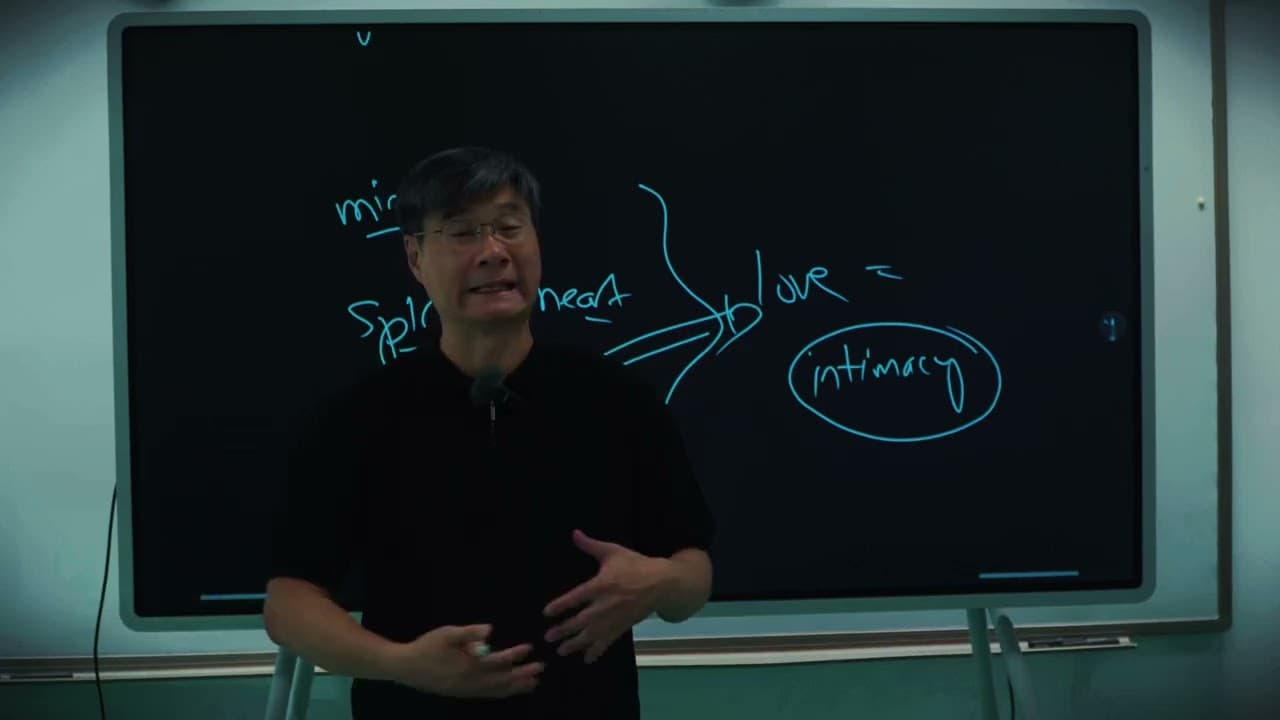
Intimate love restores the self by reuniting mind, spirit, and soul through deep mutual understanding. After 20 years apart, Odysseus, Penelope, and Telemachus must overcome different forms of depression and rediscover their family bond. The lecture contrasts genuine intimacy, expressed through shared language, secrets, and recognition, with relationships where people speak but never truly hear each other, making the full analysis worth reading.
Transcript
We conclude the Odyssey today and as we discussed uh last lecture, the Odyssey is really about a homecoming about three members of a family uh Odysius Penaltz who after 20 years separation must come together again and rediscover their love for each other. And as we discussed last class, all three suffer from depression. Um, Odysius suffers from pos... Read More
Key Insights
- The Odyssey is a story of homecoming in which Odysseus, Penelope, and Telemachus must reunite after 20 years of separation and rediscover their love. Their family restoration requires more than physical proximity because each person has suffered emotionally during the absence.
- Odysseus is portrayed as suffering from post-traumatic stress because war shattered his identity, worldview, purpose, and sense of self. His journey home therefore concerns psychological recovery as well as returning physically to Penelope, Telemachus, Ithaca, and the household occupied by the suitors.
- Penelope is depressed because the love of her life disappeared and she does not know whether he is alive or dead. Her uncertainty leaves her emotionally dormant until the disguised Odysseus speaks in a way that stirs her heart and renews her desire to weep.
- Telemachus is a young man who cannot inherit his father's legacy or his mother's wealth while the family's situation remains unresolved. His development is tied to the same homecoming that must restore Odysseus and Penelope, making the reunion a shared family transformation.
- Consciousness is described through three simultaneous planes: the mind, the spirit or heart, and the soul. Happiness comes when these planes align, while competing narratives among logical thought, emotional experience, and deeper conviction create cognitive dissonance, trauma, and depression.
- Love is defined as intimacy rather than obsession, constant thought, or possession. A person knows another intimately when they can communicate through shared code words, secrets, and meanings, creating an understanding that outsiders may hear without comprehending.
- Helen and Menelaus illustrate the absence of intimate love because they tell conflicting stories about Troy without truly hearing each other. Helen casts herself as a helper, while Menelaus recalls that her actions nearly exposed the Greeks, leaving them together but emotionally disconnected.
- Odysseus and Penelope communicate on several levels during their first conversation in 20 years. Their minds must preserve his disguise, their spirits combine fear with longing, and their souls recognize one another, while their public words conceal a private meaning from servants and suitors.
Install to Summarize YouTube Videos and Get Transcripts
Explore YouTube Video Summarizer or Get YouTube Transcript Extractor
Questions & Answers
Q: How does intimate love restore the family in The Odyssey?
Love draws Odysseus, Penelope, and Telemachus back toward one another after 20 years of separation. Their restoration requires more than physical reunion: they must align the conflicting narratives held by their minds, spirits, and souls. Rediscovering their intimate family connection brings those divided planes toward unity.
Q: What does intimacy mean in the lecture’s definition of love?
Intimacy means understanding another person deeply enough to communicate through shared language, code words, secrets, and meanings. The lecture distinguishes love from constantly thinking about, obsessing over, or wanting to possess someone. Genuine love appears when two people understand what outsiders may hear but cannot fully comprehend.
Q: Why are Odysseus, Penelope, and Telemachus depressed?
Odysseus suffers from post-traumatic stress because war shattered his identity, worldview, purpose, and sense of self. Penelope is depressed because the love of her life disappeared and she does not know whether he is alive or dead. Telemachus cannot inherit his father’s legacy or his mother’s wealth while the family remains unresolved.
Q: How do mind, spirit, and soul relate to happiness?
The lecture describes consciousness through three simultaneous planes: the mind, the spirit or heart, and the soul. Happiness occurs when all three align and a person knows who they are and what they should do. Conflict among their different narratives creates cognitive dissonance and leads to trauma and depression.
Q: Why must the family unite mind, spirit, and soul before reuniting?
In their souls, the family members know they are alive and will return to one another. In their spirits, distance causes depression, while their minds lead them to believe that Odysseus is dead or can never return home. They must combine these competing narratives into one complete worldview to come together as a family.
Q: How does Odysseus and Penelope’s private language demonstrate love?
Their conversation carries both a public meaning and a private meaning grounded in shared understanding. Servants and possible spies can hear the words without comprehending the couple’s intimate code. This ability to communicate beneath the surface demonstrates the lecture’s definition of love as intimacy.
Q: Why do Helen and Menelaus represent a failure of intimate love?
Helen and Menelaus tell stories but do not truly hear one another. Helen portrays herself as helping Odysseus at Troy without considering Menelaus’s losses, while Menelaus recalls that she nearly exposed the hidden Greeks. Their conflicting accounts show emotional disconnection rather than intimate understanding.
Q: Why does Odysseus’s description make Penelope weep?
While disguised as a stranger, Odysseus describes details associated with himself, including his clothing, golden brooch, and herald. Others can hear the description without recognizing its deeper significance. Penelope weeps because those details carry private meaning within the couple’s shared intimate language.
Summary & Key Takeaways
-
The Odyssey is presented as a homecoming involving Odysseus, Penelope, and Telemachus, three family members damaged by 20 years of separation. Odysseus has lost his identity and purpose through war, Penelope lives with uncertainty about her husband, and Telemachus cannot fully inherit his parents' legacy or wealth.
-
The lecture divides consciousness into mind, spirit, and soul. Happiness arises when these three planes correspond, while conflict among them produces cognitive dissonance, trauma, and depression. The separated family must therefore bring its competing logical beliefs, emotional experiences, and deeper sense of connection into one coherent understanding before reunion becomes possible.
-
Odysseus returns to Ithaca disguised as a beggar and speaks privately with Penelope while servants and possible spies remain nearby. Their conversation operates through public statements and an intimate private code. His detailed description of Odysseus moves Penelope to tears, showing how shared understanding can revive love after prolonged separation.
Read in Other Languages (beta)
Share This Summary 📚
Summarize YouTube Videos and Get Video Transcripts with 1-Click
Try YouTube Summary with ChatGPT & Claude or YouTube Transcript Generator
Explore More Summaries from Predictive History 📚




Summarize YouTube Videos and Get Video Transcripts with 1-Click
Try YouTube Summary with ChatGPT & Claude or YouTube Transcript Generator