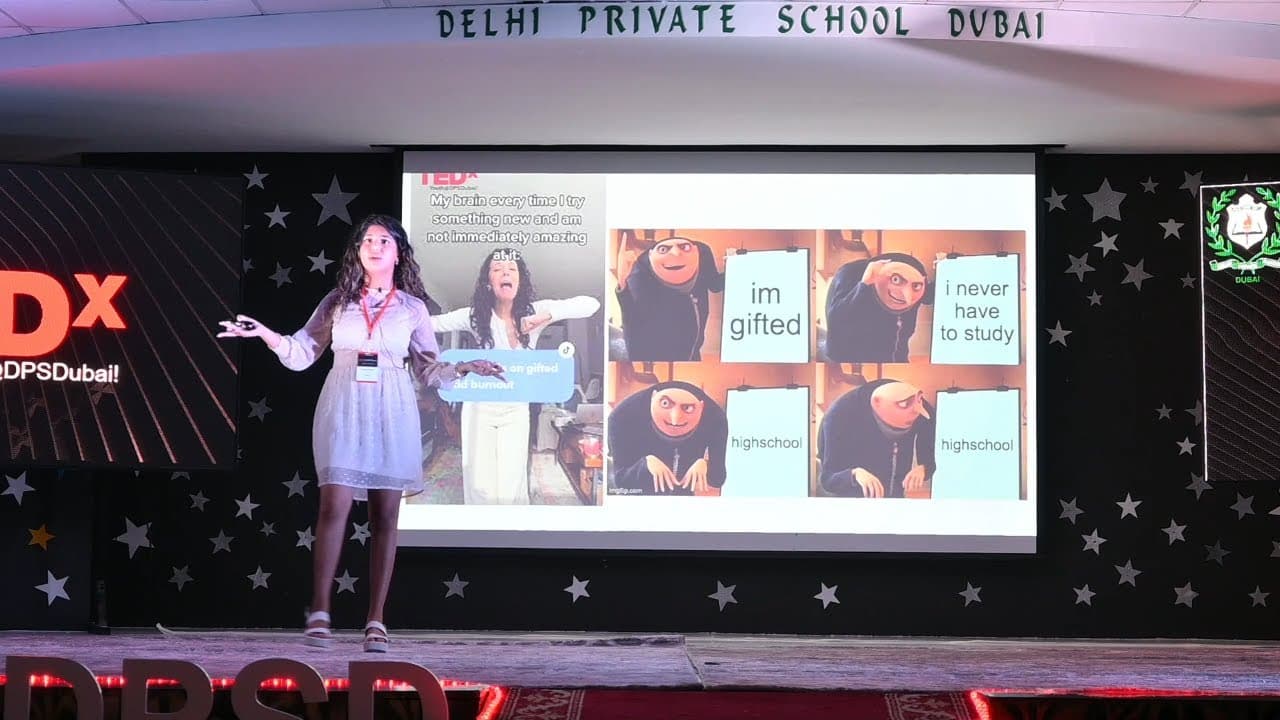
The Under-Investigated Effects of Childhood Academic Pressure | Tanisha Philip | TEDxYouth@DPSDubai
TL;DR
Being labeled as gifted can lead to high expectations, bullying, burnout, and teacher burnout.
Transcript
from the very beginning of my elementary education as young as kindergarten I was constantly being praised and appreciated by my teachers for being smart or above average intellectually I was consistency being labeled as the smartest kid in my class I would often finish a work delegated to me by my teachers faster than everyone else I would have to... Read More
Key Insights
- 🥺 Gifted labeling leads to high expectations and unrealistic perfectionism.
- 🧑🎓 Bullying of gifted students can result in serious psychological issues.
- 🤳 Long-term effects include academic burnout syndrome and self-doubt.
- 😀 Teachers also face burnout from pressure to support gifted students.
- 🔬 Coping mechanisms include seeking support and focusing on non-academic activities.
- 🧑🎓 Academic pressure can impact both gifted and ordinary students.
- 🧑⚕️ Academic burnout syndrome affects mental, physical, and emotional health.
Install to Summarize YouTube Videos and Get Transcripts
Explore YouTube Video Summarizer or Get YouTube Transcript Extractor
Questions & Answers
Q: What are the short-term effects of being labeled as gifted?
The short-term effects include high expectations, distorted views on grades, hesitancy to ask for help, and unhealthy perfectionism due to the gifted label.
Q: How does being labeled as gifted impact bullying among students?
Gifted students are more likely to face bullying, leading to serious psychological issues like depression and social anxiety, while ordinary students may feel inferior and insecure.
Q: What are some symptoms of academic burnout syndrome?
Symptoms of academic burnout syndrome include mental fatigue, physical exhaustion, emotional detachment, negative attitude towards schooling, and lack of motivation to achieve academic success.
Q: How can students cope with the effects of academic burnout syndrome?
Coping mechanisms include having a strong support system, setting realistic goals, normalizing feelings of imperfection, focusing on non-academic activities, and understanding that self-worth is not solely based on academic achievements.
Summary
This video discusses the negative effects of academic pressure and gifted programs on students. It highlights the short-term effects such as distorted views on grades, hesitancy to ask for help, and unhealthy perfectionism. It also explores the long-term effects like burnout syndrome, feelings of inferiority for ordinary students, and impacts on teachers. The speaker emphasizes the importance of coping mechanisms such as a strong support system, setting realistic goals, and focusing on non-academic activities.
Questions & Answers
Q: What are the short-term effects of being labeled as gifted?
The short-term effects of being labeled as gifted include having unrealistically high expectations, distorted views on grades and academic opinions, hesitancy to ask for help, and the development of unhealthy perfectionism.
Q: How does being labeled as gifted affect a student's willingness to ask for help?
Being labeled as gifted can make students hesitant to ask for help because they fear it might damage their reputation as being gifted. They become accustomed to being seen as intellectually superior and asking for help could undermine that perception.
Q: How does being labeled as gifted impact a student's self-esteem and well-being?
Being labeled as gifted can lead to feelings of inferiority and insecurity in ordinary students. It can also lead to increased bullying of gifted students, which in turn can cause serious psychological issues such as depression and social anxiety.
Q: What are the long-term effects of being a product of an accelerated academic program?
The long-term effects of being a product of an accelerated academic program include burnout syndrome, which encompasses mental fatigue, physical exhaustion, emotional detachment, and a negative attitude towards schooling. Students may also experience imposter syndrome, where they doubt their previous accomplishments and feel undeserving of any success.
Q: How does being a product of an accelerated academic program affect a student's study habits?
Students who have been in accelerated academic programs may face difficulties when they have to study on their own later in their academic journey. They may have become accustomed to not having to study much during their earlier years, leading to frustration and a lack of motivation to study independently.
Q: What are some coping mechanisms for students experiencing burnout syndrome?
Some coping mechanisms for students experiencing burnout syndrome include having a strong support system of teachers, parents, and counselors, setting realistic goals instead of aiming for perfection, validating the feelings of being overwhelmed, and focusing on non-academic activities to improve overall well-being.
Q: How can teachers be negatively impacted by accelerated academic programs?
Teachers can experience burnout themselves as they have to direct a significant amount of their resources towards the intellectually talented students in accelerated programs. This can lead to feelings of being underappreciated, unmotivated, and frustrated with their occupation.
Q: Is there a way to undo the damage of academic pressure and gifted programs for students who are already experiencing the negative effects?
Unfortunately, for most students who have already experienced the negative effects of academic pressure and gifted programs, the damage is done. However, coping mechanisms can help alleviate the symptoms of burnout syndrome and provide support for their well-being and mental health.
Q: How can students overcome the pressure to perform perfectly in academics?
Students should let go of the notion that perfection is the only way to succeed academically. They should normalize the feelings of not being okay and validate that their self-worth is not solely dependent on their academic achievements. Focusing on non-academic activities, hobbies, and setting realistic goals can also help alleviate the pressure to perform perfectly.
Q: What overall message does the speaker want the listeners to take away from the video?
The speaker wants listeners to know that their feelings as students are valid, and it is crucial to let go of the idea that perfection is the only way to succeed academically. They should prioritize their well-being, seek support from teachers, parents, and counselors, and engage in non-academic activities to maintain a healthy balance in their lives.
Takeaways
The video highlights the negative effects of academic pressure and gifted programs, including unrealistic expectations, perfectionism, burnout syndrome, and psychological issues. It emphasizes the need for coping mechanisms and support systems to help students navigate these challenges. The speaker encourages students to let go of the notion of perfection and focus on well-being and non-academic activities for a more balanced and fulfilling academic journey.
Summary & Key Takeaways
-
Gifted students can develop unrealistically high expectations and struggle to ask for help due to pressure.
-
Bullying of gifted students can lead to psychological issues like depression and social anxiety.
-
Long-term effects include academic burnout syndrome, self-doubt, and negative impact on teachers.
Read in Other Languages (beta)
Share This Summary 📚
Summarize YouTube Videos and Get Video Transcripts with 1-Click
Try YouTube Summary with ChatGPT & Claude or YouTube Transcript Generator
Explore More Summaries from TEDx Talks 📚

Summarize YouTube Videos and Get Video Transcripts with 1-Click
Try YouTube Summary with ChatGPT & Claude or YouTube Transcript Generator