Empowering schools to shrink our carbon footprint | C. Sanchez | TEDxLa Cote International School
TL;DR
Urgent action is needed to combat climate change, and the responsibility lies with the new generation to reduce carbon emissions and make the planet more habitable.
Transcript
[Applause] 37 billion tons of CO2 that we pushed into our atmosphere last year that's eight times the volume of the mountain Everest and get this just New York City in one day creates an amount of CO2 that reaches the height of the Empire State Building and of course all these emissions we are putting in the atmosphere are creating a change in our ... Read More
Key Insights
- 🫢 The increase in greenhouse gas emissions, primarily caused by population growth, consumerism, and reliance on fossil fuels, is leading to extreme weather events and climate change.
- 🧑🔬 Climate scientists propose that slashing carbon emissions by half in the next 10 years and achieving net-zero emissions by 2050 can help mitigate the effects of climate change.
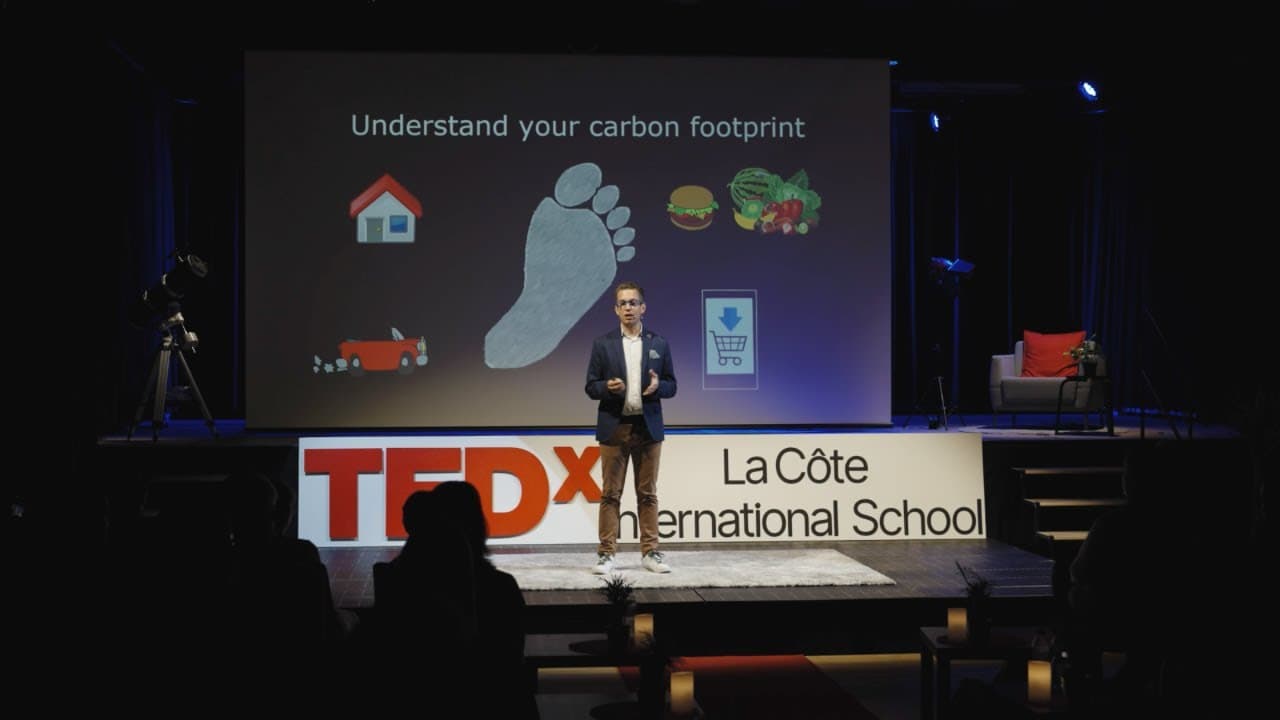
- 👣 Individual actions, such as understanding and reducing carbon footprints, can have a significant impact on reducing emissions.
- 🖐️ Schools play a crucial role in shaping future citizens by being a role model, including sustainability topics in the curriculum, and involving students in activities that promote sustainability.
Install to Summarize YouTube Videos and Get Transcripts
Explore YouTube Video Summarizer or Get YouTube Transcript Extractor
Questions & Answers
Q: What is the greenhouse effect and how is it related to climate change?
The greenhouse effect is a phenomenon where greenhouse gases, such as CO2, trap heat in the Earth's atmosphere, thereby warming the planet. This increase in temperature leads to climate change, causing extreme weather events and rising sea levels.
Q: How can individuals reduce their carbon footprint in terms of transportation?
Individuals can opt for more sustainable transportation options, such as taking public transport, carpooling, using electric or hybrid vehicles, or even choosing to walk or cycle for shorter distances.
Q: How can changes in food choices contribute to reducing carbon emissions?
Eating locally produced and seasonal foods reduces the transportation emissions associated with imported produce. Additionally, choosing plant-based alternatives and reducing meat consumption can significantly decrease the carbon footprint related to food production.
Q: Why is it important to focus on reducing waste and recycling?
Reducing waste and practicing recycling helps minimize the consumption of resources, energy, and raw materials required for producing new products. It also reduces the emissions associated with waste management.
Summary
In this video, the speaker highlights the urgent need to address climate change and reduce carbon emissions. They explain the greenhouse effect and how human activities have significantly increased greenhouse gas emissions, leading to extreme weather events and other environmental changes. However, the speaker provides good news as well, stating that scientists have found solutions and that the power to change lies with the new generations. The speaker emphasizes the importance of understanding one's own carbon footprint and provides practical tips for reducing emissions in areas such as transportation, food choices, and consumption. They also emphasize the role of schools in leading by example, incorporating sustainability topics into the curriculum, and involving students in activities that promote environmental responsibility.
Questions & Answers
Q: What are the main causes of climate change?
Climate change is primarily caused by the greenhouse effect, where greenhouse gases in the atmosphere trap heat from the sun, leading to increased global temperatures. Human activities such as population growth, increased travel, consumerism, and the use of fossil fuels have significantly contributed to the increase in greenhouse gas emissions.
Q: How have greenhouse gas emissions changed in recent years?
Over the past 800,000 years, CO2 emissions in the atmosphere have fluctuated. However, in the last 50 years, human activities have led to a rapid increase in emissions, reaching unprecedented levels. This rapid change has prevented the Earth from adapting and has caused the melting of ice caps, rising sea levels, and more frequent extreme weather events.
Q: What is the solution to climate change?
According to climate scientists, the solution to climate change is to reduce global emissions by half in the next 10 years and reach net-zero emissions by 2050. Net-zero means balancing the amount of emissions released into the atmosphere with the amount that is absorbed or offset. This can be achieved by reducing the use of fossil fuels, increasing renewable energy sources, planting trees to absorb CO2, and developing technologies that can capture carbon from the air.
Q: Why is it important to understand our carbon footprint?
Understanding our carbon footprint is crucial because it helps us identify the areas where we can make the most significant impact in reducing emissions. By knowing which activities contribute the most to our carbon footprint, such as transportation, home energy use, and consumption habits, we can make informed choices and take steps to minimize our impact on the environment.
Q: What are some practical tips for reducing carbon emissions in transportation?
There are several steps individuals can take to reduce carbon emissions in transportation. These include using public transportation or carpooling whenever possible, switching to electric or hybrid vehicles, or simply opting for active modes of transportation like walking or cycling. By making small changes in our daily transportation choices, we can have a significant impact on reducing emissions.
Q: How can food choices contribute to reducing carbon emissions?
Food production and transportation contribute to carbon emissions. To reduce these emissions, individuals can choose locally produced food to minimize transportation distances. Buying seasonal produce can also help reduce emissions associated with food storage and preservation. Additionally, reducing meat consumption and choosing plant-based alternatives can have a significant impact in reducing overall carbon emissions.
Q: How can consumption choices affect carbon emissions?
Consumption choices play a role in carbon emissions, as the production and disposal of goods contribute to greenhouse gas emissions. To reduce our impact, we can practice the mantra of "reduce, reuse, recycle." This means questioning whether we really need to buy certain items, opting for second-hand goods, and properly recycling items when we are finished using them. These small changes, when multiplied by millions of people, can have a significant collective impact.
Q: How can schools contribute to addressing climate change?
Schools play a vital role in shaping the future citizens of the planet. They can lead by example by measuring and reducing their own carbon footprint, implementing sustainable practices like installing solar panels or reducing food waste, and communicating their actions to inspire other schools. Furthermore, schools can include sustainability topics in their curriculum to educate and engage students in activities that promote environmental responsibility.
Q: How can students be involved in addressing climate change?
Students should not only be taught about climate change but also actively involved in sustainability efforts. They can participate in recycling programs, tree planting activities, and other initiatives that reduce their school's carbon footprint. By engaging students in hands-on experiences, they can better understand sustainability practices and develop a stronger sense of responsibility to protect the environment.
Q: What can individuals do to create a bigger impact in addressing climate change?
Individuals can create a bigger impact by sharing their knowledge and experiences with others. They can talk to their friends, family, and neighbors about climate change, encouraging them to make sustainable choices as well. Joining associations or community groups focused on sustainability can also provide opportunities for individuals to gain more knowledge and collectively create a larger impact on addressing climate change.
Q: How can the new generation contribute to saving the planet?
The speaker believes that the new generation has the potential to create significant change. Their creativity, determination, and motivation are powerful tools for addressing climate change. By dreaming big, being persistent, and taking action, the new generation can be remembered as the one that saved humanity from extinction. It is the responsibility of teachers and parents to inform and support young people in reducing carbon emissions and making a positive difference for the planet.
Takeaways
Individual actions do matter in addressing climate change. By understanding our carbon footprint and making changes in transportation, food choices, and consumption habits, we can collectively reduce emissions and make the planet more habitable. Schools have a vital role in leading by example, incorporating sustainability topics into the curriculum, and involving students in activities that promote environmental responsibility. The speaker believes in the power of the new generation to create change and emphasizes the importance of creativity, determination, and collaboration in tackling climate change.
Summary & Key Takeaways
-
The earth is facing extreme weather events and disasters due to the increase in greenhouse gas emissions, resulting from population growth, increased consumption, and dependence on fossil fuels.
-
Climate scientists have proposed a solution to slash emissions by half in the next 10 years and reach net-zero emissions by 2050.
-
Individuals can make a significant impact by understanding their carbon footprint and taking small steps to reduce emissions in areas such as transportation, food choices, and purchasing habits.
Read in Other Languages (beta)
Share This Summary 📚
Summarize YouTube Videos and Get Video Transcripts with 1-Click
Try YouTube Summary with ChatGPT & Claude or YouTube Transcript Generator
Explore More Summaries from TEDx Talks 📚

Summarize YouTube Videos and Get Video Transcripts with 1-Click
Try YouTube Summary with ChatGPT & Claude or YouTube Transcript Generator